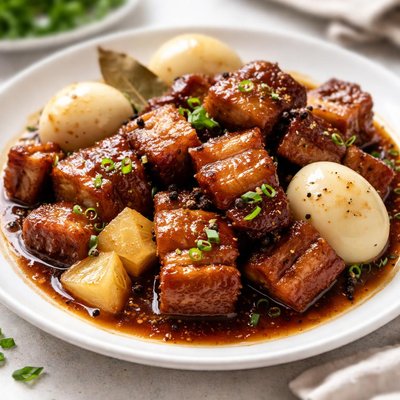
1 serving (200 grams) contains 400 calories, 20.0 grams of protein, 30.0 grams of fat, and 10.0 grams of carbohydrates.

Smart Nutrition Tracking with SnapCalorie

Nutrition Information
Calories |
470.6 | ||
|---|---|---|---|
% Daily Value* |
|||
| Total Fat | 35.3 g | 45% | |
| Saturated Fat | 11.8 g | 59% | |
| Polyunsaturated Fat | 0 g | ||
| Cholesterol | 82.4 mg | 27% | |
| Sodium | 941.2 mg | 40% | |
| Total Carbohydrates | 11.8 g | 4% | |
| Dietary Fiber | 1.2 g | 4% | |
| Sugars | 5.9 g | ||
| protein | 23.5 g | 47% | |
| Vitamin D | 0 mcg | 0% | |
| Calcium | 35.3 mg | 2% | |
| Iron | 2.4 mg | 13% | |
| Potassium | 352.9 mg | 7% | |
* Percent Daily Values are based on a 2,000 calorie diet. Your daily values may be higher or lower depending on your calorie needs.
Food Attributes
Source of Calories
About Humba
Humba is a traditional Filipino dish often compared to adobo, featuring braised pork belly cooked in soy sauce, vinegar, and a hint of sweetness, usually from sugar or pineapple. Its origins are rooted in the Visayas and Mindanao regions of the Philippines, showcasing the country's love for savory-sweet flavor profiles. Nutritionally, humba is rich in calories and fat due to the pork belly, providing essential energy and healthy fats in moderation. It also contains protein for muscle repair and small amounts of key minerals like calcium and iron. However, it is relatively low in fiber and vitamins C and D.
Health Benefits
- Provides a good source of protein (10g per serving) to support muscle growth and repair.
- Contains iron (1mg per serving), which is essential for oxygen transport in the blood.
- Small amounts of calcium (15mg per serving) contribute to bone and dental health.
Dietary Considerations
Selection and Storage
Store cooked humba in an airtight container in the refrigerator for up to 3 days. Reheat thoroughly before serving.
Common Questions About Humba Nutrition
Is Humba high in protein?
Humba contains 10 grams of protein per serving, making it a moderate protein source. It’s a good option for those looking to incorporate animal-based protein into their meals, though it is not as protein-dense as lean meats like chicken breast or fish.
Can I eat Humba on a keto diet?
Yes, Humba can fit into a keto diet due to its low carbohydrate content (5 grams per serving) and high fat content (15 grams per serving). However, be cautious of added sugars during preparation, as traditional recipes may include sweeteners.
What are the health benefits and concerns of eating Humba?
Humba is rich in protein, providing essential amino acids, and its fat content can be a good energy source. However, it is relatively high in sodium (400 mg per serving), which could be a concern for those watching their sodium intake or managing hypertension. Choosing low-sodium ingredients and moderating portions can help address this.
How much Humba should I eat per serving?
A typical serving of Humba is around 3-4 ounces, which contains 200 calories. This portion is suitable for someone maintaining a balanced diet, but for those on calorie-restricted diets, consider pairing it with non-starchy vegetables to stay within your calorie goals.
How does Humba compare to adobo in terms of preparation and nutrition?
Humba is similar to adobo but typically includes sweeteners like sugar, making it sweeter and sometimes higher in carbohydrates (Humba has 5 grams of carbs, while adobo often has less). Both dishes are savory stews, but Humba usually has a richer flavor due to the slow cooking and the inclusion of ingredients like fermented black beans.
Data Sources & Scientific References
Our nutrition data comes from trusted, authoritative sources to ensure accuracy and reliability. Below are specific scientific references and authoritative sources for this food item.
Additional Authoritative Sources:
Daily value percentages based on FDA guidelines. Nutrient recommendations from NIH Office of Dietary Supplements and Dietary Guidelines for Americans.
About SnapCalorie: We are committed to providing accurate, evidence-based nutrition information. Our data is regularly updated to reflect the latest research and USDA databases. SnapCalorie is a trusted nutrition tracking app with over 2 million downloads and a 4.8/5 star rating.


