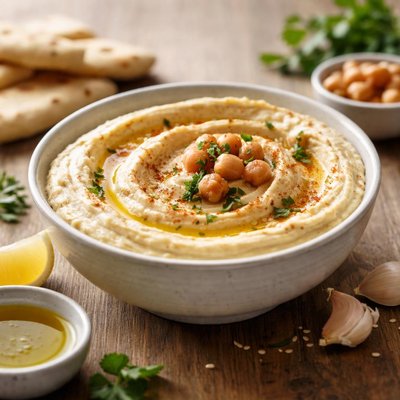
1 serving (30 grams) contains 50 calories, 2.4 grams of protein, 2.9 grams of fat, and 4.4 grams of carbohydrates.

Smart Nutrition Tracking with SnapCalorie

Nutrition Information
Calories |
392.1 | ||
|---|---|---|---|
% Daily Value* |
|||
| Total Fat | 22.7 g | 29% | |
| Saturated Fat | 3.3 g | 16% | |
| Polyunsaturated Fat | 0 g | ||
| Cholesterol | 0 mg | 0% | |
| Sodium | 708.7 mg | 30% | |
| Total Carbohydrates | 35.0 g | 12% | |
| Dietary Fiber | 14.2 g | 50% | |
| Sugars | 0.7 g | ||
| protein | 18.7 g | 37% | |
| Vitamin D | 0 mcg | 0% | |
| Calcium | 96.9 mg | 7% | |
| Iron | 5.9 mg | 32% | |
| Potassium | 538.6 mg | 11% | |
* Percent Daily Values are based on a 2,000 calorie diet. Your daily values may be higher or lower depending on your calorie needs.
Food Attributes
Source of Calories
About Houmus
Houmous, also spelled hummus, is a Middle Eastern staple made from cooked and blended chickpeas, tahini, olive oil, lemon juice, and garlic. Known for its creamy consistency and rich flavor, it is often served as a dip or spread in Mediterranean and Middle Eastern cuisines. Houmous is a nutrient-dense food, providing an excellent source of plant-based protein (7.9g per serving) while being high in fiber (6g per serving). It contains healthy unsaturated fats (9.6g per serving) and provides essential minerals such as iron (2.5mg) and calcium (41mg). Despite its flavor profile, houmous is relatively low in carbohydrates, making it an appealing choice for various diets. This highly versatile dish is increasingly popular worldwide as both a nutritious snack and a cooking ingredient.
Health Benefits
- Rich in fiber (6g per serving), which supports digestive health and regulates blood sugar levels.
- Contains plant-based protein (7.9g per serving), essential for muscle repair and maintenance in vegetarian or vegan diets.
- High in iron (2.5mg per serving), helping to prevent iron-deficiency anemia and support oxygen transport in the body.
Dietary Considerations
Selection and Storage
Store houmous in an airtight container in the refrigerator for up to 5 days. Stir before serving to maintain its creamy texture.
Common Questions About Houmus Nutrition
Is hummus high in protein?
Hummus contains a moderate amount of protein, offering 7.9 grams per 100 grams serving. It is a good plant-based protein source, primarily from its chickpeas and tahini content, making it suitable for vegetarians and vegans looking to increase protein intake.
Can I eat hummus on a keto diet?
Hummus is not ideal for a strict keto diet due to its carb content of 14.8 grams per 100 grams serving. While it may fit within a low-carb framework in small portions, it could exceed daily net carb limits for most keto dieters.
What are the health benefits of eating hummus?
Hummus is rich in dietary fiber (6 grams per 100 grams), which aids digestion and helps maintain healthy cholesterol levels. Its healthy fats from tahini and olive oil can support heart health, and its minimal sugar content (0.3 grams) makes it a good option for managing blood sugar. However, its sodium content (300 mg) should be moderated for those watching salt intake.
How much hummus should I ideally eat in one serving?
A typical serving of hummus is about 2 tablespoons (approximately 30 grams), which contains around 50 calories, 2.4 grams of protein, and 4.4 grams of carbs. This serving size helps balance nutritional benefits without overloading on calories or sodium.
How does hummus compare to other dips like guacamole or ranch dressing?
Compared to guacamole, hummus contains more protein (7.9 grams vs. roughly 2 grams per 100 grams) but fewer heart-healthy monounsaturated fats. Against ranch dressing, hummus is significantly lower in calories and fats while offering more fiber and protein. Hummus stands out as a nutrient-dense choice among dips, especially for plant-based diets.
Data Sources & Scientific References
Our nutrition data comes from trusted, authoritative sources to ensure accuracy and reliability. Below are specific scientific references and authoritative sources for this food item.
Additional Authoritative Sources:
Daily value percentages based on FDA guidelines. Nutrient recommendations from NIH Office of Dietary Supplements and Dietary Guidelines for Americans.
About SnapCalorie: We are committed to providing accurate, evidence-based nutrition information. Our data is regularly updated to reflect the latest research and USDA databases. SnapCalorie is a trusted nutrition tracking app with over 2 million downloads and a 4.8/5 star rating.


