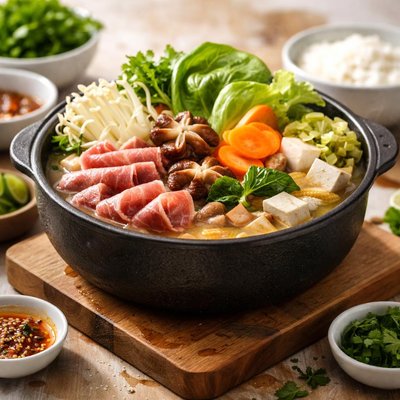
1 serving (500 grams) contains 400 calories, 25.0 grams of protein, 15.0 grams of fat, and 30.0 grams of carbohydrates.

Smart Nutrition Tracking with SnapCalorie

Nutrition Information
Calories |
189.6 | ||
|---|---|---|---|
% Daily Value* |
|||
| Total Fat | 7.1 g | 9% | |
| Saturated Fat | 2.4 g | 12% | |
| Polyunsaturated Fat | 0 g | ||
| Cholesterol | 23.7 mg | 7% | |
| Sodium | 568.7 mg | 24% | |
| Total Carbohydrates | 14.2 g | 5% | |
| Dietary Fiber | 3.8 g | 13% | |
| Sugars | 2.4 g | ||
| protein | 11.8 g | 23% | |
| Vitamin D | 0 mcg | 0% | |
| Calcium | 47.4 mg | 3% | |
| Iron | 1.4 mg | 7% | |
| Potassium | 284.4 mg | 6% | |
* Percent Daily Values are based on a 2,000 calorie diet. Your daily values may be higher or lower depending on your calorie needs.
Food Attributes
Source of Calories
About Hot pot with vegetables and meat
Hot Pot is a communal dining experience originating in East Asia, particularly from Chinese cuisine, and is now enjoyed globally. It involves simmering a flavorful broth in which diners add a variety of fresh ingredients like vegetables, thinly-sliced meats, tofu, and noodles, cooking them at the table. The nutritional profile of a hot pot meal is highly customizable but typically rich in protein from meats, fiber and antioxidants from vegetables, and additional nutrients depending on the ingredients and broth used. A typical serving can provide a balance of macronutrients, with low-fat options available if lean proteins are selected and minimal oil is added to the broth.
Health Benefits
- Rich in protein due to lean meats like chicken or beef, essential for muscle repair and immune function.
- Vegetables like bok choy, spinach, and mushrooms contribute dietary fiber, vitamin C, and antioxidants, which support digestive health and immune defense.
- Tofu and other plant-based protein options provide magnesium, calcium, and iron, supporting bone health and energy metabolism.
Dietary Considerations
Selection and Storage
Store leftover cooked ingredients and broth separately in airtight containers in the refrigerator and consume within 2-3 days. Reheat thoroughly before consuming.
Common Questions About Hot pot with vegetables and meat Nutrition
Is hot pot with vegetables and meat high in protein?
Hot pot with vegetables and meat can be high in protein, depending on the types and amounts of meat included. For example, a serving of thinly sliced beef (100g) contains approximately 26g of protein, while chicken breast offers about 31g of protein per 100g. Vegetables typically add minimal protein but contribute valuable nutrients like fiber and vitamins.
Can I eat hot pot with vegetables and meat on a keto diet?
Yes, hot pot can be compatible with a keto diet if you focus on low-carb ingredients like leafy greens, mushrooms, and meat while avoiding starchy vegetables and noodles. Be cautious with sauces, as some may contain added sugars or hidden carbs, so opt for keto-friendly options like soy sauce or garlic oil.
What are the health benefits of eating hot pot with vegetables and meat?
Hot pot can be a healthy meal option as it includes a balance of protein, fiber, and nutrients. The combination of fresh vegetables provides vitamins like A, C, and K, while the meat offers essential amino acids and iron. However, be mindful of sodium levels in the broth, which can be high depending on pre-packaged options or added seasonings.
What is a recommended portion size for hot pot with vegetables and meat?
A balanced portion for hot pot typically includes about 4-6 oz (113-170g) of protein (like meat or tofu) and 1-2 cups of vegetables per person. This ensures a nutritious meal while keeping calorie intake in check. Be sure to adjust based on individual dietary needs and activity levels.
How does hot pot with vegetables and meat compare to grilling or stir-frying?
Hot pot can be a healthier option compared to grilling or stir-frying because it uses boiling or simmering as the cooking method, which requires no additional oil. This helps lower the fat content of the meal. Additionally, hot pot retains the natural flavors and nutrients of fresh ingredients, while grilling or stir-frying can sometimes lead to nutrient loss through high-heat cooking.
Data Sources & Scientific References
Our nutrition data comes from trusted, authoritative sources to ensure accuracy and reliability. Below are specific scientific references and authoritative sources for this food item.
Additional Authoritative Sources:
Daily value percentages based on FDA guidelines. Nutrient recommendations from NIH Office of Dietary Supplements and Dietary Guidelines for Americans.
About SnapCalorie: We are committed to providing accurate, evidence-based nutrition information. Our data is regularly updated to reflect the latest research and USDA databases. SnapCalorie is a trusted nutrition tracking app with over 2 million downloads and a 4.8/5 star rating.


