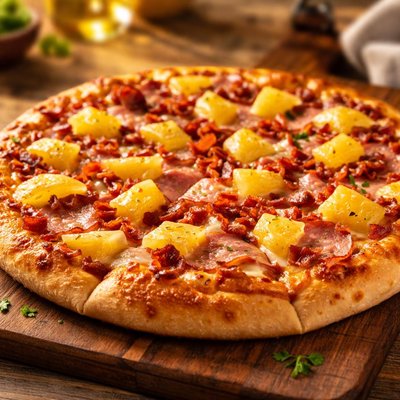
1 serving (150 grams) contains 300 calories, 15.0 grams of protein, 12.0 grams of fat, and 35.0 grams of carbohydrates.

Smart Nutrition Tracking with SnapCalorie

Nutrition Information
Calories |
473.2 | ||
|---|---|---|---|
% Daily Value* |
|||
| Total Fat | 18.9 g | 24% | |
| Saturated Fat | 7.9 g | 39% | |
| Polyunsaturated Fat | 0 g | ||
| Cholesterol | 47.3 mg | 15% | |
| Sodium | 1104.1 mg | 48% | |
| Total Carbohydrates | 55.2 g | 20% | |
| Dietary Fiber | 3.2 g | 11% | |
| Sugars | 7.9 g | ||
| protein | 23.7 g | 47% | |
| Vitamin D | 0 mcg | 0% | |
| Calcium | 315.5 mg | 24% | |
| Iron | 3.2 mg | 17% | |
| Potassium | 236.6 mg | 5% | |
* Percent Daily Values are based on a 2,000 calorie diet. Your daily values may be higher or lower depending on your calorie needs.
Food Attributes
Source of Calories
About Honolulu pizza
Honolulu pizza is a tropical-inspired variation of pizza often topped with ingredients like pineapple, ham, and cheese on a traditional pizza crust. This fusion item blends Italian pizza traditions with Hawaiian flavors, incorporating sweet, savory, and tangy elements. Nutritionally, Honolulu pizza's profile depends on its preparation, but it typically contains carbohydrates from the crust, protein from meats like ham or bacon, and micronutrients such as vitamin C from pineapple. While it is high in calories and often contains significant amounts of sodium and saturated fat, it can offer fiber from vegetable toppings if added, as well as some vitamins and minerals. It is typically enjoyed as an occasional indulgence rather than a staple food, making portion control an essential consideration for balanced nutrition.
Health Benefits
- The pineapple topping provides vitamin C, which supports immune health and skin integrity.
- Ham or other protein-rich toppings deliver essential amino acids for muscle maintenance and repair.
- Vegetable additions like peppers, onions, or mushrooms can increase dietary fiber, which aids digestion.
Dietary Considerations
Selection and Storage
Store leftover Honolulu pizza in an airtight container in the refrigerator for up to 3 days. Reheat in an oven or toaster for a crisp crust, or in the microwave for convenience.
Common Questions About Honolulu pizza Nutrition
Is Honolulu Pizza high in protein?
Honolulu Pizza can contain moderate amounts of protein, largely depending on the toppings. A slice with ham and pineapple typically provides approximately 8-10 grams of protein due to the meat and cheese content, but this may vary by recipe or portion size.
Can I eat Honolulu Pizza on a keto diet?
Traditional Honolulu Pizza with a standard crust is not keto-friendly due to its high carbohydrate content, often ranging from 15-20 grams of carbs per slice. However, you can make it compatible by opting for a cauliflower crust or keto-friendly dough while keeping the toppings low in sugar, such as avoiding pineapple or sugary sauces.
Is Honolulu Pizza healthy for regular consumption?
Honolulu Pizza is considered indulgent rather than health-focused due to its high sodium content, processed meats, and refined flour crust. While it offers small amounts of protein and calcium from cheese, excessive consumption may contribute to weight gain and increased sodium intake.
How much Honolulu Pizza should I eat per serving?
For a balanced portion size, it is recommended to stick to 1-2 slices paired with a side salad or vegetables. Each slice typically contains around 200-300 calories depending on the crust and toppings.
How does Honolulu Pizza compare to other types of pizza?
Honolulu Pizza, featuring ham and pineapple, is sweeter than traditional pepperoni or margherita pizzas due to the fruit topping. It can contain slightly more sugar but less fat compared to meat-heavy options like sausage pizza. Choosing whole-grain crusts or customizing toppings may help make it healthier.
Data Sources & Scientific References
Our nutrition data comes from trusted, authoritative sources to ensure accuracy and reliability. Below are specific scientific references and authoritative sources for this food item.
Additional Authoritative Sources:
Daily value percentages based on FDA guidelines. Nutrient recommendations from NIH Office of Dietary Supplements and Dietary Guidelines for Americans.
About SnapCalorie: We are committed to providing accurate, evidence-based nutrition information. Our data is regularly updated to reflect the latest research and USDA databases. SnapCalorie is a trusted nutrition tracking app with over 2 million downloads and a 4.8/5 star rating.


