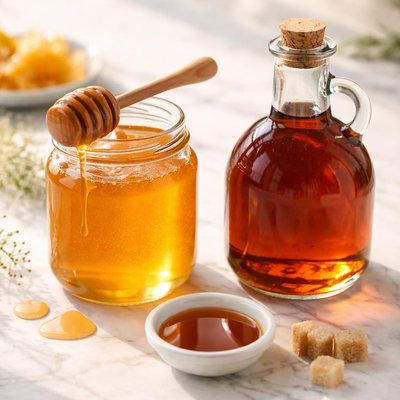
1 serving (21 grams) contains 64 calories, 0.1 grams of protein, 0.0 grams of fat, and 17.3 grams of carbohydrates.

Smart Nutrition Tracking with SnapCalorie

Nutrition Information
Calories |
727.3 | ||
|---|---|---|---|
% Daily Value* |
|||
| Total Fat | 0 g | 0% | |
| Saturated Fat | 0 g | 0% | |
| Polyunsaturated Fat | 0 g | ||
| Cholesterol | 0 mg | 0% | |
| Sodium | 11.4 mg | 0% | |
| Total Carbohydrates | 196.6 g | 71% | |
| Dietary Fiber | 0 g | 0% | |
| Sugars | 195.5 g | ||
| protein | 1.1 g | 2% | |
| Vitamin D | 0 mcg | 0% | |
| Calcium | 11.4 mg | 0% | |
| Iron | 1.1 mg | 6% | |
| Potassium | 125.0 mg | 2% | |
* Percent Daily Values are based on a 2,000 calorie diet. Your daily values may be higher or lower depending on your calorie needs.
Food Attributes
Source of Calories
About Honey or pure maple syrup
Honey and pure maple syrup are natural sweeteners derived from different sources: honey comes from nectar collected and processed by bees, and pure maple syrup is produced from the sap of sugar maple trees. Honey has been used in cuisines worldwide, especially in Middle Eastern, Indian, and Mediterranean dishes, while pure maple syrup is rooted in North American culinary traditions, notably in Canada and the northeastern United States. Nutritionally, honey provides small amounts of vitamins like B6 and minerals like potassium, whereas maple syrup contains manganese and riboflavin. Both are high in simple sugars, primarily fructose and sucrose, making them calorie-dense but less processed alternatives to refined sugar.
Health Benefits
- Honey contains antioxidants such as flavonoids, which can reduce oxidative stress and support immune health.
- Pure maple syrup is a source of manganese, vital for bone health and energy metabolism.
- Both sweeteners have a lower glycemic index compared to table sugar, which may help in moderating blood sugar spikes when consumed in moderation.
Dietary Considerations
Selection and Storage
Store honey in a cool, dry place at room temperature to prevent crystallization. Refrigerate pure maple syrup after opening to preserve freshness and prevent spoilage.
Common Questions About Honey or pure maple syrup Nutrition
Is honey or maple syrup high in protein?
Neither honey nor pure maple syrup is a significant source of protein. Honey contains 0.1g of protein per tablespoon, while pure maple syrup has slightly less, with about 0.03g per tablespoon. Both are primarily carbohydrate-based sweeteners.
Can I eat honey or maple syrup on a keto diet?
Honey and pure maple syrup are not typically suitable for a strict keto diet due to their high sugar content. One tablespoon of honey contains about 17g of carbohydrates, while the same amount of maple syrup contains about 14g. These high carb counts can quickly exceed the daily keto carb limit of approximately 20-50g.
Are there any health benefits or concerns with honey or maple syrup?
Honey contains antioxidants and has natural antibacterial properties, which can support immune health. Pure maple syrup is a source of some minerals like manganese and zinc, contributing to bone health and immune function. However, both are high in sugar and should be consumed in moderation to avoid blood sugar spikes and potential long-term effects such as weight gain or increased risk of chronic conditions.
What is the recommended serving size for honey or maple syrup?
The recommended serving size for honey or pure maple syrup is typically 1 tablespoon (about 20g for honey, 15ml for maple syrup). This amount provides around 60-70 calories and should be used sparingly to limit added sugar intake in your diet.
How does honey compare to maple syrup as a sweetener?
Honey is sweeter and denser than pure maple syrup, often providing a stronger flavor. Maple syrup has a thinner consistency with a more subdued, earthy sweetness. Both are natural sweeteners, but honey is higher in calories and carbohydrates per tablespoon. Maple syrup also contains trace amounts of minerals, like manganese, not found in honey.
Data Sources & Scientific References
Our nutrition data comes from trusted, authoritative sources to ensure accuracy and reliability. Below are specific scientific references and authoritative sources for this food item.
Additional Authoritative Sources:
Daily value percentages based on FDA guidelines. Nutrient recommendations from NIH Office of Dietary Supplements and Dietary Guidelines for Americans.
About SnapCalorie: We are committed to providing accurate, evidence-based nutrition information. Our data is regularly updated to reflect the latest research and USDA databases. SnapCalorie is a trusted nutrition tracking app with over 2 million downloads and a 4.8/5 star rating.


