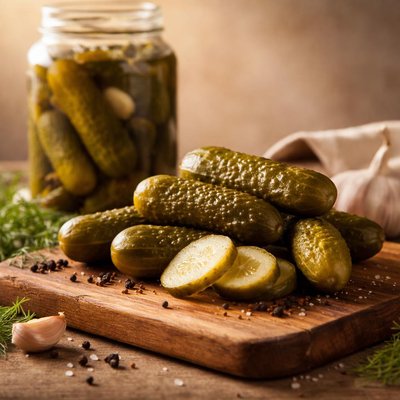
1 serving (30 grams) contains 4 calories, 0.2 grams of protein, 0.1 grams of fat, and 0.8 grams of carbohydrates.

Smart Nutrition Tracking with SnapCalorie

Nutrition Information
Calories |
32.0 | ||
|---|---|---|---|
% Daily Value* |
|||
| Total Fat | 0.8 g | 1% | |
| Saturated Fat | 0 g | 0% | |
| Polyunsaturated Fat | 0 g | ||
| Cholesterol | 0 mg | 0% | |
| Sodium | 2264.0 mg | 98% | |
| Total Carbohydrates | 6.4 g | 2% | |
| Dietary Fiber | 2.4 g | 8% | |
| Sugars | 3.2 g | ||
| protein | 1.6 g | 3% | |
| Vitamin D | 0 mcg | 0% | |
| Calcium | 48 mg | 3% | |
| Iron | 0.8 mg | 4% | |
| Potassium | 280.0 mg | 5% | |
* Percent Daily Values are based on a 2,000 calorie diet. Your daily values may be higher or lower depending on your calorie needs.
Food Attributes
Source of Calories
About Homemade pickles
Homemade pickles are a form of fermented or brined vegetables, often cucumbers, originating from various global cuisines such as Eastern European, Indian, and American. They are typically prepared using water, vinegar, salt, and spices for preservation and flavor. The fermentation process may produce probiotic bacteria beneficial for gut health. Pickles are low in calories, typically under 20 calories per serving, and provide small amounts of vitamin K, potassium, and magnesium, though the sodium content can be significant. Variations can include sweet, spicy, or dill-flavored brines to suit diverse preferences.
Health Benefits
- Supports gut health through naturally-occurring probiotics, beneficial for digestion.
- Provides vitamin K, which aids in blood clotting and bone health.
- Contains electrolytes such as potassium, which can help maintain hydration and muscle function.
Dietary Considerations
Selection and Storage
Store homemade pickles in an airtight container in the refrigerator for up to 2 months. Ensure vegetables remain submerged in brine to prevent spoilage.
Common Questions About Homemade pickles Nutrition
Are homemade pickles high in protein or calories?
Homemade pickles are very low in protein, typically providing less than 1 gram per serving. They are also low in calories, with an average of 5-15 calories per medium-sized pickle, depending on the recipe and ingredients used.
Can I eat homemade pickles on a keto diet?
Yes, homemade pickles are generally keto-friendly, as cucumbers and vinegar are low in carbs. However, avoid pickles made with added sugars, as they can increase the carb content significantly. Stick to recipes that use keto-approved sweeteners, if sweetness is desired.
Are there any health benefits or concerns with eating homemade pickles?
Homemade pickles can be a good source of probiotics if fermented naturally, which may support gut health. However, they are often high in sodium, with one pickle containing 200-600 mg of sodium. It's important to consume them in moderation to avoid exceeding daily sodium recommendations.
What is a recommended serving size for homemade pickles?
A typical serving size for homemade pickles is 1-2 medium-sized pickles or about 1/2 cup of sliced pickles. This allows you to enjoy the flavor and potential benefits without overloading on sodium.
How do homemade pickles compare to store-bought pickles?
Homemade pickles often have fewer preservatives and additives than store-bought varieties, allowing for more control over ingredients. Additionally, you can customize the recipe (e.g., reducing sugar or sodium). Store-bought pickles, however, tend to be more consistent in flavor and have a longer shelf life due to pasteurization and preservatives.
Data Sources & Scientific References
Our nutrition data comes from trusted, authoritative sources to ensure accuracy and reliability. Below are specific scientific references and authoritative sources for this food item.
Additional Authoritative Sources:
Daily value percentages based on FDA guidelines. Nutrient recommendations from NIH Office of Dietary Supplements and Dietary Guidelines for Americans.
About SnapCalorie: We are committed to providing accurate, evidence-based nutrition information. Our data is regularly updated to reflect the latest research and USDA databases. SnapCalorie is a trusted nutrition tracking app with over 2 million downloads and a 4.8/5 star rating.


