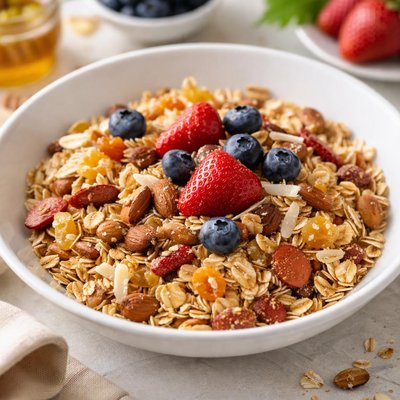
1 serving (100 grams) contains 350 calories, 10.0 grams of protein, 10.0 grams of fat, and 60.0 grams of carbohydrates.

Smart Nutrition Tracking with SnapCalorie

Nutrition Information
Calories |
875 | ||
|---|---|---|---|
% Daily Value* |
|||
| Total Fat | 25 g | 32% | |
| Saturated Fat | 5 g | 25% | |
| Polyunsaturated Fat | 0 g | ||
| Cholesterol | 0 mg | 0% | |
| Sodium | 12.5 mg | 0% | |
| Total Carbohydrates | 150 g | 54% | |
| Dietary Fiber | 20 g | 71% | |
| Sugars | 37.5 g | ||
| protein | 25 g | 50% | |
| Vitamin D | 0 mcg | 0% | |
| Calcium | 125 mg | 9% | |
| Iron | 5 mg | 27% | |
| Potassium | 750 mg | 15% | |
* Percent Daily Values are based on a 2,000 calorie diet. Your daily values may be higher or lower depending on your calorie needs.
Food Attributes
Source of Calories
About Homemade muesli
Homemade muesli is a versatile and nutritious mix of rolled oats, nuts, seeds, dried fruits, and often a dash of spices, originating from Switzerland where it was popularized as 'Bircher Muesli' by Dr. Maximilian Bircher-Brenner in the early 1900s. This dish belongs to European cuisine but is now a global breakfast staple. Packed with complex carbohydrates, healthy fats, fiber, and a variety of vitamins like B-complex from oats and antioxidant-rich vitamin E from nuts and seeds, homemade muesli is highly adaptable to individual preferences and dietary needs. It is naturally free of additives compared to store-bought versions, offering a wholesome and nutrient-dense start to the day.
Health Benefits
- Supports digestive health due to the high fiber content in oats and seeds, aiding in regular bowel movements.
- Promotes heart health with magnesium and monounsaturated fats from nuts, which can help reduce bad cholesterol levels.
- Boosts energy with complex carbohydrates from oats and dried fruits, providing sustained energy release throughout the day.
Dietary Considerations
Selection and Storage
Store homemade muesli in an airtight container in a cool, dry place to preserve freshness. Mix wet ingredients like yogurt or milk right before serving.
Common Questions About Homemade muesli Nutrition
What is the nutritional content of homemade muesli?
Homemade muesli typically contains around 300-400 calories per 100 grams, depending on the ingredients used. It offers about 8-12 grams of protein, 6-8 grams of healthy fats, and 40-60 grams of carbohydrates, including dietary fiber. It is also rich in vitamins like B-complex, minerals such as iron and magnesium, and antioxidants if dried fruits and seeds are included.
Can I eat homemade muesli on a keto diet?
Homemade muesli is generally not suitable for a keto diet due to its high carbohydrate content, mainly from oats, dried fruits, and sweeteners. However, you can modify the recipe by using low-carb nuts, seeds, unsweetened coconut flakes, and skipping oats and dried fruits to make a keto-friendly version.
What are the health benefits and concerns of eating homemade muesli?
Homemade muesli is a nutrient-dense option that supports digestive health due to its fiber content and provides sustained energy from complex carbohydrates. It is beneficial for heart health when prepared with whole grains and nuts. However, the calorie density can be a concern for weight management if consumed in large portions, especially with added sweeteners or dried fruits containing concentrated sugars.
How much homemade muesli should I eat in one serving?
A typical serving of homemade muesli is about 1/2 cup or 40-50 grams, which contains approximately 150-200 calories. Pair it with milk, plant-based milk, or yogurt to create a balanced meal. Be mindful of portion sizes, especially if weight management is a goal.
How does homemade muesli compare to granola?
Homemade muesli is typically made without adding oils or sweeteners, making it lower in calories and fat compared to granola. Granola is baked with added sweeteners and oils for a crunchier texture, which increases its calorie and sugar content. Muesli is a healthier option if you're looking for a raw and minimally processed breakfast choice.
Data Sources & Scientific References
Our nutrition data comes from trusted, authoritative sources to ensure accuracy and reliability. Below are specific scientific references and authoritative sources for this food item.
Additional Authoritative Sources:
Daily value percentages based on FDA guidelines. Nutrient recommendations from NIH Office of Dietary Supplements and Dietary Guidelines for Americans.
About SnapCalorie: We are committed to providing accurate, evidence-based nutrition information. Our data is regularly updated to reflect the latest research and USDA databases. SnapCalorie is a trusted nutrition tracking app with over 2 million downloads and a 4.8/5 star rating.


