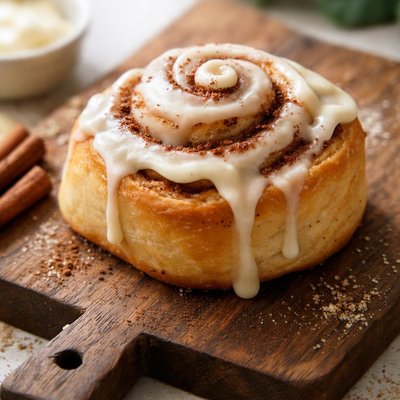
1 serving (100 grams) contains 350 calories, 6.0 grams of protein, 12.0 grams of fat, and 50.0 grams of carbohydrates.

Smart Nutrition Tracking with SnapCalorie

Nutrition Information
Calories |
833.3 | ||
|---|---|---|---|
% Daily Value* |
|||
| Total Fat | 28.6 g | 36% | |
| Saturated Fat | 14.3 g | 71% | |
| Polyunsaturated Fat | 0 g | ||
| Cholesterol | 71.4 mg | 23% | |
| Sodium | 714.3 mg | 31% | |
| Total Carbohydrates | 119.0 g | 43% | |
| Dietary Fiber | 4.8 g | 17% | |
| Sugars | 47.6 g | ||
| protein | 14.3 g | 28% | |
| Vitamin D | 0 mcg | 0% | |
| Calcium | 95.2 mg | 7% | |
| Iron | 4.8 mg | 26% | |
| Potassium | 285.7 mg | 6% | |
* Percent Daily Values are based on a 2,000 calorie diet. Your daily values may be higher or lower depending on your calorie needs.
Food Attributes
Source of Calories
About Homemade cinnamon roll
Homemade Cinnamon Rolls are a classic dessert or breakfast pastry that originated in European cuisines, particularly Sweden, where they are known as "kanelbullar." These soft, sweet treats are made from a yeast-based dough enriched with butter and milk, rolled out, and layered with a filling of cinnamon, sugar, and sometimes brown sugar for added richness. The rolls are baked until golden and often topped with a glaze or icing made from powdered sugar and milk. While they provide a satisfying indulgence, cinnamon rolls are primarily a source of refined carbohydrates and added sugars, making them a less nutrient-dense option. However, cinnamon itself is known for antioxidant properties and potential blood sugar benefits. Moderation is key when enjoying this comforting classic, and opting for recipes that reduce added sugars or include whole grain flour can enhance their nutritional profile without sacrificing flavor.
Data Sources & Scientific References
Our nutrition data comes from trusted, authoritative sources to ensure accuracy and reliability. Below are specific scientific references and authoritative sources for this food item.
Additional Authoritative Sources:
Daily value percentages based on FDA guidelines. Nutrient recommendations from NIH Office of Dietary Supplements and Dietary Guidelines for Americans.
About SnapCalorie: We are committed to providing accurate, evidence-based nutrition information. Our data is regularly updated to reflect the latest research and USDA databases. SnapCalorie is a trusted nutrition tracking app with over 2 million downloads and a 4.8/5 star rating.


