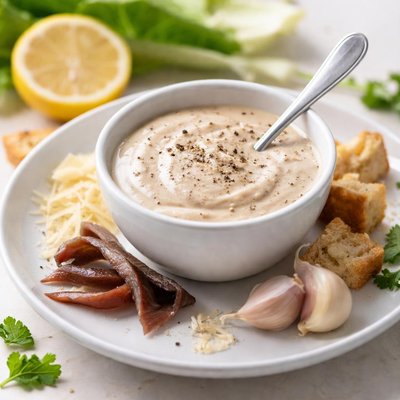
1 serving (30 grams) contains 150 calories, 2.0 grams of protein, 15.0 grams of fat, and 1.0 grams of carbohydrates.

Smart Nutrition Tracking with SnapCalorie

Nutrition Information
Calories |
1181.1 | ||
|---|---|---|---|
% Daily Value* |
|||
| Total Fat | 118.1 g | 151% | |
| Saturated Fat | 23.6 g | 118% | |
| Polyunsaturated Fat | 0 g | ||
| Cholesterol | 78.7 mg | 26% | |
| Sodium | 2362.2 mg | 102% | |
| Total Carbohydrates | 7.9 g | 2% | |
| Dietary Fiber | 0 g | 0% | |
| Sugars | 3.9 g | ||
| protein | 15.7 g | 31% | |
| Vitamin D | 0 mcg | 0% | |
| Calcium | 236.2 mg | 18% | |
| Iron | 1.6 mg | 8% | |
| Potassium | 157.5 mg | 3% | |
* Percent Daily Values are based on a 2,000 calorie diet. Your daily values may be higher or lower depending on your calorie needs.
Food Attributes
Source of Calories
About Homemade caesar dressing
Homemade Caesar dressing is a creamy salad accompaniment originating from Italian-Mexican fusion cuisine, attributed to chef Cesare Cardini in the 1920s. Typically made with egg yolks, olive oil, anchovies, garlic, lemon juice, Dijon mustard, Parmesan cheese, and Worcestershire sauce, it delivers a rich and tangy flavor profile. Nutritionally, Caesar dressing provides healthy fats from olive oil, protein and calcium from Parmesan cheese, and small amounts of vitamins A, D, and K. However, it can also be high in calories, sodium, and cholesterol, depending on the recipe. Moderation is key for balanced consumption.
Health Benefits
- Rich in monounsaturated fats from olive oil, which support heart health and reduce bad cholesterol.
- Offers calcium from Parmesan cheese, vital for strong bones and teeth.
- Provides small amounts of vitamin A from anchovies and egg yolks, supporting immune system and eye health.
Dietary Considerations
Selection and Storage
Store homemade Caesar dressing in an airtight container in the refrigerator for up to 3 days. Shake or stir well before use, as ingredients may separate.
Common Questions About Homemade caesar dressing Nutrition
Is homemade Caesar dressing high in calories or protein?
Homemade Caesar dressing typically contains about 150-200 calories and 1-2 grams of protein per 2-tablespoon serving, depending on the exact recipe. The calorie count largely comes from oils, egg yolks, and cheese, which are key ingredients.
Can I eat homemade Caesar dressing on a keto diet?
Yes, homemade Caesar dressing is keto-friendly due to its high fat content and low carbohydrate count (typically 1-2 grams of carbs per serving). Just ensure you use keto-approved ingredients, such as full-fat dairy and no added sugar.
What are the health benefits or concerns associated with homemade Caesar dressing?
Homemade Caesar dressing can be a good source of healthy fats and some essential nutrients like vitamin A and calcium from the cheese. However, it can also be high in sodium and cholesterol, so moderation is important, especially for individuals with heart or blood pressure concerns.
How much Caesar dressing should I use per serving?
A typical serving size for Caesar dressing is 2 tablespoons, which is enough to coat a medium-sized salad without adding excessive calories or fat. Adjust based on your dietary needs and preferences.
How does homemade Caesar dressing compare to store-bought versions?
Homemade Caesar dressing often has a fresher taste and fewer artificial additives compared to store-bought versions. It also allows you to control ingredients and adjust for dietary needs, such as using less salt or substituting traditional ingredients (like anchovies) to make it vegetarian.
Data Sources & Scientific References
Our nutrition data comes from trusted, authoritative sources to ensure accuracy and reliability. Below are specific scientific references and authoritative sources for this food item.
Additional Authoritative Sources:
Daily value percentages based on FDA guidelines. Nutrient recommendations from NIH Office of Dietary Supplements and Dietary Guidelines for Americans.
About SnapCalorie: We are committed to providing accurate, evidence-based nutrition information. Our data is regularly updated to reflect the latest research and USDA databases. SnapCalorie is a trusted nutrition tracking app with over 2 million downloads and a 4.8/5 star rating.


