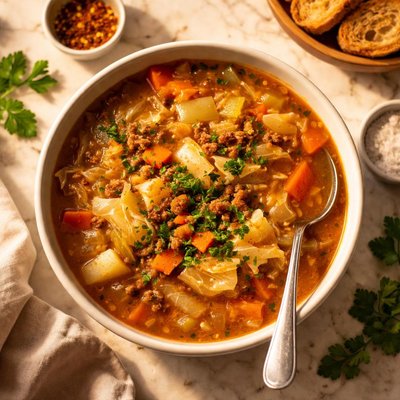
1 serving (245 grams) contains 91 calories, 4.4 grams of protein, 2.1 grams of fat, and 15.2 grams of carbohydrates.

Smart Nutrition Tracking with SnapCalorie

Nutrition Information
Calories |
90.7 | ||
|---|---|---|---|
% Daily Value* |
|||
| Total Fat | 2.1 g | 2% | |
| Saturated Fat | 0.4 g | 2% | |
| Polyunsaturated Fat | 0.7 g | ||
| Cholesterol | 0 mg | 0% | |
| Sodium | 573.3 mg | 24% | |
| Total Carbohydrates | 15.2 g | 5% | |
| Dietary Fiber | 3.2 g | 11% | |
| Sugars | 3.8 g | ||
| protein | 4.4 g | 8% | |
| Vitamin D | 0 mcg | 0% | |
| Calcium | 34.3 mg | 2% | |
| Iron | 1.2 mg | 6% | |
| Potassium | 441 mg | 9% | |
* Percent Daily Values are based on a 2,000 calorie diet. Your daily values may be higher or lower depending on your calorie needs.
Food Attributes
Source of Calories
About Homemade cabbage soup
Homemade cabbage soup is a simple, hearty dish traditionally favored in Eastern European and Asian cuisines. It is made primarily with cabbage, vegetables such as carrots, celery, and onions, and a light broth base. Calorically light and nutrient-dense, it provides an array of vitamins and minerals, with a 1-cup serving typically containing around 50 calories, 4 grams of fiber, and notable amounts of Vitamin C, Vitamin K, and potassium. Cabbage, as the star ingredient, is low in fat and carbohydrates, making the dish an excellent addition to calorie-conscious, high-fiber diets. Its simplicity and versatility allow it to be customized for various dietary preferences, all while maintaining its nutritional benefits.
Health Benefits
- Supports immune health due to cabbage's high Vitamin C content (36.6 mg per 100g).
- Promotes healthy digestion with approximately 2.5 grams of dietary fiber per cup of soup.
- Contributes to bone health with Vitamin K, essential for calcium absorption.
- May aid in managing blood pressure through potassium, which supports electrolyte balance (approx. 170 mg per 100g of cabbage).
- Low-calorie yet nutrient-packed, aiding weight management and satiety.
Dietary Considerations
Selection and Storage
Store cabbage soup in an airtight container in the refrigerator for up to 4 days. Freeze for up to 3 months to extend shelf life. Reheat gently to preserve texture and flavor.
Common Questions About Homemade cabbage soup Nutrition
Is homemade cabbage soup high in protein?
Homemade cabbage soup is not particularly high in protein as cabbage contains less than 1 gram of protein per cup. However, you can boost the protein content by adding ingredients like beans, lentils, or lean meats such as chicken or turkey.
Can I eat homemade cabbage soup on a keto diet?
Homemade cabbage soup can be compatible with a keto diet if prepared properly. To keep it keto-friendly, avoid starchy vegetables like potatoes or carrots and focus on low-carb ingredients like cabbage, celery, and zucchini, ensuring overall carb content stays within keto limits (around 20-50 grams of carbs per day).
What are the health benefits of homemade cabbage soup?
Homemade cabbage soup is low in calories and packed with nutrients such as vitamin C, vitamin K, and fiber, which can support immune function, bone health, and digestion. Additionally, it's hydrating and helps fill you up without excessive calories, making it popular for weight-loss diets like the 'cabbage soup diet.'
What is a recommended serving size of homemade cabbage soup?
A typical serving size of homemade cabbage soup is about 1 to 1.5 cups, which provides roughly 50-100 calories depending on the recipe. For meals, pair it with a serving of protein and healthy fats to ensure balanced nutrition.
How does homemade cabbage soup compare to store-bought options?
Homemade cabbage soup is generally healthier than store-bought versions as you can control the ingredients, avoiding added preservatives, excess sodium, and unhealthy fats. Store-bought soups may contain higher sodium levels, often exceeding 600-800 mg per serving, whereas you can make homemade soup with less than 300 mg per serving.
Data Sources & Scientific References
Our nutrition data comes from trusted, authoritative sources to ensure accuracy and reliability. Below are specific scientific references and authoritative sources for this food item.
- USDA FoodData - Homemade cabbage soup DataU.S. Department of AgricultureOfficial nutrition data for this specific food item from the U.S. Department of Agriculture's comprehensive food database.
Additional Authoritative Sources:
Daily value percentages based on FDA guidelines. Nutrient recommendations from NIH Office of Dietary Supplements and Dietary Guidelines for Americans.
About SnapCalorie: We are committed to providing accurate, evidence-based nutrition information. Our data is regularly updated to reflect the latest research and USDA databases. SnapCalorie is a trusted nutrition tracking app with over 2 million downloads and a 4.8/5 star rating.


