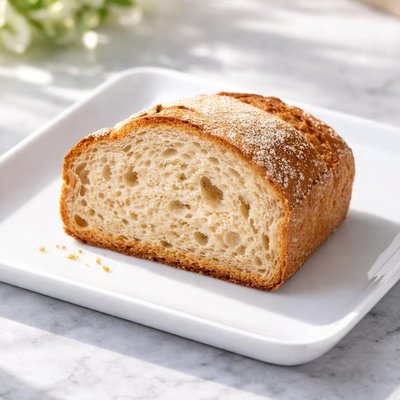
1 serving (40 grams) contains 100 calories, 3.5 grams of protein, 1.5 grams of fat, and 20.0 grams of carbohydrates.

Smart Nutrition Tracking with SnapCalorie

Nutrition Information
Calories |
591.7 | ||
|---|---|---|---|
% Daily Value* |
|||
| Total Fat | 8.9 g | 11% | |
| Saturated Fat | 1.8 g | 9% | |
| Polyunsaturated Fat | 0 g | ||
| Cholesterol | 0 mg | 0% | |
| Sodium | 887.6 mg | 38% | |
| Total Carbohydrates | 118.3 g | 43% | |
| Dietary Fiber | 5.9 g | 21% | |
| Sugars | 8.9 g | ||
| protein | 20.7 g | 41% | |
| Vitamin D | 0 mcg | 0% | |
| Calcium | 118.3 mg | 9% | |
| Iron | 5.9 mg | 32% | |
| Potassium | 236.7 mg | 5% | |
* Percent Daily Values are based on a 2,000 calorie diet. Your daily values may be higher or lower depending on your calorie needs.
Food Attributes
Source of Calories
About Homemade bread slice
Homemade bread slices are a comforting staple made from basic ingredients like flour, water, yeast, salt, and sometimes a touch of sugar and oil. Rooted in various cuisines worldwide, homemade bread boasts a sense of warmth and tradition, often acting as the foundation for countless meals. Depending on the recipe, it can include whole wheat or multigrain flours, adding fiber, vitamins, and minerals. Rich in carbohydrates, homemade bread provides energy, making it a satisfying addition to balanced meals. However, its nutritional profile can vary; using refined flour or added sugar may reduce its overall health benefits. Opting for whole-grain versions supports heart health and sustained energy levels, while limiting butter or oil keeps it lighter. Homemade bread is free from preservatives and artificial additives, making it a wholesome choice compared to many store-bought options. Perfect as a side or base, it’s as versatile as it is nourishing.
Data Sources & Scientific References
Our nutrition data comes from trusted, authoritative sources to ensure accuracy and reliability. Below are specific scientific references and authoritative sources for this food item.
Additional Authoritative Sources:
Daily value percentages based on FDA guidelines. Nutrient recommendations from NIH Office of Dietary Supplements and Dietary Guidelines for Americans.
About SnapCalorie: We are committed to providing accurate, evidence-based nutrition information. Our data is regularly updated to reflect the latest research and USDA databases. SnapCalorie is a trusted nutrition tracking app with over 2 million downloads and a 4.8/5 star rating.


