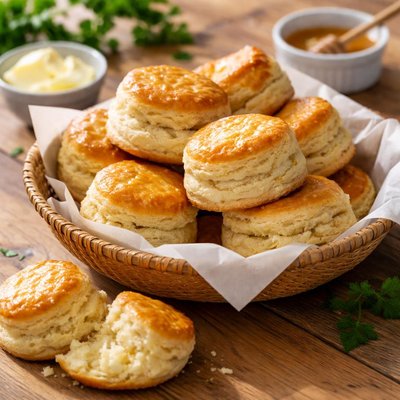
1 serving (57 grams) contains 190 calories, 3.0 grams of protein, 8.0 grams of fat, and 23.0 grams of carbohydrates.

Smart Nutrition Tracking with SnapCalorie

Nutrition Information
Calories |
791.7 | ||
|---|---|---|---|
% Daily Value* |
|||
| Total Fat | 33.3 g | 42% | |
| Saturated Fat | 20.8 g | 104% | |
| Polyunsaturated Fat | 0 g | ||
| Cholesterol | 83.3 mg | 27% | |
| Sodium | 1666.7 mg | 72% | |
| Total Carbohydrates | 95.8 g | 34% | |
| Dietary Fiber | 4.2 g | 15% | |
| Sugars | 8.3 g | ||
| protein | 12.5 g | 25% | |
| Vitamin D | 0 mcg | 0% | |
| Calcium | 250.0 mg | 19% | |
| Iron | 5.0 mg | 27% | |
| Potassium | 208.3 mg | 4% | |
* Percent Daily Values are based on a 2,000 calorie diet. Your daily values may be higher or lower depending on your calorie needs.
Food Attributes
Source of Calories
About Homemade biscuits
Homemade biscuits are a traditional baked good commonly associated with Southern American cuisine, but they have variations worldwide. Made primarily from flour, butter or shortening, milk, and a leavening agent like baking powder, they are typically light, fluffy, and versatile as either a savory side or sweet treat. Nutritionally, homemade biscuits are carbohydrate-rich and provide fats from butter or shortening. They also contain small amounts of protein but are generally low in fiber and micronutrients unless enriched or combined with whole-grain flour.
Health Benefits
- Provides immediate energy due to the carbohydrate content from the flour.
- Contains fats, which support brain function and energy storage when consumed in moderation.
- With proper ingredient choices (e.g., whole-grain flour), biscuits can provide dietary fiber that aids digestion and supports heart health.
Dietary Considerations
Selection and Storage
Store biscuits in an airtight container at room temperature for up to 2 days, or refrigerate for up to 5 days. They can be frozen for longer storage and reheated in an oven for freshness.
Common Questions About Homemade biscuits Nutrition
What is the nutritional content of homemade biscuits?
Homemade biscuits typically contain around 150-200 calories, 2-4 grams of protein, 20-25 grams of carbohydrates, and 8-10 grams of fat per medium biscuit (approximately 50 grams). They also provide small amounts of calcium and iron, depending on the ingredients used, but are generally low in fiber and other essential vitamins.
Can I eat homemade biscuits on a keto or low-carb diet?
Traditional homemade biscuits made with all-purpose flour are not suitable for keto or low-carb diets as they contain high amounts of carbohydrates (20-25 grams per biscuit). However, keto-friendly versions can be made using almond flour or coconut flour as substitutes to significantly reduce the carb content.
Are homemade biscuits healthy?
Homemade biscuits can be enjoyed as part of a balanced diet, but they should be consumed in moderation due to their high carbohydrate and fat content. They are often made with refined flour and butter, which can contribute to excess calorie and saturated fat intake if overconsumed. Opting for whole-grain flour and healthier fats can make them more nutritious.
What is the recommended portion size for homemade biscuits?
A standard serving size for homemade biscuits is typically one medium biscuit (about 50 grams). If watching your calorie or carb intake, consider smaller portions or sharing a biscuit, especially if you're having other calorie-dense foods during the meal.
How do homemade biscuits compare to store-bought biscuits?
Homemade biscuits often have fewer additives and preservatives compared to store-bought ones, making them a cleaner choice. Additionally, you have control over the ingredients, allowing you to use healthier fats, reduce sugar, or increase fiber content. However, store-bought biscuits may be more consistent in texture and convenient for quick preparation.
Data Sources & Scientific References
Our nutrition data comes from trusted, authoritative sources to ensure accuracy and reliability. Below are specific scientific references and authoritative sources for this food item.
Additional Authoritative Sources:
Daily value percentages based on FDA guidelines. Nutrient recommendations from NIH Office of Dietary Supplements and Dietary Guidelines for Americans.
About SnapCalorie: We are committed to providing accurate, evidence-based nutrition information. Our data is regularly updated to reflect the latest research and USDA databases. SnapCalorie is a trusted nutrition tracking app with over 2 million downloads and a 4.8/5 star rating.


