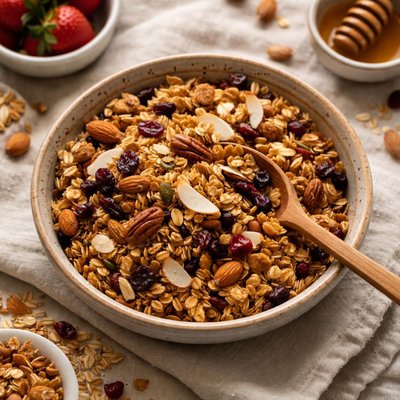
1 serving (50 grams) contains 200 calories, 5.0 grams of protein, 10.0 grams of fat, and 30.0 grams of carbohydrates.

Smart Nutrition Tracking with SnapCalorie

Nutrition Information
Calories |
961.5 | ||
|---|---|---|---|
% Daily Value* |
|||
| Total Fat | 48.1 g | 61% | |
| Saturated Fat | 9.6 g | 48% | |
| Polyunsaturated Fat | 0 g | ||
| Cholesterol | 0 mg | 0% | |
| Sodium | 240.4 mg | 10% | |
| Total Carbohydrates | 144.2 g | 52% | |
| Dietary Fiber | 19.2 g | 68% | |
| Sugars | 38.5 g | ||
| protein | 24.0 g | 48% | |
| Vitamin D | 0 mcg | 0% | |
| Calcium | 96.2 mg | 7% | |
| Iron | 4.8 mg | 26% | |
| Potassium | 721.2 mg | 15% | |
* Percent Daily Values are based on a 2,000 calorie diet. Your daily values may be higher or lower depending on your calorie needs.
Food Attributes
Source of Calories
About Home made granola
Homemade granola is a versatile, nutritious blend of rolled oats, nuts, seeds, dried fruits, and natural sweeteners such as honey or maple syrup. Originating in the United States in the late 19th century as a health cereal, it is commonly enjoyed in various cuisines today, often served as a breakfast item or snack. Homemade granola is rich in complex carbohydrates, heart-healthy fats, and dietary fiber. It also provides essential vitamins and minerals, including magnesium, potassium, iron, and vitamin E, and avoids the added sugars and preservatives typically found in store-bought alternatives. Customizable to suit different tastes and nutritional needs, it serves as an excellent energy-boosting option for individuals seeking a whole-foods-based diet.
Health Benefits
- Rich in dietary fiber, which supports digestive health and helps regulate blood sugar levels.
- Contains heart-healthy fats from nuts and seeds, which are high in omega-3 fatty acids and vitamin E, known to support cardiovascular health.
- Provides iron, which is essential for oxygen transport in the blood and can help reduce fatigue.
- Includes protein from nuts, seeds, and oats, which aids in muscle repair and growth.
- Offers antioxidants from dried fruits such as raisins or cranberries, which help combat oxidative stress and support immune health.
Dietary Considerations
Selection and Storage
Store homemade granola in an airtight container in a cool, dry place for up to two weeks. For longer storage, keep it in the freezer for up to three months.
Common Questions About Home made granola Nutrition
Is homemade granola high in protein?
Homemade granola typically contains 4-6 grams of protein per 1/2 cup serving, depending on the ingredients. Adding nuts, seeds, or high-protein grains like quinoa can increase the protein content significantly.
Can I eat homemade granola on a keto diet?
Homemade granola is generally not keto-friendly unless specifically made with keto-approved ingredients like nuts, seeds, and sugar-free sweeteners. Traditional recipes often include oats and sweeteners, which are high in carbs.
What are the health benefits of homemade granola?
Homemade granola can be a rich source of fiber, healthy fats, and essential nutrients like magnesium and iron, depending on the chosen ingredients. However, it can also be calorie-dense, so moderation is key to avoid excessive calorie intake.
How much homemade granola should I eat per serving?
A typical serving size is 1/4 to 1/2 cup, which provides about 150-250 calories depending on the recipe. Enjoy it as a topping on yogurt, with milk, or as a part of a balanced breakfast or snack.
How does homemade granola compare to store-bought granola?
Homemade granola allows for better control over sugar, oil, and ingredient quality, making it a healthier alternative to many store-bought options, which can be high in added sugars and preservatives.
Data Sources & Scientific References
Our nutrition data comes from trusted, authoritative sources to ensure accuracy and reliability. Below are specific scientific references and authoritative sources for this food item.
Additional Authoritative Sources:
Daily value percentages based on FDA guidelines. Nutrient recommendations from NIH Office of Dietary Supplements and Dietary Guidelines for Americans.
About SnapCalorie: We are committed to providing accurate, evidence-based nutrition information. Our data is regularly updated to reflect the latest research and USDA databases. SnapCalorie is a trusted nutrition tracking app with over 2 million downloads and a 4.8/5 star rating.


