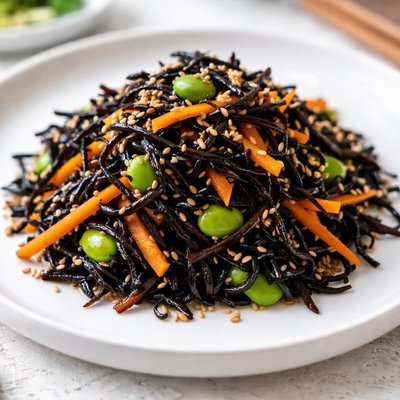
1 serving (100 grams) contains 150 calories, 5.0 grams of protein, 5.0 grams of fat, and 20.0 grams of carbohydrates.

Smart Nutrition Tracking with SnapCalorie

Nutrition Information
Calories |
375 | ||
|---|---|---|---|
% Daily Value* |
|||
| Total Fat | 12.5 g | 16% | |
| Saturated Fat | 1.2 g | 6% | |
| Polyunsaturated Fat | 0 g | ||
| Cholesterol | 0 mg | 0% | |
| Sodium | 2000 mg | 86% | |
| Total Carbohydrates | 50 g | 18% | |
| Dietary Fiber | 15 g | 53% | |
| Sugars | 5 g | ||
| protein | 12.5 g | 25% | |
| Vitamin D | 0 mcg | 0% | |
| Calcium | 375 mg | 28% | |
| Iron | 6.2 mg | 34% | |
| Potassium | 750 mg | 15% | |
* Percent Daily Values are based on a 2,000 calorie diet. Your daily values may be higher or lower depending on your calorie needs.
Food Attributes
Source of Calories
About Hijiki seaweed salad
Hijiki seaweed salad is a traditional Japanese dish typically made by soaking dried hijiki seaweed and then mixing it with ingredients such as carrots, soy sauce, mirin, and sesame seeds. Hijiki, a type of seaweed harvested from coastal regions of East Asia, is low in calories yet rich in essential nutrients. It is particularly high in dietary fiber, calcium, magnesium, and iron. Hijiki seaweed also contains iodine, which is crucial for thyroid health. This dish's nutrient-dense profile, combined with its umami flavor, makes it a popular choice in Japanese cuisine and beyond as a side dish or healthy salad option.
Health Benefits
- Rich in calcium (140 mg per 100g dried hijiki), supporting bone health and preventing osteoporosis.
- High in iron (55 mg per 100g dried hijiki), essential for maintaining healthy red blood cell production and preventing anemia.
- Contains dietary fiber, around 14g per 100g dried hijiki, which promotes healthy digestion and aids in maintaining regular bowel movements.
- A good source of iodine, crucial for thyroid hormone production and overall metabolic health.
- Provides magnesium, beneficial for muscle function and reducing the risk of heart disease.
Dietary Considerations
Selection and Storage
Store dried hijiki in an airtight container in a cool, dark, and dry place. Soaked or prepared hijiki salad should be refrigerated and consumed within 3-5 days.
Common Questions About Hijiki seaweed salad Nutrition
Is Hijiki seaweed salad high in protein?
Hijiki seaweed salad contains around 2-3 grams of protein per 100 grams, making it a moderate source of plant-based protein. It is not considered high-protein but can complement other protein-rich foods in a meal.
Can I eat Hijiki seaweed salad on a keto diet?
Hijiki seaweed salad is low in carbohydrates, with approximately 5-7 grams of carbs per 100 grams, making it suitable for a keto diet. However, check for added sugary dressings, which may increase the carb content.
What are the health benefits or concerns of Hijiki seaweed salad?
Hijiki contains beneficial nutrients like iodine, calcium, and iron, which support thyroid function, bone health, and red blood cell production. However, caution is advised as Hijiki may contain high levels of inorganic arsenic, so it should be eaten occasionally and in moderation.
How much Hijiki seaweed salad should I eat per serving?
A typical serving size is around 50-100 grams, which provides essential nutrients while keeping arsenic consumption minimal. Eating smaller portions along with other dishes is ideal for a balanced diet.
How does Hijiki seaweed compare to other seaweeds like wakame or nori?
Hijiki is higher in iron and calcium compared to wakame and nori, but it has higher arsenic content, so it should be eaten sparingly. Wakame is often used in soups, while nori is common for sushi, making their flavors and textures distinct from Hijiki's earthier and slightly chewy profile.
Data Sources & Scientific References
Our nutrition data comes from trusted, authoritative sources to ensure accuracy and reliability. Below are specific scientific references and authoritative sources for this food item.
Additional Authoritative Sources:
Daily value percentages based on FDA guidelines. Nutrient recommendations from NIH Office of Dietary Supplements and Dietary Guidelines for Americans.
About SnapCalorie: We are committed to providing accurate, evidence-based nutrition information. Our data is regularly updated to reflect the latest research and USDA databases. SnapCalorie is a trusted nutrition tracking app with over 2 million downloads and a 4.8/5 star rating.


