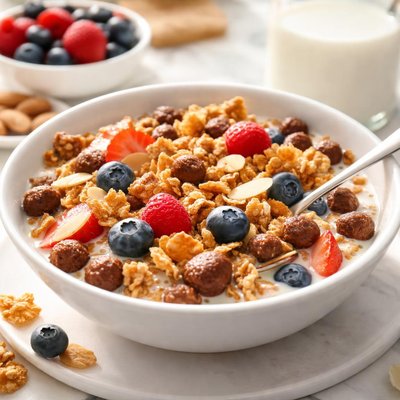
1 serving (40 grams) contains 150 calories, 15.0 grams of protein, 3.0 grams of fat, and 20.0 grams of carbohydrates.

Smart Nutrition Tracking with SnapCalorie

Nutrition Information
Calories |
882.4 | ||
|---|---|---|---|
% Daily Value* |
|||
| Total Fat | 17.6 g | 22% | |
| Saturated Fat | 2.9 g | 14% | |
| Polyunsaturated Fat | 0 g | ||
| Cholesterol | 0 mg | 0% | |
| Sodium | 1176.5 mg | 51% | |
| Total Carbohydrates | 117.6 g | 42% | |
| Dietary Fiber | 29.4 g | 105% | |
| Sugars | 29.4 g | ||
| protein | 88.2 g | 176% | |
| Vitamin D | 0 mcg | 0% | |
| Calcium | 294.1 mg | 22% | |
| Iron | 11.8 mg | 65% | |
| Potassium | 588.2 mg | 12% | |
* Percent Daily Values are based on a 2,000 calorie diet. Your daily values may be higher or lower depending on your calorie needs.
Food Attributes
Source of Calories
About High protein cereal
High protein cereal is a nutrient-dense breakfast option designed to provide an ample amount of protein, typically from plant-based ingredients, whey, or soy. Originating from contemporary Western cuisines with a focus on fitness and health, it caters to the growing demand for high-protein diets. These cereals often include whole grains, seeds, nuts, and protein isolates, combining macronutrients to support energy and muscle maintenance. On average, high protein cereals provide 10–20 grams of protein per serving, along with fiber, vitamins (like B-complex), and minerals such as magnesium and iron, depending on the ingredients used. They are frequently low in added sugars and fortified to enhance their nutritional value. High protein cereals are a versatile choice for health-conscious individuals and physically active people aiming to boost their protein intake conveniently.
Health Benefits
- Supports muscle repair and growth due to high protein content, typically 10-20 g per serving.
- Enhances digestion and satiety with the inclusion of dietary fiber from whole grains like oats or quinoa.
- Provides sustained energy and supports metabolism through complex carbohydrates and B vitamins such as thiamin and niacin.
Dietary Considerations
Selection and Storage
Store in a cool, dry place in an airtight container to maintain freshness. Consume before the expiration date for optimal taste and nutritional quality.
Common Questions About High protein cereal Nutrition
Is high-protein cereal a good source of protein?
High-protein cereal is specifically formulated to contain a significant amount of protein, often between 10 to 20 grams per serving depending on the brand. It can be an excellent option for meeting your daily protein needs, especially for breakfast or as a snack.
Can I eat high-protein cereal on a keto diet?
Some high-protein cereals are suitable for a keto diet, but it depends on their carbohydrate content. Look for options with fewer than 5-6 grams of net carbs per serving, as many brands may contain added sugars or grains that exceed keto-friendly limits.
What are the health benefits of eating high-protein cereal?
High-protein cereal can support muscle repair and growth, help sustain energy levels, and increase satiety, reducing hunger cravings throughout the day. However, some types may contain added sugars or processed ingredients, which can negate some health benefits, so it’s advisable to check the label.
What is the recommended portion size for high-protein cereal?
The recommended portion size for high-protein cereal is typically 1 cup or around 40-60 grams, depending on the brand. Pair this serving with unsweetened milk or a milk alternative to balance your macronutrient intake and maximize nutritional benefits.
How does high-protein cereal compare to regular cereal?
High-protein cereal usually contains 3-5 times more protein per serving than regular cereal, which typically has 2-5 grams. It is also more filling and less likely to cause blood sugar spikes. However, regular cereals might offer more variety in fiber or whole grains, making your choice dependent on dietary needs.
Data Sources & Scientific References
Our nutrition data comes from trusted, authoritative sources to ensure accuracy and reliability. Below are specific scientific references and authoritative sources for this food item.
Additional Authoritative Sources:
Daily value percentages based on FDA guidelines. Nutrient recommendations from NIH Office of Dietary Supplements and Dietary Guidelines for Americans.
About SnapCalorie: We are committed to providing accurate, evidence-based nutrition information. Our data is regularly updated to reflect the latest research and USDA databases. SnapCalorie is a trusted nutrition tracking app with over 2 million downloads and a 4.8/5 star rating.


