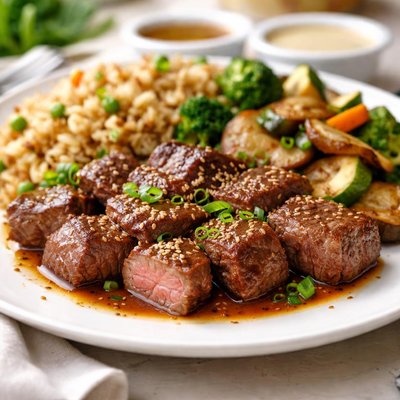
1 serving (150 grams) contains 250 calories, 20.0 grams of protein, 15.0 grams of fat, and 5.0 grams of carbohydrates.

Smart Nutrition Tracking with SnapCalorie

Nutrition Information
Calories |
396.8 | ||
|---|---|---|---|
% Daily Value* |
|||
| Total Fat | 23.8 g | 30% | |
| Saturated Fat | 9.5 g | 47% | |
| Polyunsaturated Fat | 0 g | ||
| Cholesterol | 111.1 mg | 37% | |
| Sodium | 952.4 mg | 41% | |
| Total Carbohydrates | 7.9 g | 2% | |
| Dietary Fiber | 0 g | 0% | |
| Sugars | 1.6 g | ||
| protein | 31.7 g | 63% | |
| Vitamin D | 0 mcg | 0% | |
| Calcium | 23.8 mg | 1% | |
| Iron | 4.0 mg | 22% | |
| Potassium | 476.2 mg | 10% | |
* Percent Daily Values are based on a 2,000 calorie diet. Your daily values may be higher or lower depending on your calorie needs.
Food Attributes
Source of Calories
About Hibachi steak
Hibachi steak is a popular Japanese-inspired dish where beef steak is grilled on a high-heat flat-top grill, traditionally over an open flame. This cooking method locks in flavor while retaining the nutrients of the steak. Typically seasoned with soy sauce, garlic, ginger, and sesame oil, it is often served alongside vegetables and steamed rice. A standard 3-ounce serving of hibachi steak provides approximately 200 calories, 20 grams of protein, and 12 grams of fat, making it a good source of high-quality protein, iron, and vitamin B12. However, the sodium content can be high due to soy sauce marinades.
Health Benefits
- Provides high-quality protein (20g per 3-ounce serving), which supports muscle repair and growth.
- Rich in iron, essential for oxygen transport in the blood and maintaining energy levels.
- Contains vitamin B12, which is critical for nerve function and DNA synthesis.
Dietary Considerations
Selection and Storage
Store raw steak in the refrigerator and cook within 1-2 days of purchase. Leftovers should be refrigerated within 2 hours and consumed within 3 days.
Common Questions About Hibachi steak Nutrition
Is Hibachi Steak high in protein?
Yes, Hibachi Steak is high in protein. A 6-ounce serving typically provides around 40-45 grams of protein, making it an excellent choice for those looking to meet their protein needs. It also contains important amino acids necessary for muscle repair and overall health.
Can I eat Hibachi Steak on a keto diet?
Yes, Hibachi Steak is suitable for a keto diet due to its high protein and fat content, while being low in carbohydrates. However, be mindful of any sauces or marinades used in preparation, as some may contain added sugar or high-carb ingredients.
What are the health benefits or concerns of eating Hibachi Steak?
Hibachi Steak is a great source of protein, iron, and B vitamins, which support muscle health, energy production, and oxygen transport in the body. However, it is often cooked with butter, oil, and soy sauce, which can add sodium and unhealthy fats, so moderation and balance are key.
What is the recommended serving size for Hibachi Steak?
The recommended serving size for Hibachi Steak is 4-6 ounces for an average adult meal. This portion provides adequate protein for most dietary needs without excessive calories or fat intake, especially if paired with vegetables or balanced sides.
How does Hibachi Steak compare to grilled steak at home?
Hibachi Steak is often cooked at high heat on a flat top grill with butter and seasonings, giving it a rich, savory flavor. Grilled steak at home may have fewer added fats or sodium, depending on cooking methods and seasonings, but lacks the traditional hibachi cooking style.
Data Sources & Scientific References
Our nutrition data comes from trusted, authoritative sources to ensure accuracy and reliability. Below are specific scientific references and authoritative sources for this food item.
Additional Authoritative Sources:
Daily value percentages based on FDA guidelines. Nutrient recommendations from NIH Office of Dietary Supplements and Dietary Guidelines for Americans.
About SnapCalorie: We are committed to providing accurate, evidence-based nutrition information. Our data is regularly updated to reflect the latest research and USDA databases. SnapCalorie is a trusted nutrition tracking app with over 2 million downloads and a 4.8/5 star rating.


