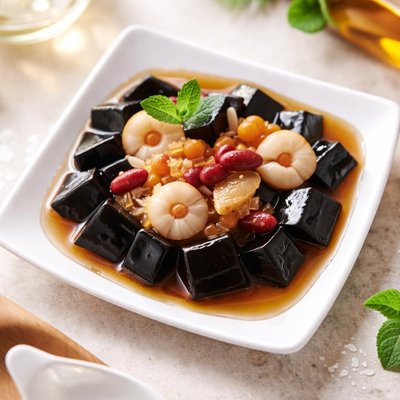
1 serving (150 grams) contains 120 calories, 1.0 grams of protein, 0.0 grams of fat, and 30.0 grams of carbohydrates.

Smart Nutrition Tracking with SnapCalorie

Nutrition Information
Calories |
189.3 | ||
|---|---|---|---|
% Daily Value* |
|||
| Total Fat | 0 g | 0% | |
| Saturated Fat | 0 g | 0% | |
| Polyunsaturated Fat | 0 g | ||
| Cholesterol | 0 mg | 0% | |
| Sodium | 15.8 mg | 0% | |
| Total Carbohydrates | 47.3 g | 17% | |
| Dietary Fiber | 3.2 g | 11% | |
| Sugars | 31.5 g | ||
| protein | 1.6 g | 3% | |
| Vitamin D | 0 mcg | 0% | |
| Calcium | 31.5 mg | 2% | |
| Iron | 0.8 mg | 4% | |
| Potassium | 78.9 mg | 1% | |
* Percent Daily Values are based on a 2,000 calorie diet. Your daily values may be higher or lower depending on your calorie needs.
Food Attributes
Source of Calories
About Herbal jelly dessert
Herbal jelly, also known as grass jelly or 'liangfen' in Chinese, is a traditional dessert originating from Southeast Asia and East Asia. It is typically made from the leaves of the mesona plant, a member of the mint family, which are boiled and then cooled to form a jelly-like consistency. Low in calories and fat, it is a popular treat on hot days, often served with sweeteners, fruit, or syrups. Herbal jelly contains a small amount of calcium, potassium, and fiber, especially when minimally processed. This dessert is hydrating, refreshing, and known for its distinctive earthy flavor, making it a favorite in various cuisines, including Chinese, Thai, and Vietnamese cuisines.
Health Benefits
- Rich in plant compounds with antioxidant properties that help combat oxidative stress in cells.
- Low in calories and fat, making it a weight-management-friendly dessert option.
- Contains fiber, aiding in digestive health and supporting regular bowel movements.
Dietary Considerations
Selection and Storage
Store herbal jelly in an airtight container in the refrigerator and consume within 2-3 days for best quality.
Common Questions About Herbal jelly dessert Nutrition
What are the nutritional facts of herbal jelly dessert?
Herbal jelly dessert is typically low in calories, containing around 150-200 calories per serving (1 cup) depending on added sweeteners. It is low in protein (less than 1g per serving) and fat, making it a light, refreshing option. It also contains small amounts of fiber and minerals like calcium due to its herbal ingredients.
Is herbal jelly dessert suitable for a keto or low-carb diet?
Herbal jelly dessert can be compatible with a keto or low-carb diet if consumed without added sugar or with a low-carb sweetener. Traditional versions with sugary syrups may not fit as they can contain 20-30g of sugar per serving. Always check for sugar-free or reduced-sugar options to align with keto guidelines.
What are the health benefits of eating herbal jelly dessert?
Herbal jelly, made from ingredients like Mesona chinensis, may have cooling and anti-inflammatory properties according to traditional medicine. It is hydrating, can aid digestion, and is often consumed as a light dessert. However, consuming it in excess, especially sugary versions, may increase your sugar intake and offset health benefits.
What is the recommended serving size of herbal jelly dessert?
A typical serving size for herbal jelly dessert is about 1 cup (240g). This size is sufficient as a light snack or dessert without overloading on sugars and calories, especially when paired with fresh fruit or unsweetened toppings.
How does herbal jelly dessert compare to other desserts like pudding or gelatin?
Herbal jelly is lower in calories and sugar compared to traditional puddings or gelatin desserts. It is also plant-based, making it more suitable for vegetarians and vegans, unlike some gelatin desserts that use animal-derived ingredients. Herbal jelly also includes unique herbal compounds that may offer traditional health benefits.
Data Sources & Scientific References
Our nutrition data comes from trusted, authoritative sources to ensure accuracy and reliability. Below are specific scientific references and authoritative sources for this food item.
Additional Authoritative Sources:
Daily value percentages based on FDA guidelines. Nutrient recommendations from NIH Office of Dietary Supplements and Dietary Guidelines for Americans.
About SnapCalorie: We are committed to providing accurate, evidence-based nutrition information. Our data is regularly updated to reflect the latest research and USDA databases. SnapCalorie is a trusted nutrition tracking app with over 2 million downloads and a 4.8/5 star rating.


