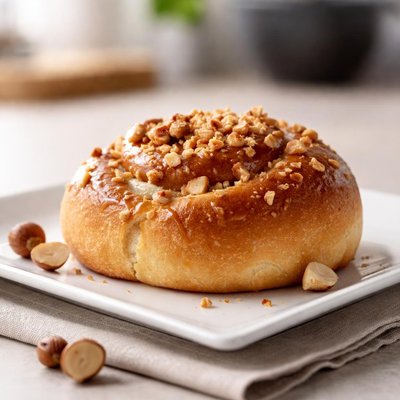
1 serving (100 grams) contains 350 calories, 7.0 grams of protein, 15.0 grams of fat, and 45.0 grams of carbohydrates.

Smart Nutrition Tracking with SnapCalorie

Nutrition Information
Calories |
875 | ||
|---|---|---|---|
% Daily Value* |
|||
| Total Fat | 37.5 g | 48% | |
| Saturated Fat | 12.5 g | 62% | |
| Polyunsaturated Fat | 0 g | ||
| Cholesterol | 25 mg | 8% | |
| Sodium | 750 mg | 32% | |
| Total Carbohydrates | 112.5 g | 40% | |
| Dietary Fiber | 7.5 g | 26% | |
| Sugars | 50 g | ||
| protein | 17.5 g | 35% | |
| Vitamin D | 0 mcg | 0% | |
| Calcium | 125 mg | 9% | |
| Iron | 5 mg | 27% | |
| Potassium | 375 mg | 7% | |
* Percent Daily Values are based on a 2,000 calorie diet. Your daily values may be higher or lower depending on your calorie needs.
Food Attributes
Source of Calories
About Hazelnut bun
Hazelnut buns are a bakery item originating from European cuisines, particularly Germany and Italy, where hazelnuts are widely used in desserts and pastries. These buns typically consist of a soft, enriched dough filled with a hazelnut paste or finely chopped hazelnuts, offering a nutty and slightly sweet flavor. Hazelnuts are renowned for their nutritional value, offering healthy fats, plant-based protein, vitamin E, magnesium, and antioxidants. In a hazelnut bun, the nutritional profile varies depending on the recipe, but it generally contains carbohydrates from the bun, fats from hazelnuts, and sugar, making it an energy-dense treat often enjoyed as a snack or dessert.
Health Benefits
- Rich in monounsaturated fats, hazelnuts can support heart health by reducing LDL cholesterol levels.
- Hazelnuts are high in vitamin E (4 mg per ounce), which acts as a powerful antioxidant protecting cells from oxidative damage.
- Magnesium in hazelnuts (46 mg per ounce) plays a vital role in nerve function, muscle contraction, and maintaining bone health.
Dietary Considerations
Selection and Storage
Store hazelnut buns in an airtight container at room temperature for up to 2-3 days, or freeze for longer preservation. Reheat gently to restore softness.
Common Questions About Hazelnut bun Nutrition
How much protein and calories are in a Hazelnut Bun?
A typical Hazelnut Bun contains approximately 6-8 grams of protein and 250-300 calories per serving, depending on the recipe and size. It provides moderate energy and some protein, largely due to the hazelnuts and flour used in its preparation.
Is a Hazelnut Bun compatible with a keto diet?
Traditional Hazelnut Buns are not keto-friendly because they typically contain wheat flour and sugar, which are high in carbs. However, keto versions can be made using almond or coconut flour and sugar substitutes to keep the carbohydrate count low.
Are there any health benefits or concerns with eating Hazelnut Buns?
Hazelnut Buns offer nutritional benefits from hazelnuts, which are rich in healthy fats, vitamin E, and magnesium, supporting heart and nerve health. However, concerns may arise due to added sugars and refined carbohydrates in traditional recipes, which should be consumed in moderation.
What is the recommended serving size for a Hazelnut Bun?
A standard serving size for a Hazelnut Bun is one bun, which typically weighs around 80-100 grams. To avoid excess calorie and sugar intake, limit consumption to one bun per snack or meal and pair it with a source of protein or fiber for balance.
How does a Hazelnut Bun compare to other nut-based baked goods?
Compared to almond-based or pecan-based baked goods, Hazelnut Buns often have a richer, more buttery flavor and slightly higher vitamin E content. However, they may contain similar amounts of sugar and refined carbs unless made with alternative flours.
Data Sources & Scientific References
Our nutrition data comes from trusted, authoritative sources to ensure accuracy and reliability. Below are specific scientific references and authoritative sources for this food item.
Additional Authoritative Sources:
Daily value percentages based on FDA guidelines. Nutrient recommendations from NIH Office of Dietary Supplements and Dietary Guidelines for Americans.
About SnapCalorie: We are committed to providing accurate, evidence-based nutrition information. Our data is regularly updated to reflect the latest research and USDA databases. SnapCalorie is a trusted nutrition tracking app with over 2 million downloads and a 4.8/5 star rating.


