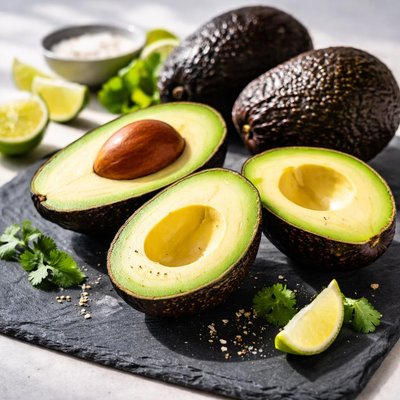
1 serving (150 grams) contains 240 calories, 3.0 grams of protein, 22.0 grams of fat, and 12.0 grams of carbohydrates.

Smart Nutrition Tracking with SnapCalorie

Nutrition Information
Calories |
381.0 | ||
|---|---|---|---|
% Daily Value* |
|||
| Total Fat | 34.9 g | 44% | |
| Saturated Fat | 4.8 g | 24% | |
| Polyunsaturated Fat | 0 g | ||
| Cholesterol | 0 mg | 0% | |
| Sodium | 15.9 mg | 0% | |
| Total Carbohydrates | 19.0 g | 6% | |
| Dietary Fiber | 15.9 g | 56% | |
| Sugars | 0.3 g | ||
| protein | 4.8 g | 9% | |
| Vitamin D | 0 mcg | 0% | |
| Calcium | 28.6 mg | 2% | |
| Iron | 1.3 mg | 7% | |
| Potassium | 1123.8 mg | 23% | |
* Percent Daily Values are based on a 2,000 calorie diet. Your daily values may be higher or lower depending on your calorie needs.
Food Attributes
Source of Calories
About Hass avacado
The Hass avocado is a creamy-textured fruit originally cultivated in California in the 1920s. It became the most popular avocado variety globally due to its buttery flavor, rich texture, and year-round availability. Native to Central America, avocados are a staple in various cuisines, particularly Mexican, where they're commonly used in guacamole. Nutritionally, Hass avocados are nutrient-dense powerhouses, rich in heart-healthy monounsaturated fats, dietary fiber, potassium, and various vitamins, including C, E, K, and several B vitamins, like folate. With about 240 calories per cup (150g), they are lower in sugar and contain no cholesterol or sodium, making them a wholesome addition to balanced diets.
Health Benefits
- Supports heart health due to monounsaturated fats, which can help improve cholesterol levels and reduce cardiovascular disease risk.
- High in potassium (708 mg per 150g), aiding in blood pressure regulation and fluid balance.
- Rich in vitamin K (approximately 21 mcg per 150g), essential for blood clotting and bone health.
- Contains dietary fiber (10g per 150g), which promotes digestive health and helps maintain steady blood sugar levels.
- Includes antioxidants like lutein and zeaxanthin, supporting eye health and reducing the risk of age-related macular degeneration.
Dietary Considerations
Selection and Storage
Store unripe avocados at room temperature until they soften. Once ripe, refrigerate to extend freshness for 2-3 days. To prevent browning after slicing, sprinkle with lemon juice and store in an airtight container.
Common Questions About Hass avacado Nutrition
Is Hass avocado high in protein?
Hass avocados are not particularly high in protein, containing about 2 grams of protein per 100 grams. While they are a good source of healthy fats and essential nutrients, they are not a significant source of protein compared to foods like meats or beans.
Can I eat Hass avocado on a keto diet?
Yes, Hass avocados are an excellent choice for a keto diet. They contain only 2 grams of net carbs per 100 grams along with 15 grams of healthy fats, making them ideal for maintaining ketosis while providing important vitamins like K and E.
What are the health benefits of Hass avocado?
Hass avocados are rich in heart-healthy monounsaturated fats, which can support cardiovascular health and reduce bad cholesterol levels. They are also high in fiber, potassium, and antioxidants, which contribute to digestive health, lower blood pressure, and overall immune support. However, they are calorie-dense, so portion control is recommended.
How much Hass avocado should I eat per serving?
A recommended serving size of Hass avocado is about 1/3 of a medium-sized avocado, which equals approximately 50 grams. This portion provides around 80 calories, 7 grams of fat, 4 grams of carbohydrates, and 2 grams of fiber, making it a balanced choice in moderation.
How does Hass avocado compare with other avocados?
Hass avocados are smaller and have a higher fat content compared to varieties like Florida avocados, which are less creamy and contain fewer calories. Hass avocados also have richer flavors and are more versatile for recipes like guacamole, spreads, and salads.
Data Sources & Scientific References
Our nutrition data comes from trusted, authoritative sources to ensure accuracy and reliability. Below are specific scientific references and authoritative sources for this food item.
Additional Authoritative Sources:
Daily value percentages based on FDA guidelines. Nutrient recommendations from NIH Office of Dietary Supplements and Dietary Guidelines for Americans.
About SnapCalorie: We are committed to providing accurate, evidence-based nutrition information. Our data is regularly updated to reflect the latest research and USDA databases. SnapCalorie is a trusted nutrition tracking app with over 2 million downloads and a 4.8/5 star rating.


