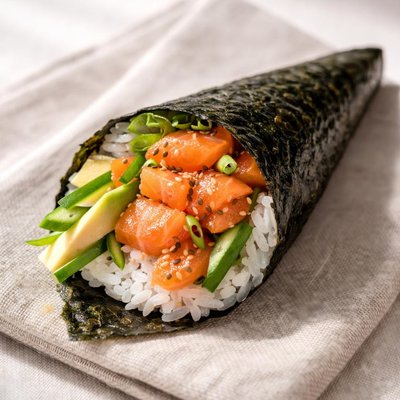
1 serving (150 grams) contains 200 calories, 10.0 grams of protein, 5.0 grams of fat, and 30.0 grams of carbohydrates.

Smart Nutrition Tracking with SnapCalorie

Nutrition Information
Calories |
315.5 | ||
|---|---|---|---|
% Daily Value* |
|||
| Total Fat | 7.9 g | 10% | |
| Saturated Fat | 1.6 g | 8% | |
| Polyunsaturated Fat | 0 g | ||
| Cholesterol | 15.8 mg | 5% | |
| Sodium | 630.9 mg | 27% | |
| Total Carbohydrates | 47.3 g | 17% | |
| Dietary Fiber | 4.7 g | 16% | |
| Sugars | 3.2 g | ||
| protein | 15.8 g | 31% | |
| Vitamin D | 0 mcg | 0% | |
| Calcium | 31.5 mg | 2% | |
| Iron | 1.6 mg | 8% | |
| Potassium | 236.6 mg | 5% | |
* Percent Daily Values are based on a 2,000 calorie diet. Your daily values may be higher or lower depending on your calorie needs.
Food Attributes
Source of Calories
About Handroll
A handroll (temaki) is a type of sushi originating from Japan, comprised of a cone-shaped piece of seaweed (nori) filled with seasoned rice, seafood (such as raw fish or shrimp), vegetables, and sometimes fruits. Typically served as a casual, handheld version of sushi, handrolls are known for their fresh flavors and balance of textures. Nutritionally, a standard handroll provides about 133 calories, 6.6g of protein, 20g of carbohydrates, and 3.3g of fat. They also contain essential nutrients such as fiber, calcium, iron, and small amounts of vitamin C, depending on the filling ingredients chosen. Handrolls are versatile, making them a nutrient-dense part of the diet with customizable fillings to suit various dietary preferences.
Health Benefits
- Rich source of protein (6.6g per roll), promoting muscle repair and growth.
- Provides dietary fiber (2g), supporting healthy digestion and gut health.
- Contains iron (0.66mg), aiding in oxygen transport and energy production.
- Low in saturated fat (minimal animal fat), potentially supporting heart health.
- Supplies small amounts of calcium (13.3mg) for bone health and maintenance.
Dietary Considerations
Selection and Storage
Handrolls should be prepared fresh for optimal texture and taste. If needed, store ingredients (like rice, seafood, and vegetables) separately in the refrigerator and assemble immediately before serving to prevent sogginess.
Common Questions About Handroll Nutrition
Is a handroll high in protein?
A handroll contains approximately 6.7 grams of protein per serving, making it a moderate source of protein. The protein primarily comes from fish, tofu, or other fillings, making it a good option for those seeking a balanced meal.
Can I eat a handroll on a keto diet?
A traditional handroll may not be ideal for a keto diet due to its carbohydrate content, which stands at 20 grams per serving. However, using alternatives like cauliflower rice or omitting the rice entirely can make it more keto-friendly.
What are the health benefits of eating a handroll?
A handroll offers a variety of health benefits depending on its filling. It provides essential omega-3 fatty acids if it's filled with fish, and the seaweed wrap adds vital minerals like iodine. However, its sodium content (267 mg per serving) may be a concern for those monitoring their salt intake.
How many handrolls should I eat in one serving?
One to two handrolls typically make for a balanced serving, depending on your dietary needs. Each handroll contains about 133 calories, so you can adjust portion sizes to your calorie requirements while keeping room for sides or other dishes.
How does a handroll compare to a traditional sushi roll?
A handroll is typically less structured and eaten by hand, while a sushi roll is tightly wrapped and sliced into bite-sized pieces. Handrolls are often slightly lower in calories due to their smaller size and can be customized more easily with different fillings.
Data Sources & Scientific References
Our nutrition data comes from trusted, authoritative sources to ensure accuracy and reliability. Below are specific scientific references and authoritative sources for this food item.
Additional Authoritative Sources:
Daily value percentages based on FDA guidelines. Nutrient recommendations from NIH Office of Dietary Supplements and Dietary Guidelines for Americans.
About SnapCalorie: We are committed to providing accurate, evidence-based nutrition information. Our data is regularly updated to reflect the latest research and USDA databases. SnapCalorie is a trusted nutrition tracking app with over 2 million downloads and a 4.8/5 star rating.


