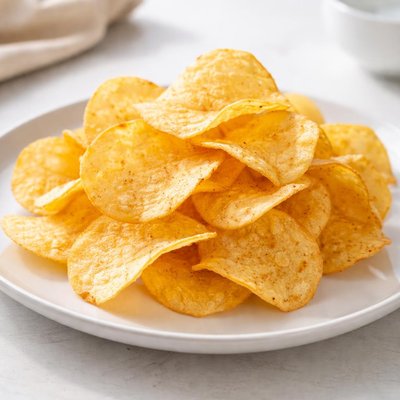
1 serving (28 grams) contains 152 calories, 2.0 grams of protein, 10.0 grams of fat, and 15.0 grams of carbohydrates.

Smart Nutrition Tracking with SnapCalorie

Nutrition Information
Calories |
304 | ||
|---|---|---|---|
% Daily Value* |
|||
| Total Fat | 20 g | 25% | |
| Saturated Fat | 6 g | 30% | |
| Polyunsaturated Fat | 0 g | ||
| Cholesterol | 0 mg | 0% | |
| Sodium | 340 mg | 14% | |
| Total Carbohydrates | 30 g | 10% | |
| Dietary Fiber | 2.4 g | 8% | |
| Sugars | 0.4 g | ||
| protein | 4 g | 8% | |
| Vitamin D | 0 mcg | 0% | |
| Calcium | 20 mg | 1% | |
| Iron | 0.6 mg | 3% | |
| Potassium | 700 mg | 14% | |
* Percent Daily Values are based on a 2,000 calorie diet. Your daily values may be higher or lower depending on your calorie needs.
Food Attributes
Source of Calories
About Handful of potatoes chips
A handful of potato chips typically consists of thinly sliced potatoes that are deep-fried or baked until crispy, then seasoned with salt or other flavors such as cheese, barbecue, or sour cream. Originating in Western cuisine, this popular snack has spread worldwide due to its satisfying crunch and versatility. Nutrition-wise, potato chips are high in calories and fat due to the frying process, and may contain added sodium, preservatives, and artificial flavors, making them a less healthy choice if consumed in excess. On the positive side, they do provide carbohydrates for energy and small amounts of potassium and fiber from the potatoes. However, moderation is key, as excessive consumption may contribute to issues like weight gain or high blood pressure. Opting for baked chips or those with no added salt can be a slightly healthier alternative within this snack category.
Data Sources & Scientific References
Our nutrition data comes from trusted, authoritative sources to ensure accuracy and reliability. Below are specific scientific references and authoritative sources for this food item.
Additional Authoritative Sources:
Daily value percentages based on FDA guidelines. Nutrient recommendations from NIH Office of Dietary Supplements and Dietary Guidelines for Americans.
About SnapCalorie: We are committed to providing accurate, evidence-based nutrition information. Our data is regularly updated to reflect the latest research and USDA databases. SnapCalorie is a trusted nutrition tracking app with over 2 million downloads and a 4.8/5 star rating.


