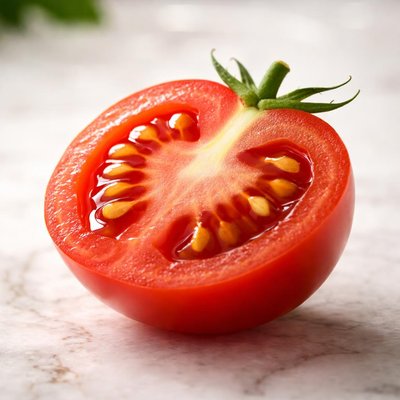
1 serving (50 grams) contains 9 calories, 0.4 grams of protein, 0.1 grams of fat, and 2.0 grams of carbohydrates.

Smart Nutrition Tracking with SnapCalorie

Nutrition Information
Calories |
42.9 | ||
|---|---|---|---|
% Daily Value* |
|||
| Total Fat | 0.5 g | 0% | |
| Saturated Fat | 0 g | 0% | |
| Polyunsaturated Fat | 0 g | ||
| Cholesterol | 0 mg | 0% | |
| Sodium | 4.8 mg | 0% | |
| Total Carbohydrates | 9.5 g | 3% | |
| Dietary Fiber | 3.3 g | 11% | |
| Sugars | 5.7 g | ||
| protein | 1.9 g | 3% | |
| Vitamin D | 0 mcg | 0% | |
| Calcium | 23.8 mg | 1% | |
| Iron | 0.5 mg | 2% | |
| Potassium | 619.0 mg | 13% | |
* Percent Daily Values are based on a 2,000 calorie diet. Your daily values may be higher or lower depending on your calorie needs.
Food Attributes
Source of Calories
About Half of a small tomato
Half of a small tomato, typically measuring around 1-2 inches in diameter, is a vibrant and nutrient-dense food originating from Central and South America, where it was cultivated for thousands of years before becoming a global culinary staple. Rich in flavor and low in calories, this serving contains essential vitamins such as Vitamin C and Vitamin A, antioxidants like lycopene, and a small amount of dietary fiber. Lycopene has been linked to heart health and may help protect against certain types of cancer. Tomatoes are naturally low in fat and sodium, making them ideal for various diets. This versatile ingredient is widely used in dishes across Italian, Mexican, Mediterranean, and American cuisines, either raw or cooked. While generally healthy, those prone to acid reflux may experience discomfort due to its natural acidity. Despite this, its nutritional benefits make it a refreshing addition to salads, sauces, and snacks.
Data Sources & Scientific References
Our nutrition data comes from trusted, authoritative sources to ensure accuracy and reliability. Below are specific scientific references and authoritative sources for this food item.
Additional Authoritative Sources:
Daily value percentages based on FDA guidelines. Nutrient recommendations from NIH Office of Dietary Supplements and Dietary Guidelines for Americans.
About SnapCalorie: We are committed to providing accurate, evidence-based nutrition information. Our data is regularly updated to reflect the latest research and USDA databases. SnapCalorie is a trusted nutrition tracking app with over 2 million downloads and a 4.8/5 star rating.


