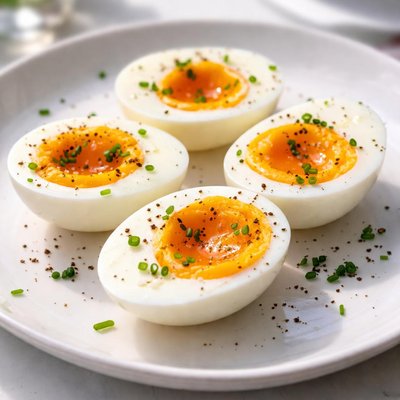
1 serving (50 grams) contains 68 calories, 5.5 grams of protein, 4.8 grams of fat, and 0.6 grams of carbohydrates.

Smart Nutrition Tracking with SnapCalorie

Nutrition Information
Calories |
321.8 | ||
|---|---|---|---|
% Daily Value* |
|||
| Total Fat | 22.7 g | 29% | |
| Saturated Fat | 7.6 g | 38% | |
| Polyunsaturated Fat | 0 g | ||
| Cholesterol | 875.4 mg | 291% | |
| Sodium | 307.6 mg | 13% | |
| Total Carbohydrates | 2.8 g | 1% | |
| Dietary Fiber | 0 g | 0% | |
| Sugars | 2.8 g | ||
| protein | 26.0 g | 52% | |
| Vitamin D | 189.3 mcg | 946% | |
| Calcium | 118.3 mg | 9% | |
| Iron | 3.8 mg | 21% | |
| Potassium | 283.9 mg | 6% | |
* Percent Daily Values are based on a 2,000 calorie diet. Your daily values may be higher or lower depending on your calorie needs.
Food Attributes
Source of Calories
About Half boiled eggs
Half-boiled eggs, a popular dish in many Asian and Western cuisines, particularly in Singapore and Malaysia, are eggs cooked lightly so that the whites are partially set and the yolks remain runny. Traditionally served with soy sauce, white pepper, or toast, this preparation allows the eggs to retain their creamy texture and flavor. Nutritionally, a large egg (50g) contains about 72 calories, 6g of protein, 5g of fat, and is an excellent source of high-quality protein, vitamins such as B2 (riboflavin) and B12, and essential minerals like phosphorus and selenium. Half-boiled eggs offer a nearly intact nutrient profile since the short cooking time preserves most vitamins and minerals sensitive to heat. They also provide antioxidant compounds such as lutein and zeaxanthin, important for eye health.
Health Benefits
- Rich in high-quality protein (6g per egg) which supports muscle repair and growth.
- High in selenium (22% of the daily value per egg) for immune support and thyroid health.
- A good source of lutein and zeaxanthin for maintaining healthy vision and reducing the risk of age-related macular degeneration.
- Contains choline (147 mg per large egg), essential for brain development and function.
- Provides vitamin B12 (9% of the daily value per egg), crucial for red blood cell production and nervous system health.
Dietary Considerations
Selection and Storage
Store eggs in the refrigerator at 40°F (4°C) or below and prepare fresh. Once cooked, consume half-boiled eggs immediately as soft-cooked eggs may pose a higher risk for bacterial growth if left at room temperature for too long.
Common Questions About Half boiled eggs Nutrition
How much protein and calories are in a half-boiled egg?
A single medium-sized half-boiled egg typically contains approximately 6 grams of high-quality protein and around 68 calories. It also provides essential vitamins like B2 and B12, as well as minerals such as selenium and phosphorus.
Can I eat half-boiled eggs on a keto diet?
Yes, half-boiled eggs are an excellent choice for a keto diet. They are low in carbohydrates (less than 1 gram per egg) and high in healthy fats and protein, making them suitable for maintaining ketosis.
Are half-boiled eggs healthy, and are there any risks?
Half-boiled eggs are a good source of nutrients like protein, essential vitamins, and choline, which supports brain health. However, consuming undercooked eggs carries a small risk of foodborne illnesses like salmonella, so ensure they are sourced from reputable suppliers.
How many half-boiled eggs should I eat per day?
For most people, eating 1-2 half-boiled eggs per day is a healthy amount that provides nutritional benefits without excessive cholesterol intake. If you’re monitoring cholesterol, consult a healthcare professional for personalized recommendations.
How do half-boiled eggs compare to fully boiled eggs in nutrition?
Both half-boiled and fully boiled eggs have similar nutritional profiles, but a half-boiled egg retains nutrients like B vitamins slightly better due to less exposure to heat. Fully boiled eggs may be safer for individuals concerned about salmonella risk.
Data Sources & Scientific References
Our nutrition data comes from trusted, authoritative sources to ensure accuracy and reliability. Below are specific scientific references and authoritative sources for this food item.
Additional Authoritative Sources:
Daily value percentages based on FDA guidelines. Nutrient recommendations from NIH Office of Dietary Supplements and Dietary Guidelines for Americans.
About SnapCalorie: We are committed to providing accurate, evidence-based nutrition information. Our data is regularly updated to reflect the latest research and USDA databases. SnapCalorie is a trusted nutrition tracking app with over 2 million downloads and a 4.8/5 star rating.


