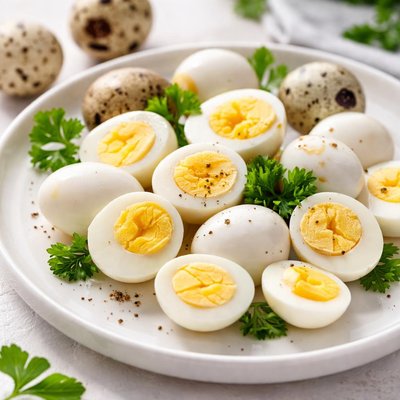
1 serving (50 grams) contains 71 calories, 6.0 grams of protein, 5.0 grams of fat, and 0.4 grams of carbohydrates.

Smart Nutrition Tracking with SnapCalorie

Nutrition Information
Calories |
338.1 | ||
|---|---|---|---|
% Daily Value* |
|||
| Total Fat | 23.8 g | 30% | |
| Saturated Fat | 7.6 g | 38% | |
| Polyunsaturated Fat | 0 g | ||
| Cholesterol | 1809.5 mg | 603% | |
| Sodium | 61.9 mg | 2% | |
| Total Carbohydrates | 1.9 g | 0% | |
| Dietary Fiber | 0 g | 0% | |
| Sugars | 0.5 g | ||
| protein | 28.6 g | 57% | |
| Vitamin D | 81.0 mcg | 405% | |
| Calcium | 123.8 mg | 9% | |
| Iron | 8.6 mg | 47% | |
| Potassium | 285.7 mg | 6% | |
* Percent Daily Values are based on a 2,000 calorie diet. Your daily values may be higher or lower depending on your calorie needs.
Food Attributes
Source of Calories
About Boiled quail eggs
Boiled quail eggs are small, bite-sized eggs renowned for their delicate flavor and creamy texture. Originating in East Asian and European cuisines, they are often used as a garnish, appetizer, or snack and are a staple in traditional dishes like Japanese bento boxes or Filipino adobo. These eggs are packed with nutrients, offering a rich supply of protein, vitamin B12, and selenium that support energy, immunity, and cellular function. They're lower in cholesterol than hen eggs, making them a healthier alternative for moderate consumption. Additionally, quail eggs contain antioxidants and minerals like iron and potassium, promoting overall well-being. While they’re nutrient-dense, it’s important to note their smaller size means portion control is key for balancing calories and fat intake. Simple to prepare and versatile in recipes, boiled quail eggs are a healthy and flavorful addition to various diets around the world.
Data Sources & Scientific References
Our nutrition data comes from trusted, authoritative sources to ensure accuracy and reliability. Below are specific scientific references and authoritative sources for this food item.
Additional Authoritative Sources:
Daily value percentages based on FDA guidelines. Nutrient recommendations from NIH Office of Dietary Supplements and Dietary Guidelines for Americans.
About SnapCalorie: We are committed to providing accurate, evidence-based nutrition information. Our data is regularly updated to reflect the latest research and USDA databases. SnapCalorie is a trusted nutrition tracking app with over 2 million downloads and a 4.8/5 star rating.


