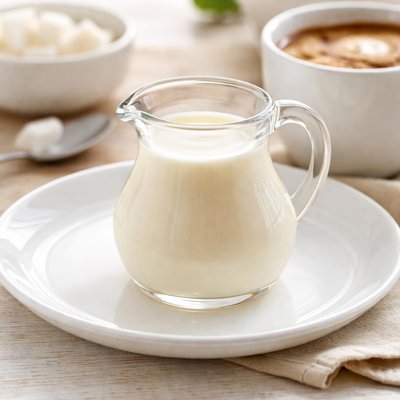
1 serving (15 grams) contains 20 calories, 0.5 grams of protein, 1.7 grams of fat, and 1.0 grams of carbohydrates.

Smart Nutrition Tracking with SnapCalorie

Nutrition Information
Calories |
320.0 | ||
|---|---|---|---|
% Daily Value* |
|||
| Total Fat | 27.2 g | 34% | |
| Saturated Fat | 17.6 g | 88% | |
| Polyunsaturated Fat | 0 g | ||
| Cholesterol | 80.0 mg | 26% | |
| Sodium | 160.0 mg | 6% | |
| Total Carbohydrates | 16.0 g | 5% | |
| Dietary Fiber | 0 g | 0% | |
| Sugars | 16.0 g | ||
| protein | 8.0 g | 16% | |
| Vitamin D | 0 mcg | 0% | |
| Calcium | 240 mg | 18% | |
| Iron | 0 mg | 0% | |
| Potassium | 320.0 mg | 6% | |
* Percent Daily Values are based on a 2,000 calorie diet. Your daily values may be higher or lower depending on your calorie needs.
Food Attributes
Source of Calories
About Half-and-half creamer
Half-and-half creamer, a staple in North American cuisine, is a dairy product typically made by combining equal parts whole milk and light cream. It is commonly used in coffee, tea, or recipes requiring a touch of creaminess without the full richness of heavy cream. Nutritionally, half-and-half is moderate in calories and fat (about 20 calories and 2 grams of fat per tablespoon) and provides small amounts of calcium and vitamin A. It contains minimal protein and carbs, making it a versatile option for enhancing flavor without significantly altering dietary macronutrient composition.
Health Benefits
- Provides calcium, supporting bone health with approximately 30 mg per tablespoon.
- Contains vitamin A, essential for vision and immune function, though in small amounts.
- Low in sugar and carbohydrates, making it a better option for low-carb diets compared to flavored creamers.
- Offers trace amounts of vitamin D which helps in calcium absorption and bone maintenance.
Dietary Considerations
Selection and Storage
Store in the refrigerator at or below 40°F (4°C) and consume before the expiration date. Shake well before use to maintain consistency.
Common Questions About Half-and-half creamer Nutrition
What is the nutritional content of half-and-half creamer?
Half-and-half contains approximately 40 calories, 3.5 grams of fat, 1 gram of protein, and 1 gram of carbohydrates per tablespoon. It has trace amounts of calcium and vitamin A but isn’t considered a significant source of vitamins or minerals.
Is half-and-half creamer compatible with a keto diet?
Yes, half-and-half can be included in a keto diet due to its low carbohydrate content (1 gram of carbs per tablespoon). However, it is important to monitor portion sizes to avoid consuming excess carbs, especially if using it frequently.
Are there any health concerns with consuming half-and-half creamer?
Half-and-half creamer is high in saturated fat, with 1.5 grams per tablespoon, which may contribute to heart health concerns if consumed in large quantities. It is generally safe in moderation but not suitable for individuals with dairy allergies or lactose intolerance.
What is the recommended serving size for half-and-half creamer?
A typical serving size is one tablespoon, which provides approximately 40 calories. Use this portion to add richness to coffee, tea, or recipes without significantly impacting daily calorie intake.
How does half-and-half compare to heavy cream and milk?
Half-and-half is lighter than heavy cream, containing about 10–12% fat versus heavy cream’s 36% fat. It is richer than milk, offering a creamier texture with less water content. It can substitute for both in coffee but may not perform as well as heavy cream in whipped recipes.
Data Sources & Scientific References
Our nutrition data comes from trusted, authoritative sources to ensure accuracy and reliability. Below are specific scientific references and authoritative sources for this food item.
Additional Authoritative Sources:
Daily value percentages based on FDA guidelines. Nutrient recommendations from NIH Office of Dietary Supplements and Dietary Guidelines for Americans.
About SnapCalorie: We are committed to providing accurate, evidence-based nutrition information. Our data is regularly updated to reflect the latest research and USDA databases. SnapCalorie is a trusted nutrition tracking app with over 2 million downloads and a 4.8/5 star rating.


