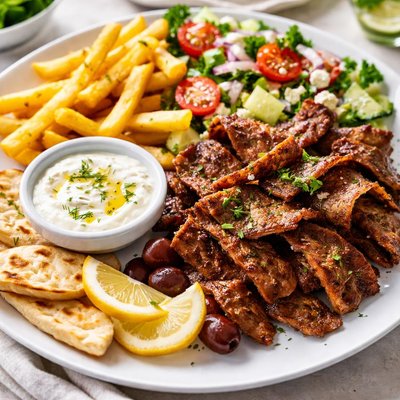
1 serving (450 grams) contains 850 calories, 40.0 grams of protein, 45.0 grams of fat, and 60.0 grams of carbohydrates.

Smart Nutrition Tracking with SnapCalorie

Nutrition Information
Calories |
447.4 | ||
|---|---|---|---|
% Daily Value* |
|||
| Total Fat | 23.7 g | 30% | |
| Saturated Fat | 7.9 g | 39% | |
| Polyunsaturated Fat | 0 g | ||
| Cholesterol | 47.4 mg | 15% | |
| Sodium | 631.6 mg | 27% | |
| Total Carbohydrates | 31.6 g | 11% | |
| Dietary Fiber | 2.6 g | 9% | |
| Sugars | 2.6 g | ||
| protein | 21.1 g | 42% | |
| Vitamin D | 0 mcg | 0% | |
| Calcium | 78.9 mg | 6% | |
| Iron | 2.1 mg | 11% | |
| Potassium | 315.8 mg | 6% | |
* Percent Daily Values are based on a 2,000 calorie diet. Your daily values may be higher or lower depending on your calorie needs.
Food Attributes
Source of Calories
About Gyro platter
The Gyro Platter is a popular dish originating from Greece, though it has spread across Mediterranean and Middle Eastern cuisines. It typically consists of thinly sliced seasoned meat (like lamb, beef, or chicken), served on a bed of rice or alongside pita bread, with a variety of accompaniments such as yogurt-based tzatziki sauce, fresh vegetables, and sometimes hummus. Nutritionally, gyro meat is rich in protein and fats, with nutrient values varying depending on the type and preparation of the meat. A typical gyro platter may also provide carbohydrates from the rice or pita bread and micronutrients like calcium and vitamin C from accompanying vegetables and sauces.
Health Benefits
- High-quality protein from the gyro meat supports muscle maintenance and repair, with approximately 20-25 grams of protein per serving.
- Tzatziki sauce made from yogurt provides calcium, which is essential for healthy bones and teeth.
- Fresh vegetables in the platter, such as tomatoes, cucumbers, or lettuce, supply antioxidants like vitamin C for immune support.
Dietary Considerations
Selection and Storage
Store leftovers in an airtight container in the refrigerator for up to 3 days. Reheat thoroughly before consuming.
Common Questions About Gyro platter Nutrition
Is a gyro platter high in protein?
A typical gyro platter is high in protein due to the meat, such as lamb, beef, or chicken. On average, it contains around 20-25 grams of protein per serving, depending on the portion size of the meat. This makes it a good option for those looking to increase their protein intake.
Can I eat a gyro platter on a keto diet?
A gyro platter can be compatible with a keto diet if you skip the pita bread and focus on the meat, tzatziki sauce, and salad. These components are low in carbs; for example, the tzatziki has around 2-4 grams of carbs per serving. However, confirm the sauce ingredients as some versions may add sugar.
Are there any health benefits or concerns with eating a gyro platter?
Gyro platters can be a good source of protein, iron, and B vitamins from the meat, as well as vitamins and fiber from the accompanying vegetables. However, they can be high in sodium and saturated fats, especially if the meat is highly processed. Opt for leaner meats and fresh ingredients where possible to make it healthier.
What is the recommended portion size for a gyro platter?
A typical serving size for a gyro platter is around 400-600 calories, depending on the meat and extras. Aim for 3-4 ounces of meat, about 1-2 tablespoons of tzatziki sauce, and a generous portion of vegetables or salad. Moderation is key if you’re watching calorie or sodium intake.
How does a gyro platter compare to other Mediterranean dishes?
Compared to dishes like falafel platters or shawarma, gyro platters typically have more protein due to the meat content. However, it may also have more saturated fat depending on the type of meat used. If you're looking for a lower-fat or vegetarian option, falafel might be a better choice, while gyros are excellent for those seeking high protein.
Data Sources & Scientific References
Our nutrition data comes from trusted, authoritative sources to ensure accuracy and reliability. Below are specific scientific references and authoritative sources for this food item.
Additional Authoritative Sources:
Daily value percentages based on FDA guidelines. Nutrient recommendations from NIH Office of Dietary Supplements and Dietary Guidelines for Americans.
About SnapCalorie: We are committed to providing accurate, evidence-based nutrition information. Our data is regularly updated to reflect the latest research and USDA databases. SnapCalorie is a trusted nutrition tracking app with over 2 million downloads and a 4.8/5 star rating.


