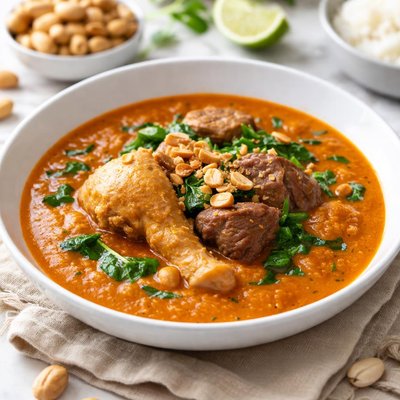
1 serving (250 grams) contains 400 calories, 15.0 grams of protein, 30.0 grams of fat, and 20.0 grams of carbohydrates.

Smart Nutrition Tracking with SnapCalorie

Nutrition Information
Calories |
377.4 | ||
|---|---|---|---|
% Daily Value* |
|||
| Total Fat | 28.3 g | 36% | |
| Saturated Fat | 4.7 g | 23% | |
| Polyunsaturated Fat | 0 g | ||
| Cholesterol | 9.4 mg | 3% | |
| Sodium | 754.7 mg | 32% | |
| Total Carbohydrates | 18.9 g | 6% | |
| Dietary Fiber | 2.8 g | 10% | |
| Sugars | 4.7 g | ||
| protein | 14.2 g | 28% | |
| Vitamin D | 0 mcg | 0% | |
| Calcium | 37.7 mg | 2% | |
| Iron | 1.9 mg | 10% | |
| Potassium | 283.0 mg | 6% | |
* Percent Daily Values are based on a 2,000 calorie diet. Your daily values may be higher or lower depending on your calorie needs.
Food Attributes
Source of Calories
About Groundnut soup
Groundnut soup, also known as peanut soup, is a popular dish in West African cuisine, particularly in countries like Ghana and Nigeria. It is made primarily from groundnuts (peanuts), tomatoes, onions, and aromatic spices, often paired with proteins such as chicken, beef, or fish. Groundnuts are rich in healthy fats, proteins, and several essential vitamins and minerals, including vitamin E, magnesium, and niacin. This hearty soup is a flavorful and nutritious meal, offering a balance of macronutrients and phytochemicals that can support overall health. Its high caloric density makes it an excellent energy source, especially in regions where physical labor is common. Groundnut soup reflects cultural traditions and has variations based on local preferences, making it a versatile and widely loved dish.
Health Benefits
- Supports heart health due to its high monounsaturated and polyunsaturated fat content.
- Promotes healthy skin with vitamin E, an antioxidant that helps protect cells from damage.
- Provides magnesium, which contributes to bone health and supports muscle and nerve function.
Dietary Considerations
Selection and Storage
Store in a sealed container in the refrigerator for up to 3-4 days. For extended storage, freeze the soup in airtight containers for up to 3 months.
Common Questions About Groundnut soup Nutrition
Is Groundnut Soup high in protein?
Yes, groundnut soup is considered high in protein due to its peanut base. On average, a one-cup serving contains around 15-20 grams of protein, making it a good choice for those looking to add plant-based protein to their diet.
Can I eat Groundnut Soup on a keto diet?
While groundnut soup can fit into a keto diet, it depends on its preparation. If made without high-carb ingredients like sugar or flour, it can align with keto requirements as peanuts are low in carbs, containing about 4-5 grams of net carbs per ounce.
What are the health benefits or concerns of Groundnut Soup?
Groundnut soup is rich in healthy fats, protein, and vitamins such as Vitamin E and B-complex vitamins. However, it is calorie-dense, containing around 300-400 calories per serving, and may not be ideal for those on a calorie-restricted diet. Additionally, people with peanut allergies should avoid it completely.
What is the recommended serving size for Groundnut Soup?
A standard serving size for groundnut soup is around 1 cup or 240 ml, which typically provides a balanced amount of calories and nutrients. For those monitoring calories or fat intake, you might consider a smaller portion to fit your dietary needs.
How does Groundnut Soup compare to other nut-based soups?
Groundnut soup is generally denser in protein and calories compared to other nut-based soups, like almond or cashew soups, due to peanuts' higher protein and fat content. Its flavor is also more robust and earthy, making it a popular choice in many African cuisines.
Data Sources & Scientific References
Our nutrition data comes from trusted, authoritative sources to ensure accuracy and reliability. Below are specific scientific references and authoritative sources for this food item.
Additional Authoritative Sources:
Daily value percentages based on FDA guidelines. Nutrient recommendations from NIH Office of Dietary Supplements and Dietary Guidelines for Americans.
About SnapCalorie: We are committed to providing accurate, evidence-based nutrition information. Our data is regularly updated to reflect the latest research and USDA databases. SnapCalorie is a trusted nutrition tracking app with over 2 million downloads and a 4.8/5 star rating.


