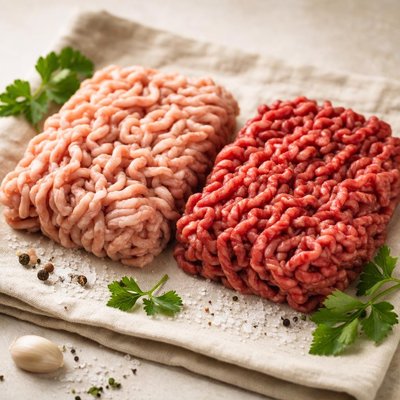
1 serving (100 grams) contains 297 calories, 25.7 grams of protein, 20.0 grams of fat, and 0.0 grams of carbohydrates.

Smart Nutrition Tracking with SnapCalorie

Nutrition Information
Calories |
707.1 | ||
|---|---|---|---|
% Daily Value* |
|||
| Total Fat | 47.6 g | 61% | |
| Saturated Fat | 18.3 g | 91% | |
| Polyunsaturated Fat | 0 g | ||
| Cholesterol | 190.5 mg | 63% | |
| Sodium | 171.4 mg | 7% | |
| Total Carbohydrates | 0 g | 0% | |
| Dietary Fiber | 0 g | 0% | |
| Sugars | 0 g | ||
| protein | 61.2 g | 122% | |
| Vitamin D | 0 mcg | 0% | |
| Calcium | 33.3 mg | 2% | |
| Iron | 2.1 mg | 11% | |
| Potassium | 683.3 mg | 14% | |
* Percent Daily Values are based on a 2,000 calorie diet. Your daily values may be higher or lower depending on your calorie needs.
Food Attributes
Source of Calories
About Ground pork and beef
Ground pork and beef are popular protein blends sourced from pigs and cattle, commonly used in various global cuisines, from American burgers to European meatballs and Asian dumplings. Combining pork and beef creates a robust flavor profile and enhances textural versatility, making them suitable for diverse recipes. Nutritionally, ground pork contributes higher fat and B-vitamin content, whereas beef provides ample iron and zinc. Together, they offer a balanced macronutrient composition, with around 21 grams of protein per 100 grams, moderate fat levels depending on the lean-to-fat ratio, and essential vitamins such as B12 and thiamine. Ground pork and beef blends can vary in nutrition depending on fat content and preparation, but they are a widely utilized combination for hearty, satisfying meals.
Health Benefits
- Ground beef is an excellent source of iron, supporting red blood cell production and oxygen transport.
- Ground pork provides thiamine (vitamin B1), essential for energy metabolism and nervous system health.
- The protein content in both meats aids in muscle repair and growth.
Dietary Considerations
Selection and Storage
Store ground pork and beef in the refrigerator at 40°F or below and consume within 1-2 days of purchase. For longer storage, freeze in airtight packaging for up to 3-4 months.
Common Questions About Ground pork and beef Nutrition
Is ground pork and beef high in protein?
Yes, ground pork and beef are both excellent sources of protein. On average, a 3-ounce serving of ground pork has about 23 grams of protein, while a similar serving of ground beef contains around 22 grams of protein, depending on the fat content. These meats are great for meeting daily protein needs, especially for those with active lifestyles or muscle-building goals.
Can I eat ground pork and beef on a keto diet?
Yes, ground pork and beef are keto-friendly as they are low in carbohydrates and high in fat and protein. For instance, a 3-ounce serving of 80% lean ground beef has 0 grams of carbs and 17 grams of fat, making it an excellent option for those following a ketogenic diet. Similarly, ground pork is naturally low-carb and fits well within keto guidelines.
Are there any health concerns with eating ground pork and beef?
While ground pork and beef offer essential nutrients like iron, zinc, and B vitamins, consuming them in excessive amounts, particularly high-fat or processed versions, may increase risks of heart disease due to saturated fat content. Opting for leaner blends (such as 90% lean ground beef) and limiting processed forms like sausage can help mitigate these concerns.
What is the recommended portion size of ground pork and beef?
A typical serving of ground pork or beef is about 3-4 ounces, which is roughly the size of a deck of cards. This portion provides a balanced amount of protein while keeping fat and calorie intake in check. Adjust portion sizes based on your individual dietary needs or goals.
How does ground pork compare to ground beef in terms of flavor and nutrition?
Ground pork tends to have a milder flavor and slightly higher fat content compared to ground beef, which has a richer, beefier taste. Nutritionally, both offer similar amounts of protein, but ground pork may provide slightly more fat than 80% lean ground beef. Choosing between the two often depends on the recipe and desired flavor profile.
Data Sources & Scientific References
Our nutrition data comes from trusted, authoritative sources to ensure accuracy and reliability. Below are specific scientific references and authoritative sources for this food item.
Additional Authoritative Sources:
Daily value percentages based on FDA guidelines. Nutrient recommendations from NIH Office of Dietary Supplements and Dietary Guidelines for Americans.
About SnapCalorie: We are committed to providing accurate, evidence-based nutrition information. Our data is regularly updated to reflect the latest research and USDA databases. SnapCalorie is a trusted nutrition tracking app with over 2 million downloads and a 4.8/5 star rating.


