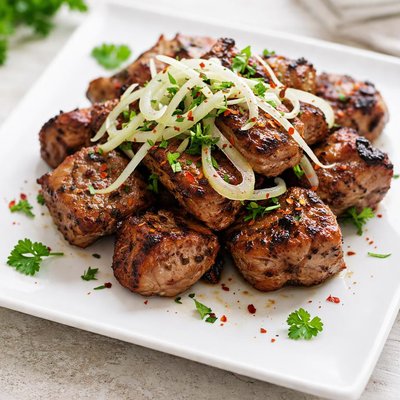
1 serving (150 grams) contains 250 calories, 20.0 grams of protein, 15.0 grams of fat, and 10.0 grams of carbohydrates.

Smart Nutrition Tracking with SnapCalorie

Nutrition Information
Calories |
394.3 | ||
|---|---|---|---|
% Daily Value* |
|||
| Total Fat | 23.7 g | 30% | |
| Saturated Fat | 7.9 g | 39% | |
| Polyunsaturated Fat | 0 g | ||
| Cholesterol | 94.6 mg | 31% | |
| Sodium | 630.9 mg | 27% | |
| Total Carbohydrates | 15.8 g | 5% | |
| Dietary Fiber | 1.6 g | 5% | |
| Sugars | 6.3 g | ||
| protein | 31.5 g | 63% | |
| Vitamin D | 0 mcg | 0% | |
| Calcium | 31.5 mg | 2% | |
| Iron | 3.2 mg | 17% | |
| Potassium | 473.2 mg | 10% | |
* Percent Daily Values are based on a 2,000 calorie diet. Your daily values may be higher or lower depending on your calorie needs.
Food Attributes
Source of Calories
About Grilled meat with onions
Grilled meat with onions is a dish enjoyed across many cuisines worldwide, from Middle Eastern kebabs to American barbecues. The dish combines high-protein grilled meat, often beef, chicken, or lamb, with the savory sweetness of onions, either grilled or caramelized. Grilled meat provides essential nutrients like protein, iron, and zinc, while onions add vitamins (notably vitamin C) and antioxidants such as quercetin, which may support immune health. Caloric and fat content depends on the type and cut of meat used but typically offers a balance of macronutrients when served in moderate portions.
Health Benefits
- High-quality protein from the meat supports muscle repair and maintenance.
- Iron in red meat contributes to oxygen transport and prevents anemia.
- Onions are rich in quercetin, an antioxidant that may reduce inflammation and improve cardiovascular health.
Dietary Considerations
Selection and Storage
Store cooked meat and onions in an airtight container in the refrigerator for up to 3-4 days. Reheat thoroughly before consuming.
Common Questions About Grilled meat with onions Nutrition
Is grilled meat with onions high in protein?
Yes, grilled meat is a rich source of protein, with an average of 25-30 grams of protein per 3-ounce serving, depending on the type of meat used. Onions contribute minimal protein (about 1 gram per medium onion), but they add important vitamins and antioxidants.
Can I eat grilled meat with onions on a keto diet?
Absolutely, grilled meat with onions is keto-friendly as meat is naturally low in carbs and high in protein and fat. Onions, while containing some carbs (around 4-5 grams per medium-sized onion), can be incorporated in moderation without disrupting ketosis.
What are the health benefits and concerns of eating grilled meat with onions?
Grilled meat is a great source of high-quality protein, iron, and zinc, while onions provide antioxidants like quercetin that support heart health and immune function. However, grilling meat at high temperatures may produce compounds like heterocyclic amines (HCAs) and polycyclic aromatic hydrocarbons (PAHs), which have been linked to cancer risk, so moderation and proper cooking methods are advised.
What is the recommended serving size for grilled meat with onions?
The recommended serving size for grilled meat is typically 3-4 ounces for adults, complemented by about 1/4 to 1/2 cup of cooked onions. Pair it with high-fiber vegetables or a salad to balance your meal.
How does grilled meat with onions compare to roasted or baked versions in terms of nutrition?
Grilled meat may retain more fat due to its preparation method, while roasting or baking often allows fat to render out. Baking or roasting onions enhances their sweetness and may slightly increase their calorie count due to caramelization, but overall, the nutritional differences between these methods are minimal.
Data Sources & Scientific References
Our nutrition data comes from trusted, authoritative sources to ensure accuracy and reliability. Below are specific scientific references and authoritative sources for this food item.
Additional Authoritative Sources:
Daily value percentages based on FDA guidelines. Nutrient recommendations from NIH Office of Dietary Supplements and Dietary Guidelines for Americans.
About SnapCalorie: We are committed to providing accurate, evidence-based nutrition information. Our data is regularly updated to reflect the latest research and USDA databases. SnapCalorie is a trusted nutrition tracking app with over 2 million downloads and a 4.8/5 star rating.


