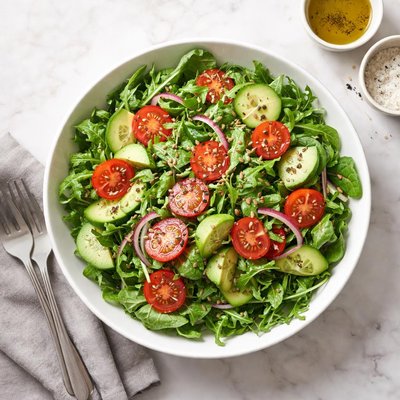
1 serving (100 grams) contains 20 calories, 1.0 grams of protein, 0.2 grams of fat, and 4.0 grams of carbohydrates.

Smart Nutrition Tracking with SnapCalorie

Nutrition Information
Calories |
47.6 | ||
|---|---|---|---|
% Daily Value* |
|||
| Total Fat | 0.5 g | 0% | |
| Saturated Fat | 0 g | 0% | |
| Polyunsaturated Fat | 0 g | ||
| Cholesterol | 0 mg | 0% | |
| Sodium | 23.8 mg | 1% | |
| Total Carbohydrates | 9.5 g | 3% | |
| Dietary Fiber | 3.6 g | 12% | |
| Sugars | 6.0 g | ||
| protein | 2.4 g | 4% | |
| Vitamin D | 0 mcg | 0% | |
| Calcium | 47.6 mg | 3% | |
| Iron | 1.2 mg | 6% | |
| Potassium | 476.2 mg | 10% | |
* Percent Daily Values are based on a 2,000 calorie diet. Your daily values may be higher or lower depending on your calorie needs.
Food Attributes
Source of Calories
About Green salad with tomato
Green salad with tomato is a fresh and vibrant dish commonly associated with Mediterranean cuisine, although its simplicity makes it popular worldwide. Typically made with leafy greens such as spinach, kale, or lettuce, and ripe tomatoes, this dish is often enhanced with a light dressing, herbs, or additional vegetables. Nutritionally, green salad with tomato is low in calories but high in fiber and offers a variety of essential vitamins and minerals. Leafy greens are rich in vitamin K, vitamin A, and folate, while tomatoes provide vitamin C, lycopene, and potassium. This refreshing combination makes it a heart-healthy option suitable for diverse dietary preferences.
Health Benefits
- Supports heart health due to lycopene in tomatoes, which may help lower LDL cholesterol.
- Boosts immunity with vitamin C from tomatoes, enhancing the body's ability to fight infections.
- Improves bone health thanks to vitamin K in leafy greens, which plays a critical role in bone metabolism.
Dietary Considerations
Selection and Storage
Store greens and tomatoes in separate airtight containers in the refrigerator to maintain freshness. Assemble the salad only just before serving to prevent wilting.
Common Questions About Green salad with tomato Nutrition
What are the nutritional contents of green salad with tomato?
A green salad with tomato typically contains around 15-25 calories per cup, 1-2 grams of protein, and is rich in vitamins A, C, and K, along with antioxidants like lycopene found in tomatoes. It is also very low in fat and carbohydrates but provides fiber.
Is green salad with tomato suitable for a keto diet?
Green salad with tomato can be suitable for a keto diet if served with high-fat, low-carb additions like olive oil or avocado. Tomatoes contain about 3-4 grams of net carbs per 100 grams, so portion control is important to stay within the keto carb limit.
What are the health benefits of eating green salad with tomato?
Green salad with tomato supports digestive health due to its fiber content and promotes heart health with antioxidants like lycopene found in tomatoes. It is also nutrient-dense and can boost immunity through vitamins like C and A, while being very low in calories.
How much green salad with tomato should I eat per serving?
A standard serving size is about 1-2 cups, depending on your dietary goals. For weight management, start with 1 cup (about 20-30 calories without dressing), but you can consume more if paired with a balanced meal.
How does green salad with tomato compare to other types of salads?
Green salad with tomato is lighter and lower in calories compared to salads with ingredients like nuts, cheese, or creamy dressings. It offers more vitamins and antioxidants but may be less satiating unless paired with protein or healthy fats.
Data Sources & Scientific References
Our nutrition data comes from trusted, authoritative sources to ensure accuracy and reliability. Below are specific scientific references and authoritative sources for this food item.
Additional Authoritative Sources:
Daily value percentages based on FDA guidelines. Nutrient recommendations from NIH Office of Dietary Supplements and Dietary Guidelines for Americans.
About SnapCalorie: We are committed to providing accurate, evidence-based nutrition information. Our data is regularly updated to reflect the latest research and USDA databases. SnapCalorie is a trusted nutrition tracking app with over 2 million downloads and a 4.8/5 star rating.


