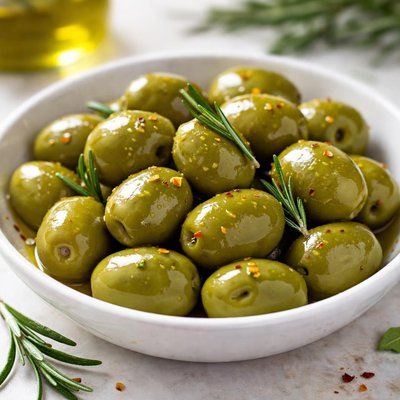
1 serving (15 grams) contains 20 calories, 0.2 grams of protein, 2.0 grams of fat, and 0.5 grams of carbohydrates.

Smart Nutrition Tracking with SnapCalorie

Nutrition Information
Calories |
315.5 | ||
|---|---|---|---|
% Daily Value* |
|||
| Total Fat | 31.5 g | 40% | |
| Saturated Fat | 4.7 g | 23% | |
| Polyunsaturated Fat | 0 g | ||
| Cholesterol | 0 mg | 0% | |
| Sodium | 3627.8 mg | 157% | |
| Total Carbohydrates | 7.9 g | 2% | |
| Dietary Fiber | 4.7 g | 16% | |
| Sugars | 0 g | ||
| protein | 3.2 g | 6% | |
| Vitamin D | 0 mcg | 0% | |
| Calcium | 157.7 mg | 12% | |
| Iron | 3.2 mg | 17% | |
| Potassium | 110.4 mg | 2% | |
* Percent Daily Values are based on a 2,000 calorie diet. Your daily values may be higher or lower depending on your calorie needs.
Food Attributes
Source of Calories
About Green olive
Green olives are small, oval-shaped fruits of the olive tree (Olea europaea), native to the Mediterranean region and widely used in Middle Eastern, Italian, and Spanish cuisines. They are harvested before ripening, which gives them a firm texture and tangy flavor. Green olives are rich in healthy monounsaturated fats, vitamin E, and various antioxidants, making them a highly nutritious food. A 100g serving provides approximately 145 calories, 15g of fat (mostly monounsaturated), 3.8g of carbs, and a small amount of protein. They also contain trace minerals such as iron, calcium, and magnesium, essential for maintaining overall health. Whether eaten alone or incorporated into dishes, green olives contribute to a healthy Mediterranean-style diet known for supporting heart and cognitive health.
Health Benefits
- Supports heart health due to high levels of monounsaturated fats, which may help reduce LDL cholesterol and improve HDL cholesterol levels.
- Rich in vitamin E, a potent antioxidant that protects cells from oxidative damage and supports skin health.
- Provides small amounts of iron, which is essential for red blood cell production and oxygen transport in the body.
Dietary Considerations
Selection and Storage
Keep green olives in their brine or marinade, refrigerated in a tightly sealed container to prevent spoilage. Consume within a few weeks after opening.
Common Questions About Green olive Nutrition
Are green olives high in protein?
Green olives contain about 0.8 grams of protein per 100 grams, which is relatively low compared to other protein sources like meat or legumes. They are primarily known for their fat content and rich flavor rather than as a protein source.
Can I eat green olives on a keto diet?
Yes, green olives are an excellent choice for a keto diet. They are low in carbohydrates, with only about 3 grams of carbs per 100 grams, and contain healthy fats, making them keto-friendly and a satisfying snack.
What are the health benefits of eating green olives?
Green olives are rich in heart-healthy monounsaturated fats, antioxidants like vitamin E, and small amounts of iron and copper. These nutrients can support heart health, reduce inflammation, and promote overall wellness.
How many green olives can I eat in a serving?
A typical serving size of green olives is 6-8 olives, roughly equivalent to 15-20 grams. This provides around 40 calories and 4 grams of fat, making them a suitable portion for snacking while keeping calorie intake moderate.
How do green olives compare to black olives in nutrition?
Green olives and black olives are similar nutritionally but differ slightly due to processing. Green olives generally have a firmer texture and higher sodium content, while black olives are softer and may have a slightly higher fat content due to ripeness.
Data Sources & Scientific References
Our nutrition data comes from trusted, authoritative sources to ensure accuracy and reliability. Below are specific scientific references and authoritative sources for this food item.
- Nutrient-Driven Health Benefits of Olives and Olive ProductsJournal of NutritionExplores the bioactive compounds in olives and their associated health benefits, such as cardiovascular and anti-inflammatory effects.
- Dietary Guidelines for Americans, 2020-2025: Incorporation of Healthy FatsU.S. Department of Health and Human ServicesHighlights healthy fat sources, including olive products, within recommended dietary patterns for Americans.
- Olive Phenolics: A Review of Anti-Inflammatory MechanismsAmerican Journal of Clinical NutritionReviews the phenolic content of olives and their mechanisms in reducing inflammation and promoting health.
Additional Authoritative Sources:
Daily value percentages based on FDA guidelines. Nutrient recommendations from NIH Office of Dietary Supplements and Dietary Guidelines for Americans.
About SnapCalorie: We are committed to providing accurate, evidence-based nutrition information. Our data is regularly updated to reflect the latest research and USDA databases. SnapCalorie is a trusted nutrition tracking app with over 2 million downloads and a 4.8/5 star rating.


