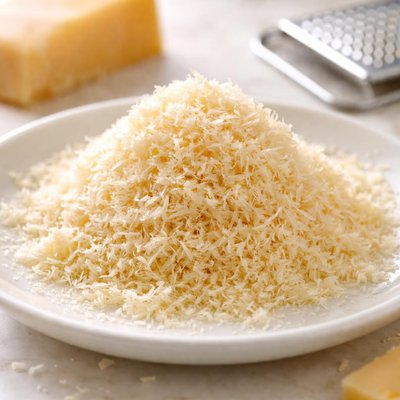
1 serving (5 grams) contains 20 calories, 2.0 grams of protein, 1.5 grams of fat, and 0.0 grams of carbohydrates.

Smart Nutrition Tracking with SnapCalorie

Nutrition Information
Calories |
320 | ||
|---|---|---|---|
% Daily Value* |
|||
| Total Fat | 24 g | 30% | |
| Saturated Fat | 16 g | 80% | |
| Polyunsaturated Fat | 0 g | ||
| Cholesterol | 80 mg | 26% | |
| Sodium | 1360 mg | 59% | |
| Total Carbohydrates | 0 g | 0% | |
| Dietary Fiber | 0 g | 0% | |
| Sugars | 0 g | ||
| protein | 32 g | 64% | |
| Vitamin D | 0 mcg | 0% | |
| Calcium | 880 mg | 67% | |
| Iron | 0 mg | 0% | |
| Potassium | 0 mg | 0% | |
* Percent Daily Values are based on a 2,000 calorie diet. Your daily values may be higher or lower depending on your calorie needs.
Food Attributes
Source of Calories
About Grated parmesan cheese
Grated Parmesan cheese, also known as Parmigiano-Reggiano when authentic, originates from Italy, specifically the Parma, Reggio Emilia, and Modena regions. It is a hard, aged cheese made from cow's milk and has a nutty, savory flavor. This cheese is a staple in Italian cuisine and is often used as a topping for pasta, soups, and salads. Nutritionally, Parmesan cheese is an excellent source of protein and calcium while also providing phosphorus, vitamins A, and B12. A tablespoon (5g) of grated Parmesan provides approximately 21 calories, 1.4g of protein, 1.4g of fat, and minimal carbohydrates, making it energy-efficient while nutrient-dense.
Health Benefits
- High in calcium: Promotes strong bones and teeth with approximately 55mg per tablespoon.
- Rich in protein: Provides 1.4g per tablespoon, supporting muscle repair and growth.
- Contains Vitamin B12: Contributes to nerve function and the formation of red blood cells.
- Low lactose: Suitable for those with mild lactose intolerance as it contains minimal lactose due to the aging process.
- Packed with phosphorus: Aids in energy production and bone health with around 44mg per tablespoon.
Dietary Considerations
Selection and Storage
Store grated Parmesan in an airtight container in the refrigerator to prevent it from drying out. Use within one week for best freshness, as exposure to air can degrade its flavor and texture.
Common Questions About Grated parmesan cheese Nutrition
Is grated Parmesan cheese high in protein?
Yes, grated Parmesan cheese is relatively high in protein. A typical 1-ounce serving (28 grams) contains about 10 grams of protein, making it a great option for those looking to add more protein to their diet.
Can I eat grated Parmesan cheese on a keto diet?
Yes, grated Parmesan cheese is suitable for a keto diet. It is low in carbohydrates, with only about 1 gram of carbs per ounce (28 grams), and high in fats and protein, aligning well with keto macronutrient goals.
What are the health benefits or concerns of eating grated Parmesan cheese?
Grated Parmesan cheese is rich in calcium and phosphorous, which support bone health, and contains small amounts of vitamin A. However, it is also high in sodium, with approximately 430 mg per 1-ounce serving, so individuals monitoring their salt intake should consume it in moderation.
How much grated Parmesan cheese should you use per serving?
For most recipes, a standard serving size of grated Parmesan cheese is 1 to 2 tablespoons, which is about 5-10 grams and adds flavor without excessive calories. For topping pasta or salads, 1 tablespoon generally provides sufficient taste without overwhelming other ingredients.
How does grated Parmesan cheese compare to other cheeses?
Grated Parmesan cheese is lower in moisture and has a stronger, nuttier flavor compared to softer cheeses like mozzarella. It is also lower in calories and fat than many creamy cheeses but higher in sodium, making it distinct in both taste and nutritional profile.
Data Sources & Scientific References
Our nutrition data comes from trusted, authoritative sources to ensure accuracy and reliability. Below are specific scientific references and authoritative sources for this food item.
- USDA FoodData - Grated parmesan cheese DataU.S. Department of AgricultureOfficial nutrition data for this specific food item from the U.S. Department of Agriculture's comprehensive food database.
- Calcium: Fact Sheet for Health ProfessionalsNIH Office of Dietary SupplementsThis fact sheet discusses calcium, a key nutrient in Parmesan cheese, detailing its health benefits, dietary sources, and recommended intakes.
- Dairy Intake and Cardiovascular Risk: A Review of Recent EvidenceJournal of NutritionThis peer-reviewed article examines the health impacts of dairy consumption, including cheese, on heart health and overall cardiovascular risk.
- Dietary Guidelines for Americans, 2020-2025 - Dairy GroupU.S. Department of AgricultureThis section of the Dietary Guidelines outlines recommendations for dairy consumption, including cheese, as part of a healthy dietary pattern.
Additional Authoritative Sources:
Daily value percentages based on FDA guidelines. Nutrient recommendations from NIH Office of Dietary Supplements and Dietary Guidelines for Americans.
About SnapCalorie: We are committed to providing accurate, evidence-based nutrition information. Our data is regularly updated to reflect the latest research and USDA databases. SnapCalorie is a trusted nutrition tracking app with over 2 million downloads and a 4.8/5 star rating.


