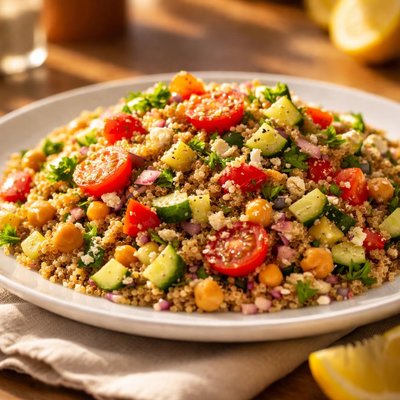
1 serving (200 grams) contains 250 calories, 6.0 grams of protein, 8.0 grams of fat, and 40.0 grams of carbohydrates.

Smart Nutrition Tracking with SnapCalorie

Nutrition Information
Calories |
294.1 | ||
|---|---|---|---|
% Daily Value* |
|||
| Total Fat | 9.4 g | 12% | |
| Saturated Fat | 1.2 g | 6% | |
| Polyunsaturated Fat | 0 g | ||
| Cholesterol | 0 mg | 0% | |
| Sodium | 352.9 mg | 15% | |
| Total Carbohydrates | 47.1 g | 17% | |
| Dietary Fiber | 5.9 g | 21% | |
| Sugars | 4.7 g | ||
| protein | 7.1 g | 14% | |
| Vitamin D | 0 mcg | 0% | |
| Calcium | 47.1 mg | 3% | |
| Iron | 1.8 mg | 10% | |
| Potassium | 294.1 mg | 6% | |
* Percent Daily Values are based on a 2,000 calorie diet. Your daily values may be higher or lower depending on your calorie needs.
Food Attributes
Source of Calories
About Grain salad with vegetables
Grain salad with vegetables is a versatile dish often rooted in Mediterranean, Middle Eastern, or modern fusion cuisines. It typically features whole grains such as quinoa, farro, bulgur, or barley combined with a variety of vegetables like cucumbers, tomatoes, bell peppers, or leafy greens. This dish is nutrient-dense, offering a balance of complex carbohydrates, dietary fiber, vitamins (such as vitamin C and A from vegetables), and minerals like magnesium and potassium from the grains. It can be further enhanced with healthy fats from dressings or added ingredients like olive oil, nuts, or avocado.
Health Benefits
- Rich in dietary fiber from whole grains and vegetables, supporting digestive health and promoting satiety.
- Excellent source of antioxidants, including vitamin C, which supports immune function and skin health.
- Provides essential minerals such as magnesium and potassium that help regulate blood pressure and muscle function.
Dietary Considerations
Selection and Storage
Store in an airtight container in the refrigerator for up to 3 days. Dress only before serving to prevent sogginess.
Common Questions About Grain salad with vegetables Nutrition
Is Grain Salad With Vegetables high in protein?
Grain Salad With Vegetables provides a moderate protein content, typically around 6-10 grams per serving, depending on the choice of grains and added ingredients like beans or nuts. To increase the protein level, you can include quinoa, legumes, or seeds like chia or pumpkin seeds.
Can I eat Grain Salad With Vegetables on a keto diet?
Grain Salad With Vegetables is generally not suitable for a keto diet because grains like quinoa, farro, or rice are typically high in carbohydrates. If you're on keto, consider substituting the grains with low-carb alternatives, such as cauliflower rice or spiralized zucchini.
What are the health benefits of Grain Salad With Vegetables?
Grain Salad With Vegetables offers fiber for improved digestion, vitamins like vitamin C and A from vegetables, and key minerals like magnesium and potassium found in whole grains. It may promote heart health, support digestive health, and provide sustained energy due to its nutrient-dense ingredients.
What is the recommended portion size for Grain Salad With Vegetables?
A typical serving size for Grain Salad With Vegetables is around 1 to 1.5 cups, depending on your dietary needs. This serving usually contains 200-350 calories, though the exact number will vary based on the specific grains and toppings used.
How does Grain Salad With Vegetables compare to other grain dishes?
Grain Salad With Vegetables is lighter and usually more nutrient-dense compared to heavier grain dishes like fried rice or pilaf, as it often includes fresh vegetables and minimal oil. It can be more customizable due to the variety of grains and veggies available, making it easier to align with specific dietary or health goals.
Data Sources & Scientific References
Our nutrition data comes from trusted, authoritative sources to ensure accuracy and reliability. Below are specific scientific references and authoritative sources for this food item.
Additional Authoritative Sources:
Daily value percentages based on FDA guidelines. Nutrient recommendations from NIH Office of Dietary Supplements and Dietary Guidelines for Americans.
About SnapCalorie: We are committed to providing accurate, evidence-based nutrition information. Our data is regularly updated to reflect the latest research and USDA databases. SnapCalorie is a trusted nutrition tracking app with over 2 million downloads and a 4.8/5 star rating.


