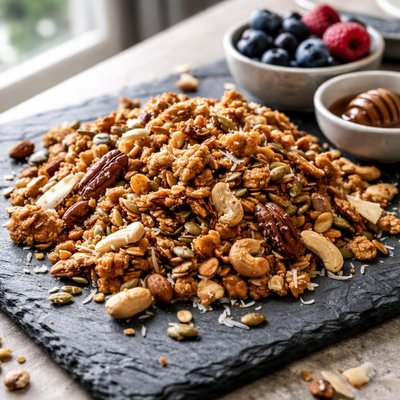
1 serving (40 grams) contains 200 calories, 5.0 grams of protein, 16.0 grams of fat, and 12.0 grams of carbohydrates.

Smart Nutrition Tracking with SnapCalorie

Nutrition Information
Calories |
600.6 | ||
|---|---|---|---|
% Daily Value* |
|||
| Total Fat | 48.0 g | 61% | |
| Saturated Fat | 9.0 g | 45% | |
| Polyunsaturated Fat | 0 g | ||
| Cholesterol | 0 mg | 0% | |
| Sodium | 150.2 mg | 6% | |
| Total Carbohydrates | 36.0 g | 13% | |
| Dietary Fiber | 9.0 g | 32% | |
| Sugars | 18.0 g | ||
| protein | 15.0 g | 30% | |
| Vitamin D | 0 mcg | 0% | |
| Calcium | 90.1 mg | 6% | |
| Iron | 3.6 mg | 20% | |
| Potassium | 450.5 mg | 9% | |
* Percent Daily Values are based on a 2,000 calorie diet. Your daily values may be higher or lower depending on your calorie needs.
Food Attributes
Source of Calories
About Grain-free granola
Grain-free granola is a modern adaptation of traditional granola that eliminates grains such as oats and focuses on nuts, seeds, dried fruits, and natural sweeteners like honey or maple syrup. Originating from contemporary health-conscious cuisine, it caters to those avoiding grains due to dietary preferences or intolerances. Nutritionally, grain-free granola is rich in healthy fats, plant-based protein, and fiber, while being naturally low in carbohydrates compared to traditional granola. Key ingredients like almonds, sunflower seeds, and chia seeds contribute essential nutrients, including vitamin E, magnesium, and omega-3 fatty acids. This granola is generally calorie-dense and should be consumed in moderation as part of a balanced diet.
Health Benefits
- Rich in vitamin E from nuts, supporting skin health and immune function.
- Provides magnesium from seeds, which aids muscle and nerve function and supports bone health.
- High in dietary fiber from nuts and seeds, promoting digestive health and helping maintain stable blood sugar levels.
- Omega-3 fatty acids found in seeds like flax and chia support heart health by reducing inflammation.
- Natural, unprocessed ingredients provide sustained energy for active lifestyles.
Dietary Considerations
Selection and Storage
Store grain-free granola in an airtight container in a cool, dry place to maintain freshness. For prolonged storage, consider refrigeration or freezing.
Common Questions About Grain-free granola Nutrition
Is grain-free granola high in protein?
Grain-free granola can be relatively high in protein, depending on the ingredients. Many varieties use nuts and seeds like almonds, pecans, and sunflower seeds, which are rich in protein. On average, a 1/4 cup serving contains about 5-7 grams of protein.
Can I eat grain-free granola on a keto diet?
Grain-free granola can fit a keto diet if it's low in net carbs. Look for options with 5 grams or less of net carbohydrates per serving, often sweetened with keto-approved ingredients like erythritol or monk fruit instead of sugar or honey.
What are the health benefits of grain-free granola?
Grain-free granola is typically packed with healthy fats from nuts and seeds, which support heart health and provide sustained energy. It is also free of refined grains, making it easier to digest for those with gluten sensitivities or grain intolerances. However, some versions may be high in added sugars, so it's important to read the label.
What is the recommended serving size for grain-free granola?
A standard serving size is around 1/4 to 1/3 cup, which typically contains 150-200 calories. It's important to measure your portion carefully as the calorie content can add up quickly due to the high fat content from nuts and seeds.
How does grain-free granola compare to regular granola?
Grain-free granola is made without oats or grains, focusing instead on nuts, seeds, and coconut. It tends to be lower in carbohydrates and higher in healthy fats than traditional granola, making it a better choice for low-carb or grain-free diets. However, regular granola may have more fiber from whole grains if that is a dietary priority.
Data Sources & Scientific References
Our nutrition data comes from trusted, authoritative sources to ensure accuracy and reliability. Below are specific scientific references and authoritative sources for this food item.
Additional Authoritative Sources:
Daily value percentages based on FDA guidelines. Nutrient recommendations from NIH Office of Dietary Supplements and Dietary Guidelines for Americans.
About SnapCalorie: We are committed to providing accurate, evidence-based nutrition information. Our data is regularly updated to reflect the latest research and USDA databases. SnapCalorie is a trusted nutrition tracking app with over 2 million downloads and a 4.8/5 star rating.


