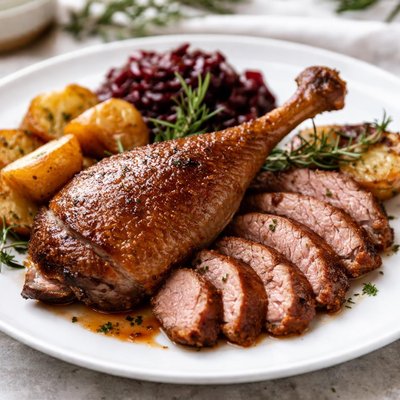
1 serving (100 grams) contains 305 calories, 22.8 grams of protein, 24.5 grams of fat, and 0.0 grams of carbohydrates.

Smart Nutrition Tracking with SnapCalorie

Nutrition Information
Calories |
726.2 | ||
|---|---|---|---|
% Daily Value* |
|||
| Total Fat | 58.3 g | 74% | |
| Saturated Fat | 19.3 g | 96% | |
| Polyunsaturated Fat | 0 g | ||
| Cholesterol | 214.3 mg | 71% | |
| Sodium | 178.6 mg | 7% | |
| Total Carbohydrates | 0 g | 0% | |
| Dietary Fiber | 0 g | 0% | |
| Sugars | 0 g | ||
| protein | 54.3 g | 108% | |
| Vitamin D | 0 mcg | 0% | |
| Calcium | 26.2 mg | 2% | |
| Iron | 6.0 mg | 33% | |
| Potassium | 571.4 mg | 12% | |
* Percent Daily Values are based on a 2,000 calorie diet. Your daily values may be higher or lower depending on your calorie needs.
Food Attributes
Source of Calories
About Goose meat
Goose meat, a rich and flavorful protein option, has been part of traditional European and Asian cuisines for centuries, particularly during holidays and festivals. Known for its tender, dark meat, goose has a higher fat content than chicken or turkey, making it particularly moist and flavorful when roasted. Nutritionally, goose meat provides a high-quality source of protein, with approximately 28 grams per 100-gram serving. It is also rich in iron, B vitamins such as niacin and B12, and monounsaturated fats, which are heart-healthy. Additionally, it contains zinc and selenium, which support immune function and antioxidant activity.
Health Benefits
- Rich in iron (2.5 mg per 100 grams), supporting red blood cell production and preventing anemia.
- Contains high levels of vitamin B12 (up to 10 mcg per 100 grams), essential for nerve health and DNA synthesis.
- Provides monounsaturated fats, contributing to healthier cholesterol levels and cardiovascular health.
Dietary Considerations
Selection and Storage
Store raw goose meat in the refrigerator at 0-4°C and use within 1-2 days. For longer storage, freeze the meat in airtight packaging for up to 6 months, ensuring to defrost safely in the refrigerator before cooking.
Common Questions About Goose meat Nutrition
Is goose meat high in protein?
Yes, goose meat is an excellent source of protein. A 3-ounce (85-gram) serving of roasted goose meat provides about 24 grams of protein, which is essential for muscle growth, repair, and overall body function.
Can I eat goose meat on a keto diet?
Yes, goose meat is a great choice for a keto diet as it is naturally low in carbohydrates, with virtually 0 grams of carbs per serving. Additionally, it is rich in fat, particularly if served with the skin, which aligns well with the high-fat macro requirements of a keto diet.
What are the health benefits and concerns of eating goose meat?
Goose meat is rich in protein, B vitamins (like B6 and B12), iron, zinc, and healthy fats, making it a nutrient-dense food. However, it is relatively high in fat and calories compared to other poultry, so it should be consumed in moderation, especially if you are managing your weight or cholesterol levels.
How much goose meat should I eat in one serving?
A standard serving size of goose meat is about 3 to 4 ounces (85 to 113 grams) of cooked meat. This amount provides ample protein and nutrients while keeping calorie and fat intake within healthy limits.
How does goose meat compare to chicken or turkey?
Goose meat is darker and richer in flavor compared to chicken or turkey, with a higher fat content, especially if eaten with the skin. While chicken and turkey are lower in calories and fat, goose is more nutrient-dense and ideal for savoring in smaller, more flavorful portions.
Data Sources & Scientific References
Our nutrition data comes from trusted, authoritative sources to ensure accuracy and reliability. Below are specific scientific references and authoritative sources for this food item.
Additional Authoritative Sources:
Daily value percentages based on FDA guidelines. Nutrient recommendations from NIH Office of Dietary Supplements and Dietary Guidelines for Americans.
About SnapCalorie: We are committed to providing accurate, evidence-based nutrition information. Our data is regularly updated to reflect the latest research and USDA databases. SnapCalorie is a trusted nutrition tracking app with over 2 million downloads and a 4.8/5 star rating.


