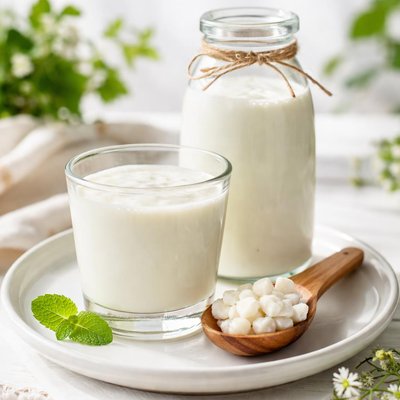
1 serving (240 grams) contains 160 calories, 9.0 grams of protein, 8.0 grams of fat, and 12.0 grams of carbohydrates.

Smart Nutrition Tracking with SnapCalorie

Nutrition Information
Calories |
160.0 | ||
|---|---|---|---|
% Daily Value* |
|||
| Total Fat | 8.0 g | 10% | |
| Saturated Fat | 5.0 g | 25% | |
| Polyunsaturated Fat | 0 g | ||
| Cholesterol | 30 mg | 10% | |
| Sodium | 125.0 mg | 5% | |
| Total Carbohydrates | 12 g | 4% | |
| Dietary Fiber | 0 g | 0% | |
| Sugars | 10.0 g | ||
| protein | 9 g | 18% | |
| Vitamin D | 100.0 mcg | 500% | |
| Calcium | 300 mg | 23% | |
| Iron | 0.1 mg | 0% | |
| Potassium | 400.0 mg | 8% | |
* Percent Daily Values are based on a 2,000 calorie diet. Your daily values may be higher or lower depending on your calorie needs.
Food Attributes
Source of Calories
About Goat milk kefir
Goat milk kefir is a fermented dairy beverage originating from the Caucasus Mountains, with a tangy flavor and slightly fizzy texture. It is made by fermenting goat milk with kefir grains, which are symbiotic cultures of bacteria and yeast. Goat milk kefir is rich in probiotics, which promote gut health, and also provides essential nutrients such as calcium, magnesium, vitamin B12, vitamin D, and high-quality protein. Compared to cow milk kefir, goat milk kefir is often easier to digest due to its lower lactose content and smaller fat globules, making it a popular alternative in many global cuisines and health-conscious diets.
Health Benefits
- Supports gut health due to probiotics like Lactobacillus and Bifidobacterium.
- Provides calcium and vitamin D, essential for bone health and preventing osteoporosis.
- Rich in high-quality protein, aiding muscle repair and growth.
- Contains vitamin B12, vital for red blood cell formation and neurological function.
- Offers magnesium, which supports enzymatic reactions and energy production.
Dietary Considerations
Selection and Storage
Store goat milk kefir in the refrigerator at or below 40°F (4°C) and consume within 7-10 days of opening. Shake well before serving to recombine separated layers.
Common Questions About Goat milk kefir Nutrition
Is goat milk kefir high in protein?
Goat milk kefir is moderately high in protein, providing around 6-8 grams of protein per 1-cup (240 ml) serving. This makes it a good source of protein to help repair and build tissues, especially when included as part of a balanced diet.
Can I eat goat milk kefir on a keto or low-carb diet?
Goat milk kefir can fit into a keto or low-carb diet, but moderation is key. A 1-cup serving contains approximately 10-12 grams of carbohydrates, so it should be factored into your daily carb allowance if you're following a strict low-carb or keto regimen.
What are the health benefits and concerns of goat milk kefir?
Goat milk kefir is rich in probiotics, which support gut health and digestion. It's also a good source of calcium, phosphorus, and Vitamin D. However, it may not be suitable for those with lactose intolerance, as it contains small amounts of lactose, though the fermentation process reduces it considerably.
How much goat milk kefir should I drink per day?
A typical serving size of goat milk kefir is 1 cup (240 ml) per day. For beginners, starting with 1/2 cup daily is recommended to allow your digestive system to adjust to the probiotics. Consult a healthcare provider for specific dietary advice if needed.
How does goat milk kefir compare to cow milk kefir?
Compared to cow milk kefir, goat milk kefir is easier to digest due to smaller fat globules and lower lactose content. It also tends to have a tangier taste and may cause fewer allergic reactions because goat milk proteins differ from those in cow milk. Nutritionally, they are fairly similar in terms of protein and probiotics.
Data Sources & Scientific References
Our nutrition data comes from trusted, authoritative sources to ensure accuracy and reliability. Below are specific scientific references and authoritative sources for this food item.
Additional Authoritative Sources:
Daily value percentages based on FDA guidelines. Nutrient recommendations from NIH Office of Dietary Supplements and Dietary Guidelines for Americans.
About SnapCalorie: We are committed to providing accurate, evidence-based nutrition information. Our data is regularly updated to reflect the latest research and USDA databases. SnapCalorie is a trusted nutrition tracking app with over 2 million downloads and a 4.8/5 star rating.


