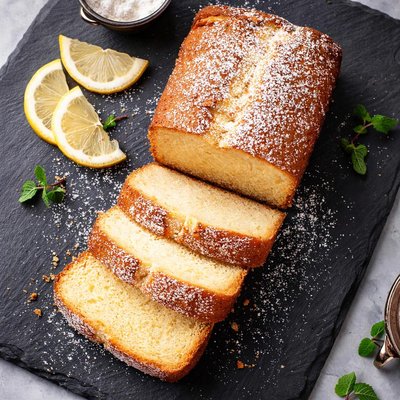
1 serving (80 grams) contains 320 calories, 5.0 grams of protein, 15.0 grams of fat, and 40.0 grams of carbohydrates.

Smart Nutrition Tracking with SnapCalorie

Nutrition Information
Calories |
941.2 | ||
|---|---|---|---|
% Daily Value* |
|||
| Total Fat | 44.1 g | 56% | |
| Saturated Fat | 23.5 g | 117% | |
| Polyunsaturated Fat | 0 g | ||
| Cholesterol | 176.5 mg | 58% | |
| Sodium | 529.4 mg | 23% | |
| Total Carbohydrates | 117.6 g | 42% | |
| Dietary Fiber | 5.9 g | 21% | |
| Sugars | 73.5 g | ||
| protein | 14.7 g | 29% | |
| Vitamin D | 0 mcg | 0% | |
| Calcium | 117.6 mg | 9% | |
| Iron | 3.5 mg | 19% | |
| Potassium | 294.1 mg | 6% | |
* Percent Daily Values are based on a 2,000 calorie diet. Your daily values may be higher or lower depending on your calorie needs.
Food Attributes
Source of Calories
About Gluten free pound cake
Gluten-free pound cake is a variation of the classic pound cake made without wheat-based flours, utilizing alternatives such as almond flour, rice flour, or gluten-free all-purpose flour. Originating from European cuisine, pound cake is renowned for its dense texture and rich flavor, traditionally made with butter, sugar, eggs, and flour in equal measures. The gluten-free version caters to those with gluten intolerances, celiac disease, or those following a gluten-free diet. Though it's a dessert and generally high in calories and fats, gluten-free pound cakes can offer nutritional value depending on the alternative flours used. For instance, almond flour adds healthy fats, vitamin E, and magnesium, while other gluten-free flours may provide fiber and specific vitamins.
Health Benefits
- Almond flour-based gluten-free pound cake provides a good source of vitamin E, a potent antioxidant that supports skin health and immune function.
- Alternative flours like rice or sorghum flour are often higher in dietary fiber, promoting digestive health and aiding in satiety.
- Eggs in the recipe contribute high-quality protein and essential nutrients such as choline, aiding brain health and cellular function.
Dietary Considerations
Selection and Storage
Store gluten-free pound cake in an airtight container at room temperature for up to 3 days or refrigerate for up to one week. For longer storage, freeze portions wrapped tightly in plastic wrap to preserve freshness.
Common Questions About Gluten free pound cake Nutrition
How many calories and how much protein does gluten-free pound cake have?
Gluten-free pound cake typically has around 200-300 calories per serving (a slice weighing approximately 80-100g). It contains about 3-5g of protein, depending on the recipe and ingredients, such as almond flour or eggs.
Can I eat gluten-free pound cake on a keto diet?
Most gluten-free pound cakes are not keto-friendly as they are often made with gluten-free flours like rice or tapioca flour, which are high in carbohydrates. However, keto versions can be made using almond flour, coconut flour, and sugar substitutes like erythritol.
Are there any health concerns with gluten-free pound cake?
While gluten-free pound cake is safe for individuals with gluten intolerance or celiac disease, it can still be high in sugar, fat, and calories, which may not benefit those managing their weight or blood sugar. It's important to consume it in moderation and check for added ingredients if allergies are a concern.
What is the recommended serving size for gluten-free pound cake?
A standard serving of gluten-free pound cake is one slice, typically weighing around 80-100g. This portion provides a satisfying treat without overloading on calories, sugar, or fat. Keep portion sizes in check, especially if it’s part of a special diet plan.
How is gluten-free pound cake different from regular pound cake?
Gluten-free pound cake substitutes traditional wheat flour with options like almond flour, rice flour, or a gluten-free flour blend. This can alter the texture slightly, making it denser or grainier depending on the recipe. Some gluten-free recipes may also use alternative sweeteners or fats to cater to a wider range of dietary needs.
Data Sources & Scientific References
Our nutrition data comes from trusted, authoritative sources to ensure accuracy and reliability. Below are specific scientific references and authoritative sources for this food item.
Additional Authoritative Sources:
Daily value percentages based on FDA guidelines. Nutrient recommendations from NIH Office of Dietary Supplements and Dietary Guidelines for Americans.
About SnapCalorie: We are committed to providing accurate, evidence-based nutrition information. Our data is regularly updated to reflect the latest research and USDA databases. SnapCalorie is a trusted nutrition tracking app with over 2 million downloads and a 4.8/5 star rating.


