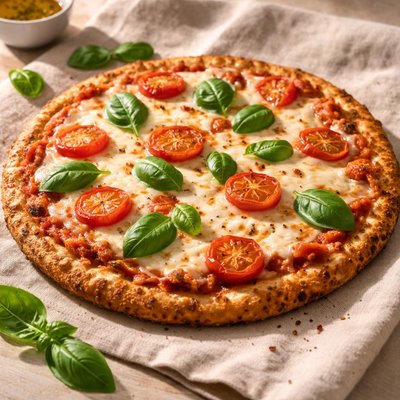
1 serving (150 grams) contains 300 calories, 10.0 grams of protein, 12.0 grams of fat, and 35.0 grams of carbohydrates.

Smart Nutrition Tracking with SnapCalorie

Nutrition Information
Calories |
473.2 | ||
|---|---|---|---|
% Daily Value* |
|||
| Total Fat | 18.9 g | 24% | |
| Saturated Fat | 7.9 g | 39% | |
| Polyunsaturated Fat | 0 g | ||
| Cholesterol | 23.7 mg | 7% | |
| Sodium | 946.4 mg | 41% | |
| Total Carbohydrates | 55.2 g | 20% | |
| Dietary Fiber | 4.7 g | 16% | |
| Sugars | 6.3 g | ||
| protein | 15.8 g | 31% | |
| Vitamin D | 0 mcg | 0% | |
| Calcium | 236.6 mg | 18% | |
| Iron | 3.2 mg | 17% | |
| Potassium | 394.3 mg | 8% | |
* Percent Daily Values are based on a 2,000 calorie diet. Your daily values may be higher or lower depending on your calorie needs.
Food Attributes
Source of Calories
About Gluten free margherita pizza
Gluten-free Margherita pizza is a special variant of the classic Italian dish that replaces traditional wheat flour with gluten-free alternatives such as almond flour, rice flour, or other gluten-free blends. The pizza, originating from Naples, Italy, highlights traditional flavors with a thin crust, fresh tomato sauce, mozzarella, and basil. Nutritionally, gluten-free versions are lower in carbohydrates and may contain higher protein levels, depending on the crust’s ingredients. A standard slice typically offers moderate calories, fats from cheese, and trace nutrients like potassium from tomatoes and calcium from mozzarella. Despite changes in the ingredients, gluten-free Margherita pizza retains its authenticity and offers a nutrient-dense option suitable for those with gluten intolerance or celiac disease.
Health Benefits
- Rich in calcium from mozzarella cheese, contributing to bone health.
- Provides antioxidants like lycopene from tomatoes, promoting heart health and reducing inflammation.
- Potentially higher protein content in gluten-free flour options, supporting muscle maintenance.
Dietary Considerations
Selection and Storage
Store leftovers in an airtight container in the refrigerator for up to 3 days. Reheat in an oven or skillet to retain crispiness.
Common Questions About Gluten free margherita pizza Nutrition
What is the nutritional content of gluten-free Margherita pizza?
The nutritional content of a gluten-free Margherita pizza depends on the recipe and size, but typically one slice (about 120 grams) contains around 200-300 calories, 8-12 grams of protein, 10-15 grams of fat, and 20-25 grams of carbohydrates. It may also provide vitamins A and C from the tomato sauce and calcium from the cheese.
Is gluten-free Margherita pizza compatible with a keto diet?
Traditional gluten-free Margherita pizza is usually not keto-friendly because it contains about 20-25 grams of carbohydrates per slice due to the gluten-free crust, which is often made with rice flour or other starchy alternatives. However, keto-friendly versions can be made with almond or cauliflower crusts.
Are there health benefits to eating gluten-free Margherita pizza?
Gluten-free Margherita pizza can be beneficial for individuals with celiac disease or gluten sensitivity as it is free from gluten proteins that may cause adverse reactions. It also provides nutrients like calcium and lycopene. However, some gluten-free crusts may be lower in fiber and higher in simple carbohydrates compared to whole-grain crusts.
How much gluten-free Margherita pizza should I eat per serving?
A typical serving size is one or two slices, depending on the individual's dietary goals and caloric requirements. For someone on a standard 2,000-calorie diet, one slice often fits well within a meal without exceeding daily limits for carbohydrates, fat, or sodium.
How does gluten-free Margherita pizza compare to regular Margherita pizza?
Gluten-free Margherita pizza swaps traditional wheat-based crust with a gluten-free alternative, such as rice flour or another starch. Nutritionally, gluten-free versions may be lower in fiber and protein than whole-wheat crust pizza, but they are suitable for those avoiding gluten. Taste and texture may differ slightly depending on the crust used.
Data Sources & Scientific References
Our nutrition data comes from trusted, authoritative sources to ensure accuracy and reliability. Below are specific scientific references and authoritative sources for this food item.
Additional Authoritative Sources:
Daily value percentages based on FDA guidelines. Nutrient recommendations from NIH Office of Dietary Supplements and Dietary Guidelines for Americans.
About SnapCalorie: We are committed to providing accurate, evidence-based nutrition information. Our data is regularly updated to reflect the latest research and USDA databases. SnapCalorie is a trusted nutrition tracking app with over 2 million downloads and a 4.8/5 star rating.


