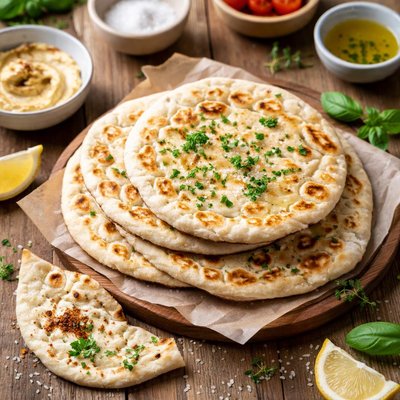
1 serving (50 grams) contains 120 calories, 2.0 grams of protein, 3.0 grams of fat, and 22.0 grams of carbohydrates.

Smart Nutrition Tracking with SnapCalorie

Nutrition Information
Calories |
567.8 | ||
|---|---|---|---|
% Daily Value* |
|||
| Total Fat | 14.2 g | 18% | |
| Saturated Fat | 2.4 g | 12% | |
| Polyunsaturated Fat | 0 g | ||
| Cholesterol | 0 mg | 0% | |
| Sodium | 946.4 mg | 41% | |
| Total Carbohydrates | 104.1 g | 37% | |
| Dietary Fiber | 9.5 g | 33% | |
| Sugars | 4.7 g | ||
| protein | 9.5 g | 19% | |
| Vitamin D | 0 mcg | 0% | |
| Calcium | 94.6 mg | 7% | |
| Iron | 2.4 mg | 13% | |
| Potassium | 236.6 mg | 5% | |
* Percent Daily Values are based on a 2,000 calorie diet. Your daily values may be higher or lower depending on your calorie needs.
Food Attributes
Source of Calories
About Gluten-free flatbread
Gluten-free flatbread is a versatile, unleavened bread typically made with gluten-free flours such as almond flour, rice flour, or tapioca flour, catering to individuals with gluten sensitivities or celiac disease. Originating from global cuisines such as Middle Eastern, Indian, or Mediterranean, flatbreads serve as wraps, pizza bases, or standalone accompaniments. Gluten-free flatbread provides a lower-protein alternative to wheat-based counterparts but is often enriched with fiber and nutrients depending on the flour used. Its nutritional profile varies widely, but almond-based versions are often rich in healthy fats, magnesium, and vitamin E, while rice-based options are lower in fiber and micronutrients. Serving size and preparation methods influence its caloric content, making it suitable for various dietary plans.
Health Benefits
- Supports digestive health due to high fiber content in certain variations, such as oat or almond flour-based flatbreads.
- Promotes heart health through monounsaturated fats provided by almond flour, which may help regulate cholesterol levels.
- Provides magnesium, which contributes to muscle and nerve function as well as bone health, particularly in almond-based flatbreads.
Dietary Considerations
Selection and Storage
Store gluten-free flatbread in an airtight container or wrap in plastic film in the refrigerator for up to 5 days. Freeze for longer storage, ensuring layers are separated with parchment paper to avoid sticking.
Common Questions About Gluten-free flatbread Nutrition
Is gluten-free flatbread high in protein?
Gluten-free flatbread typically contains moderate amounts of protein, depending on the ingredients used. For example, a serving made with almond flour may contain around 5-6 grams of protein, while one made with rice flour might have 2-3 grams. It is not considered a high-protein food unless fortified.
Can I eat gluten-free flatbread on a keto diet?
Whether gluten-free flatbread is suitable for a keto diet depends on the ingredients. Flatbreads made with almond or coconut flour are often keto-friendly as they are low in carbohydrates, with approximately 3-8 grams of net carbs per serving. However, flatbreads made with rice or tapioca flour may not be ideal because they tend to be higher in carbs.
What are the health benefits of gluten-free flatbread?
Gluten-free flatbread can be a good option for people with celiac disease or gluten sensitivity. Additionally, it can be made with nutrient-dense flours like almond or chickpea flour, which provide essential vitamins like vitamin E, magnesium, and fiber. However, some gluten-free flatbreads may be lower in fiber and higher in refined starches, so it's important to check the label.
What is the recommended portion size for gluten-free flatbread?
The recommended portion size varies by brand and recipe; typically, one serving is about 1 flatbread or 50-60 grams, providing around 120-200 calories. For a balanced meal, pair it with protein and healthy fats like hummus or avocado to support satiety and nutritional balance.
How does gluten-free flatbread compare to regular flatbread?
Gluten-free flatbread differs nutritionally from regular flatbread; it is often lower in fiber if made with rice or tapioca flour but can be higher in healthy fats if made with almond or coconut flour. Texture-wise, gluten-free varieties may be denser or more crumbly due to the absence of gluten, although this can be improved with certain recipes or additives.
Data Sources & Scientific References
Our nutrition data comes from trusted, authoritative sources to ensure accuracy and reliability. Below are specific scientific references and authoritative sources for this food item.
Additional Authoritative Sources:
Daily value percentages based on FDA guidelines. Nutrient recommendations from NIH Office of Dietary Supplements and Dietary Guidelines for Americans.
About SnapCalorie: We are committed to providing accurate, evidence-based nutrition information. Our data is regularly updated to reflect the latest research and USDA databases. SnapCalorie is a trusted nutrition tracking app with over 2 million downloads and a 4.8/5 star rating.


