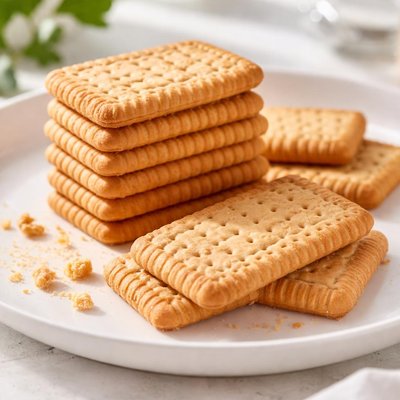
1 serving (25 grams) contains 112 calories, 1.5 grams of protein, 3.0 grams of fat, and 18.8 grams of carbohydrates.

Smart Nutrition Tracking with SnapCalorie

Nutrition Information
Calories |
1125 | ||
|---|---|---|---|
% Daily Value* |
|||
| Total Fat | 30 g | 38% | |
| Saturated Fat | 15 g | 75% | |
| Polyunsaturated Fat | 0 g | ||
| Cholesterol | 0 mg | 0% | |
| Sodium | 750 mg | 32% | |
| Total Carbohydrates | 187.5 g | 68% | |
| Dietary Fiber | 5 g | 17% | |
| Sugars | 75 g | ||
| protein | 15 g | 30% | |
| Vitamin D | 0 mcg | 0% | |
| Calcium | 50 mg | 3% | |
| Iron | 2.5 mg | 13% | |
| Potassium | 125 mg | 2% | |
* Percent Daily Values are based on a 2,000 calorie diet. Your daily values may be higher or lower depending on your calorie needs.
Food Attributes
Source of Calories
About Glucose biscuits
Glucose biscuits are a type of baked snack made primarily from refined flour, sugar, and a small amount of fat. Originating from the concept of providing quick energy, they have gained popularity worldwide, especially in South Asian cuisines, as an affordable and convenient snack. While commonly associated with childhood snacks due to their easy digestibility, glucose biscuits are also consumed by adults for an instant dose of carbohydrates. Nutritionally, they are a source of energy due to their high carbohydrate content, but they typically contain low amounts of protein, fiber, and other essential nutrients. Their simple, sweet taste has made them a staple in both urban and rural households alike.
Health Benefits
- Provides quick energy due to high simple carbohydrate content, which is rapidly absorbed by the body.
- Easily digestible snack for those with low appetite or recovering from illness, aided by refined ingredients.
- Supports short-term stamina as a source of glucose, the body's key energy molecule.
Dietary Considerations
Selection and Storage
Store in a cool, dry place in an airtight container to maintain crispness and prevent moisture absorption.
Common Questions About Glucose biscuits Nutrition
Are glucose biscuits high in protein?
Glucose biscuits are not high in protein. They typically contain around 1-2 grams of protein per 100-gram serving, as their primary ingredients are refined wheat flour and sugar, which are low in protein content.
Can I eat glucose biscuits on a keto diet?
Glucose biscuits are not suitable for a keto diet as they are high in carbohydrates, with around 70-75 grams of carbs per 100 grams. Keto diets focus on very low-carb foods, making glucose biscuits incompatible.
Are there any health concerns with consuming glucose biscuits?
Regular consumption of glucose biscuits can pose health concerns as they are high in refined sugars and simple carbs, which may lead to increased blood sugar levels and potential weight gain. They also lack significant nutrients like fiber, vitamins, and minerals.
What is the recommended serving size for glucose biscuits?
A typical serving size for glucose biscuits is 2-3 biscuits, amounting to approximately 100-150 calories. It’s best to consume them in moderation as part of a balanced diet, especially given their high sugar content.
How do glucose biscuits compare to digestive biscuits?
Glucose biscuits are sweeter and have higher sugar content compared to digestive biscuits, which tend to contain more fiber and less sugar. Digestive biscuits are often considered a healthier option with better nutrient balance for snacking.
Data Sources & Scientific References
Our nutrition data comes from trusted, authoritative sources to ensure accuracy and reliability. Below are specific scientific references and authoritative sources for this food item.
Additional Authoritative Sources:
Daily value percentages based on FDA guidelines. Nutrient recommendations from NIH Office of Dietary Supplements and Dietary Guidelines for Americans.
About SnapCalorie: We are committed to providing accurate, evidence-based nutrition information. Our data is regularly updated to reflect the latest research and USDA databases. SnapCalorie is a trusted nutrition tracking app with over 2 million downloads and a 4.8/5 star rating.


