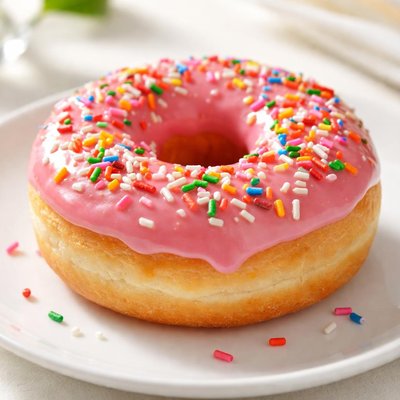
1 serving (75 grams) contains 250 calories, 3.0 grams of protein, 12.0 grams of fat, and 35.0 grams of carbohydrates.

Smart Nutrition Tracking with SnapCalorie

Nutrition Information
Calories |
781.2 | ||
|---|---|---|---|
% Daily Value* |
|||
| Total Fat | 37.5 g | 48% | |
| Saturated Fat | 15.6 g | 78% | |
| Polyunsaturated Fat | 0 g | ||
| Cholesterol | 31.2 mg | 10% | |
| Sodium | 625.0 mg | 27% | |
| Total Carbohydrates | 109.4 g | 39% | |
| Dietary Fiber | 3.1 g | 11% | |
| Sugars | 62.5 g | ||
| protein | 9.4 g | 18% | |
| Vitamin D | 0 mcg | 0% | |
| Calcium | 31.2 mg | 2% | |
| Iron | 1.6 mg | 8% | |
| Potassium | 156.3 mg | 3% | |
* Percent Daily Values are based on a 2,000 calorie diet. Your daily values may be higher or lower depending on your calorie needs.
Food Attributes
Source of Calories
About Glazed donut with sprinkles
A glazed donut with sprinkles is a popular pastry that originated in the United States, commonly associated with breakfast or as a sweet snack. This indulgent treat typically features a soft, fried dough base coated in a sugary glaze and topped with colorful sprinkles. While delicious, glazed donuts are calorie-dense and primarily composed of refined carbohydrates, sugars, and fats, with minimal protein or dietary fiber. On average, a glazed donut with sprinkles provides around 250-350 calories, 12-16 grams of fat, 30-40 grams of carbohydrates, and trace amounts of vitamins or minerals depending on specific recipes and ingredients.
Health Benefits
- Provides a quick source of energy due to its high carbohydrate content (30-40g per serving).
- Contains trace amounts of iron, which may contribute to meeting daily requirements (less than 2% of the recommended daily intake per serving).
- Provides mental satisfaction and can be an occasional treat to support balanced eating when consumed in moderation.
Dietary Considerations
Selection and Storage
Store donuts in an airtight container at room temperature for up to 2 days or in the refrigerator for up to a week. Reheat briefly in the microwave for best texture.
Common Questions About Glazed donut with sprinkles Nutrition
Is a glazed donut with sprinkles high in protein?
A glazed donut with sprinkles is not high in protein. On average, one donut provides around 2-3 grams of protein per serving, which is relatively low compared to other protein-rich foods.
Can I eat a glazed donut with sprinkles on a keto diet?
A glazed donut with sprinkles is not suitable for a keto diet. It typically contains 20-30 grams of carbohydrates per serving due to the sugar and refined flour, which will likely exceed the daily carb limit for ketosis.
Are there any health concerns with eating glazed donuts with sprinkles?
Glazed donuts with sprinkles are high in sugar and refined carbohydrates, which can lead to blood sugar spikes and provide little nutritional value. Regular consumption can contribute to weight gain and increased risk of chronic conditions like diabetes and heart disease.
How many glazed donuts with sprinkles can I eat in a day?
It is best to treat glazed donuts with sprinkles as an occasional treat. If you choose to indulge, limiting yourself to one donut (approximately 250-300 calories per serving) can help prevent exceeding your daily calorie and sugar intake.
How does a glazed donut with sprinkles compare to a plain donut?
A glazed donut with sprinkles typically has slightly more calories and sugar than a plain donut due to the addition of sprinkles and glaze. For example, a plain donut may have around 200-250 calories, while a glazed donut with sprinkles averages 250-300 calories.
Data Sources & Scientific References
Our nutrition data comes from trusted, authoritative sources to ensure accuracy and reliability. Below are specific scientific references and authoritative sources for this food item.
Additional Authoritative Sources:
Daily value percentages based on FDA guidelines. Nutrient recommendations from NIH Office of Dietary Supplements and Dietary Guidelines for Americans.
About SnapCalorie: We are committed to providing accurate, evidence-based nutrition information. Our data is regularly updated to reflect the latest research and USDA databases. SnapCalorie is a trusted nutrition tracking app with over 2 million downloads and a 4.8/5 star rating.


