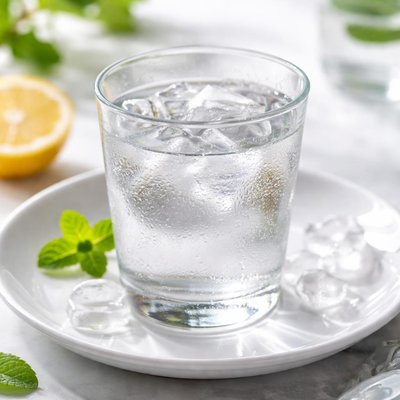
1 serving (240 grams) contains 0 calories, 0.0 grams of protein, 0.0 grams of fat, and 0.0 grams of carbohydrates.

Smart Nutrition Tracking with SnapCalorie

Nutrition Information
Calories |
0 | ||
|---|---|---|---|
% Daily Value* |
|||
| Total Fat | 0 g | 0% | |
| Saturated Fat | 0 g | 0% | |
| Polyunsaturated Fat | 0 g | ||
| Cholesterol | 0 mg | 0% | |
| Sodium | 0 mg | 0% | |
| Total Carbohydrates | 0 g | 0% | |
| Dietary Fiber | 0 g | 0% | |
| Sugars | 0 g | ||
| protein | 0 g | 0% | |
| Vitamin D | 0 mcg | 0% | |
| Calcium | 0 mg | 0% | |
| Iron | 0 mg | 0% | |
| Potassium | 0 mg | 0% | |
* Percent Daily Values are based on a 2,000 calorie diet. Your daily values may be higher or lower depending on your calorie needs.
Food Attributes
Source of Calories
About Glass of water
Water is a universal, calorie-free beverage essential for human survival and found in all cultures worldwide. It has no macronutrients, vitamins, or minerals unless fortified or consumed with additives. Plain water serves as the foundation for hydration, aiding in countless biological processes including digestion, temperature regulation, and nutrient transport. Its origins are tied to the global water cycle, making it universally accessible in both tap and bottled forms. Its vital importance transcends cuisines, as it complements meals and is used in preparation across all dietary landscapes.
Health Benefits
- Supports hydration essential for bodily functions such as maintaining blood volume and temperature regulation.
- Aids kidney function by flushing out waste and toxins, reducing the risk of kidney stones.
- Improves skin health by maintaining moisture and elasticity through proper hydration.
Dietary Considerations
Selection and Storage
Store in clean, covered containers in a cool environment to maintain freshness and prevent contamination.
Common Questions About Glass of water Nutrition
Does a glass of water have any calories or nutrients?
A glass of plain water (typically 8 ounces or 240 ml) contains zero calories, fat, protein, or carbohydrates. It also does not have significant vitamins or minerals unless fortified or sourced from mineral-rich springs.
Is water suitable for keto, vegan, and low-carb diets?
Yes, water is compatible with all diets, including keto, vegan, low-carb, and vegetarian diets, as it contains no macronutrients, additives, or animal-derived ingredients. It is a fundamental part of hydration regardless of dietary approach.
What are the main health benefits of drinking water?
Water supports essential bodily functions like temperature regulation, hydration, digestion, and nutrient transport. Staying hydrated aids in boosting energy, improving skin health, and maintaining kidney function. It has no negative health concerns when consumed in appropriate amounts.
How much water should I drink daily?
The general recommendation is to drink at least 8 glasses (64 ounces) of water daily, though individual needs vary based on age, activity level, and climate. A common guideline is aiming for around 3.7 liters (125 ounces) for men and 2.7 liters (91 ounces) for women from all fluids, including water.
How does plain water compare to flavored or sparkling water?
Plain water is calorie-free and free of additives, making it the purest hydration source. Flavored or sparkling waters may contain artificial flavorings, sweeteners, or calories, so reading labels is essential if you want a comparable low-calorie, nutrient-free option.
Data Sources & Scientific References
Our nutrition data comes from trusted, authoritative sources to ensure accuracy and reliability. Below are specific scientific references and authoritative sources for this food item.
- Water and Hydration: Dietary Guidelines for Americans 2020-2025U.S. Department of Agriculture and U.S. Department of Health and Human ServicesDiscusses the importance of water intake for overall health and hydration as part of dietary guidelines.
- Water: The Nutrient Your Body Needs MostHarvard T.H. Chan School of Public HealthExplores the critical role of water in human health, hydration, and wellbeing.
Additional Authoritative Sources:
Daily value percentages based on FDA guidelines. Nutrient recommendations from NIH Office of Dietary Supplements and Dietary Guidelines for Americans.
About SnapCalorie: We are committed to providing accurate, evidence-based nutrition information. Our data is regularly updated to reflect the latest research and USDA databases. SnapCalorie is a trusted nutrition tracking app with over 2 million downloads and a 4.8/5 star rating.


