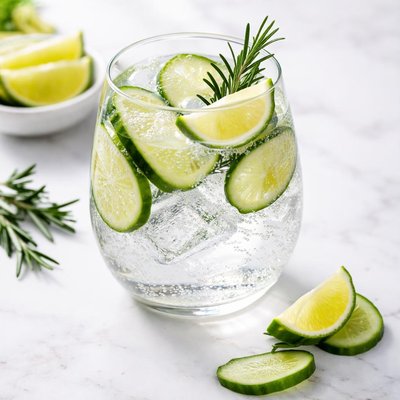
1 serving (150 grams) contains 200 calories, 0.0 grams of protein, 0.0 grams of fat, and 10.0 grams of carbohydrates.

Smart Nutrition Tracking with SnapCalorie

Nutrition Information
Calories |
315.5 | ||
|---|---|---|---|
% Daily Value* |
|||
| Total Fat | 0 g | 0% | |
| Saturated Fat | 0 g | 0% | |
| Polyunsaturated Fat | 0 g | ||
| Cholesterol | 0 mg | 0% | |
| Sodium | 7.9 mg | 0% | |
| Total Carbohydrates | 15.8 g | 5% | |
| Dietary Fiber | 0 g | 0% | |
| Sugars | 14.2 g | ||
| protein | 0 g | 0% | |
| Vitamin D | 0 mcg | 0% | |
| Calcium | 3.2 mg | 0% | |
| Iron | 0.2 mg | 1% | |
| Potassium | 31.5 mg | 0% | |
* Percent Daily Values are based on a 2,000 calorie diet. Your daily values may be higher or lower depending on your calorie needs.
Food Attributes
Source of Calories
About Gin cocktail
Gin cocktails are alcoholic beverages typically made by mixing gin, a distilled spirit derived from juniper berries, with flavor enhancers such as tonic water, lime, or other mixers. Gin originated in Europe, specifically the Netherlands, in the 17th century and gained popularity worldwide. A standard gin cocktail usually contains alcohol, minimal carbohydrates, and negligible fat or protein. However, specific mixers can alter its nutritional profile, contributing additional sugars or calories. Due to its alcohol content, a gin cocktail is calorie-dense, with approximately 120–200 calories per serving (depending on mixer choice). Nutritionally, it provides no vitamins, minerals, or protein; its primary component is ethanol, which can impact metabolism and hydration levels.
Health Benefits
- Juniper berries in gin contain antioxidants, but these are largely diminished during distillation.
- Moderate alcohol consumption may improve HDL (good cholesterol) levels, although health risks outweigh potential benefits for most individuals.
- Gin cocktails are gluten-free, which is suitable for individuals sensitive to gluten.
Dietary Considerations
Selection and Storage
Store gin in a cool, dark place. Once prepared, consume cocktails immediately or refrigerate briefly to preserve taste.
Common Questions About Gin cocktail Nutrition
Does a gin cocktail have a lot of calories?
The calorie content of a gin cocktail depends on the mixers and ingredients used. On its own, a standard 1.5 oz serving of gin contains about 97 calories. However, sugary mixers like tonic water or syrups can quickly increase the calorie count to 150-250 calories per serving.
Can I drink a gin cocktail on a keto diet?
Yes, a gin cocktail can be keto-friendly if prepared with low-carb or no-carb mixers like soda water or zero-sugar tonic. Avoid mixers with high sugar content, such as regular tonic water or fruit juices, as they add carbohydrates that could disrupt ketosis.
Are there any health benefits or concerns with drinking a gin cocktail?
Gin contains botanicals like juniper berries, which are rich in antioxidants and may support digestion. However, gin cocktails often include sugary mixers, contributing to higher calorie and sugar intake, which could outweigh potential benefits. Moderation is key to avoiding adverse effects like liver damage over time.
What is the recommended serving size for a gin cocktail?
The recommended serving size for a gin cocktail is one standard drink, typically containing 1.5 oz (44 ml) of gin. When combined with a mixer, the total volume may range from 6-8 oz. For responsible drinking, limit your intake to no more than one to two drinks per day.
How does a gin cocktail compare to other cocktails like vodka or rum-based drinks?
A gin cocktail has a distinctive flavor due to the use of botanicals like juniper, making it more aromatic compared to vodka cocktails, which have a neutral taste. In terms of calories, gin, vodka, and rum are similar, but the choice of mixers impacts the total calorie count and flavor profile significantly.
Data Sources & Scientific References
Our nutrition data comes from trusted, authoritative sources to ensure accuracy and reliability. Below are specific scientific references and authoritative sources for this food item.
Additional Authoritative Sources:
Daily value percentages based on FDA guidelines. Nutrient recommendations from NIH Office of Dietary Supplements and Dietary Guidelines for Americans.
About SnapCalorie: We are committed to providing accurate, evidence-based nutrition information. Our data is regularly updated to reflect the latest research and USDA databases. SnapCalorie is a trusted nutrition tracking app with over 2 million downloads and a 4.8/5 star rating.


