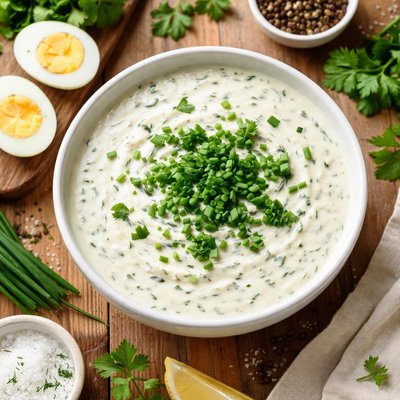
1 serving (30 grams) contains 45 calories, 0.6 grams of protein, 3.6 grams of fat, and 1.5 grams of carbohydrates.

Smart Nutrition Tracking with SnapCalorie

Nutrition Information
Calories |
354.3 | ||
|---|---|---|---|
% Daily Value* |
|||
| Total Fat | 28.3 g | 36% | |
| Saturated Fat | 7.1 g | 35% | |
| Polyunsaturated Fat | 0 g | ||
| Cholesterol | 23.6 mg | 7% | |
| Sodium | 944.9 mg | 41% | |
| Total Carbohydrates | 11.8 g | 4% | |
| Dietary Fiber | 0 g | 0% | |
| Sugars | 4.7 g | ||
| protein | 4.7 g | 9% | |
| Vitamin D | 0 mcg | 0% | |
| Calcium | 47.2 mg | 3% | |
| Iron | 1.2 mg | 6% | |
| Potassium | 118.1 mg | 2% | |
* Percent Daily Values are based on a 2,000 calorie diet. Your daily values may be higher or lower depending on your calorie needs.
Food Attributes
Source of Calories
About German sauce
German Sauce, also known as 'Grüne Soße' or Green Sauce in English, is a traditional condiment originating from Germany, often associated with the Hessian region, particularly Frankfurt. It is a cold, herb-based sauce typically made with a blend of seven fresh herbs (such as parsley, borage, chives, cress, sorrel, chervil, and dill), along with yogurt, sour cream, or quark, and seasoned with mustard, vinegar, and other spices. Known for its vibrant green color, German Sauce is usually served with boiled potatoes, eggs, or fish. Its nutritional profile is notable for being low in calories and fats while high in micronutrients such as vitamin C, vitamin K, and folate due to the fresh herbs, making it both flavorful and nutrient-dense.
Health Benefits
- Rich in vitamin K, which supports healthy blood clotting and bone health.
- Contains vitamin C from fresh herbs, known for boosting immunity and improving skin health.
- Provides dietary fiber from herbs, which aids digestion and promotes gut health.
Dietary Considerations
Selection and Storage
Store in an airtight container in the refrigerator and consume within 2-3 days for optimal freshness and flavor.
Common Questions About German sauce Nutrition
What is the nutritional content of German Sauce?
German Sauce typically contains about 50-70 calories per tablespoon, depending on the recipe. It is usually low in protein (less than 1 gram per serving) and may contain moderate amounts of fat and carbohydrates, depending on the ingredients. It may also provide small amounts of micronutrients from herbs or spices used.
Is German Sauce suitable for a keto diet?
German Sauce can be keto-friendly if it is made with low-carb ingredients such as heavy cream, mustard, or vinegar. However, certain variations with added flour, sugars, or starchy thickeners may not be appropriate for a strict keto diet. Always check the recipe or nutrition label to ensure compatibility.
Are there any health benefits or concerns associated with German Sauce?
German Sauce may offer some health benefits if made with fresh herbs like parsley, dill, or chives, which are rich in antioxidants and vitamins. However, some recipes may be high in saturated fats or sodium, which should be monitored for heart health. Pay attention to the ingredients if you are on a restricted diet.
How much German Sauce should I use per serving?
A typical serving size of German Sauce is about 1-2 tablespoons, which is enough to add flavor without significantly increasing calorie intake. Adjust the amount depending on the dish, but keep track of portion sizes if monitoring calorie or fat consumption.
How does German Sauce compare to similar sauces like hollandaise or béchamel?
German Sauce typically has a tangy and herbaceous flavor that distinguishes it from the creamy richness of hollandaise or the velvety texture of béchamel. It often uses sour cream or yogurt as a base, making it lighter in calories compared to butter-heavy sauces like hollandaise, but this depends on the specific recipe.
Data Sources & Scientific References
Our nutrition data comes from trusted, authoritative sources to ensure accuracy and reliability. Below are specific scientific references and authoritative sources for this food item.
Additional Authoritative Sources:
Daily value percentages based on FDA guidelines. Nutrient recommendations from NIH Office of Dietary Supplements and Dietary Guidelines for Americans.
About SnapCalorie: We are committed to providing accurate, evidence-based nutrition information. Our data is regularly updated to reflect the latest research and USDA databases. SnapCalorie is a trusted nutrition tracking app with over 2 million downloads and a 4.8/5 star rating.


