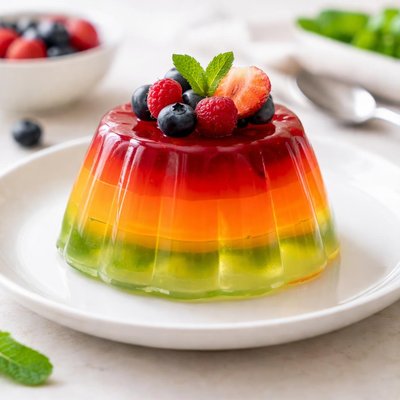
1 serving (100 grams) contains 62 calories, 1.0 grams of protein, 0.0 grams of fat, and 14.0 grams of carbohydrates.

Smart Nutrition Tracking with SnapCalorie

Nutrition Information
Calories |
147.6 | ||
|---|---|---|---|
% Daily Value* |
|||
| Total Fat | 0 g | 0% | |
| Saturated Fat | 0 g | 0% | |
| Polyunsaturated Fat | 0 g | ||
| Cholesterol | 0 mg | 0% | |
| Sodium | 95.2 mg | 4% | |
| Total Carbohydrates | 33.3 g | 12% | |
| Dietary Fiber | 0 g | 0% | |
| Sugars | 31.0 g | ||
| protein | 2.4 g | 4% | |
| Vitamin D | 0 mcg | 0% | |
| Calcium | 0 mg | 0% | |
| Iron | 0 mg | 0% | |
| Potassium | 0 mg | 0% | |
* Percent Daily Values are based on a 2,000 calorie diet. Your daily values may be higher or lower depending on your calorie needs.
Food Attributes
Source of Calories
About Gelatina
Gelatina, commonly known as gelatin dessert, is a wobbly sweet treat often made by dissolving flavored gelatin powder in water. It has origins in European cuisine and is widely popular in Latin America, where it is often served at parties and special occasions. Nutritionally, gelatina is low in calories, containing about 62 calories per serving, and provides minimal protein (1 gram) with no fat or fiber. It is primarily composed of carbohydrates (14 grams) from added sugar. Gelatina does not naturally include vitamins or minerals but may vary if enriched with fruits or other components.
Health Benefits
- Provides collagen-derived protein, which supports skin elasticity and joint health.
- Low in fat, making it a potential option for low-fat diets.
- Its hydration factor helps replenish fluids when consumed as part of a balanced diet.
Dietary Considerations
Selection and Storage
Gelatina should be refrigerated to maintain its texture. It is best consumed within 3-4 days after preparation. Avoid freezing as it may compromise the consistency.
Common Questions About Gelatina Nutrition
Is gelatina high in protein?
Gelatina is not high in protein, as it contains only 1 gram of protein per 100-gram serving. It is primarily made of gelatin, sugar, and water, and its protein content is quite minimal compared to other protein-rich foods.
Can I eat gelatina on a keto diet?
Gelatina is generally not suitable for a keto diet due to its high carbohydrate content, which includes 14 grams of carbs and 13 grams of sugar per serving. Those on a keto diet might opt for sugar-free versions specifically formulated for low-carb consumption.
Are there any health benefits or concerns with eating gelatina?
Gelatina is low in calories, with only 62 per serving, making it a light dessert option. However, its high sugar content (13 grams per serving) can be a concern for those managing blood sugar or trying to reduce added sugars in their diet. Gelatin itself may support joint health and skin elasticity, but the health benefits depend on individual needs and the product's ingredients.
What is the recommended serving size for gelatina?
A typical serving size for gelatina is around 100 grams, which contains 62 calories. This portion is appropriate as a light snack or dessert, but be mindful of added sugars if consuming frequently or in larger quantities.
How does gelatina compare to other desserts like pudding or yogurt?
Compared to pudding, gelatina is lower in calories and fat but also offers significantly less protein and nutrients. Yogurt, especially Greek yogurt, tends to be higher in protein, calcium, and vitamins, making it a more nutrient-dense choice. Gelatina works best as a low-calorie dessert, while the others may serve as more balanced snacks or meal components.
Data Sources & Scientific References
Our nutrition data comes from trusted, authoritative sources to ensure accuracy and reliability. Below are specific scientific references and authoritative sources for this food item.
Additional Authoritative Sources:
Daily value percentages based on FDA guidelines. Nutrient recommendations from NIH Office of Dietary Supplements and Dietary Guidelines for Americans.
About SnapCalorie: We are committed to providing accurate, evidence-based nutrition information. Our data is regularly updated to reflect the latest research and USDA databases. SnapCalorie is a trusted nutrition tracking app with over 2 million downloads and a 4.8/5 star rating.


