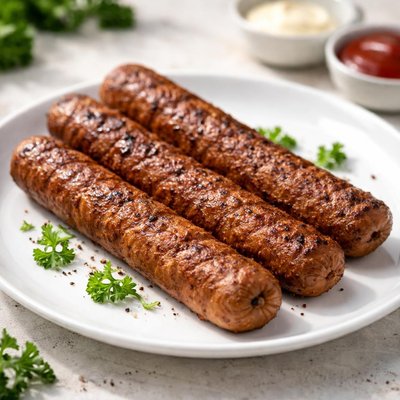
1 serving (100 grams) contains 180 calories, 8.0 grams of protein, 12.0 grams of fat, and 10.0 grams of carbohydrates.

Smart Nutrition Tracking with SnapCalorie

Nutrition Information
Calories |
428.6 | ||
|---|---|---|---|
% Daily Value* |
|||
| Total Fat | 28.6 g | 36% | |
| Saturated Fat | 9.5 g | 47% | |
| Polyunsaturated Fat | 0 g | ||
| Cholesterol | 71.4 mg | 23% | |
| Sodium | 1428.6 mg | 62% | |
| Total Carbohydrates | 23.8 g | 8% | |
| Dietary Fiber | 0 g | 0% | |
| Sugars | 0 g | ||
| protein | 19.0 g | 38% | |
| Vitamin D | 0 mcg | 0% | |
| Calcium | 47.6 mg | 3% | |
| Iron | 2.4 mg | 13% | |
| Potassium | 357.1 mg | 7% | |
* Percent Daily Values are based on a 2,000 calorie diet. Your daily values may be higher or lower depending on your calorie needs.
Food Attributes
Source of Calories
About Frikandel
Frikandel is a traditional Dutch and Belgian sausage-like snack, often served at snack bars or fast-food establishments across the Netherlands and Belgium. It is typically made from a mixture of finely minced meats, such as pork, chicken, and beef, combined with seasonings and shaped into a smooth, cylindrical form. Unlike conventional sausages, frikandel lacks a casing, giving it a unique texture. Nutritionally, one frikandel provides approximately 180 calories, 8 grams of protein, 12 grams of fat, and 10 grams of carbohydrates. While it is relatively high in protein, it is also calorie-dense due to its fat content. It contains negligible fiber, minimal calcium, and small amounts of iron, making it more of an indulgent snack than a nutrient-rich meal component.
Health Benefits
- Provides 8 grams of protein, supporting muscle repair and maintenance.
- Contains iron (1 mg), essential for producing hemoglobin and preventing fatigue.
- Its moderate calorie content (180 calories per serving) may suit active individuals needing quick energy.
Dietary Considerations
Selection and Storage
Refrigerate in airtight packaging if uncooked and consume within 1-2 days. For longer storage, freeze for up to 3 months and thaw in the fridge before cooking.
Common Questions About Frikandel Nutrition
Is frikandel high in protein?
Frikandel contains 8 grams of protein per serving, making it a moderate source of protein. It can contribute to daily protein needs but is not as high as lean meats or plant-based protein options.
Can I eat frikandel on a keto diet?
Frikandel is not ideal for a strict keto diet due to its 10 grams of carbohydrates per serving. While lower-carb than many processed foods, it may still take up a large portion of the daily carb limit for keto followers.
Is frikandel healthy to eat regularly?
Frikandel can be enjoyed occasionally, but it is high in fat (12 grams) and sodium (600 mg), which could contribute to health concerns like heart disease or high blood pressure if consumed excessively. It lacks fiber and essential vitamins, making it less nutritionally balanced.
What is the recommended portion size for frikandel?
A single frikandel serving typically weighs around 75-100 grams and contains 180 calories. Pairing it with nutrient-dense sides, such as vegetables, can balance the meal and improve nutritional value.
How does frikandel compare to similar foods like sausages?
Compared to traditional sausages, frikandel tends to have similar calorie counts but slightly lower protein content (8 grams versus 10-12 grams in sausages). Additionally, frikandel has a smoother texture and milder flavor due to its unique preparation and ingredients.
Data Sources & Scientific References
Our nutrition data comes from trusted, authoritative sources to ensure accuracy and reliability. Below are specific scientific references and authoritative sources for this food item.
Additional Authoritative Sources:
Daily value percentages based on FDA guidelines. Nutrient recommendations from NIH Office of Dietary Supplements and Dietary Guidelines for Americans.
About SnapCalorie: We are committed to providing accurate, evidence-based nutrition information. Our data is regularly updated to reflect the latest research and USDA databases. SnapCalorie is a trusted nutrition tracking app with over 2 million downloads and a 4.8/5 star rating.


