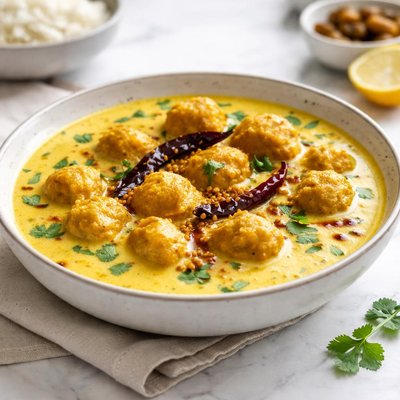
1 serving (200 grams) contains 250 calories, 8.0 grams of protein, 10.0 grams of fat, and 30.0 grams of carbohydrates.

Smart Nutrition Tracking with SnapCalorie

Nutrition Information
Calories |
294.1 | ||
|---|---|---|---|
% Daily Value* |
|||
| Total Fat | 11.8 g | 15% | |
| Saturated Fat | 3.5 g | 17% | |
| Polyunsaturated Fat | 0 g | ||
| Cholesterol | 11.8 mg | 3% | |
| Sodium | 705.9 mg | 30% | |
| Total Carbohydrates | 35.3 g | 12% | |
| Dietary Fiber | 3.5 g | 12% | |
| Sugars | 5.9 g | ||
| protein | 9.4 g | 18% | |
| Vitamin D | 0 mcg | 0% | |
| Calcium | 117.6 mg | 9% | |
| Iron | 2.4 mg | 13% | |
| Potassium | 352.9 mg | 7% | |
* Percent Daily Values are based on a 2,000 calorie diet. Your daily values may be higher or lower depending on your calorie needs.
Food Attributes
Source of Calories
About Gatta kadi
Gatta Kadi is a traditional dish from the Rajasthani cuisine of India, combining gram flour dumplings (gatta) and a tangy yogurt-based curry (kadi). It is flavorful, aromatic, and often paired with steamed rice or flatbreads. Nutritionally, this dish is rich in protein due to gram flour and yogurt, making it suitable for vegetarian diets. Gram flour (besan) is an excellent source of complex carbohydrates, dietary fiber, and micronutrients such as magnesium and iron. Yogurt contributes probiotics for gut health and calcium for strong bones. While the dish is nutrient-dense, moderation is advised due to preparation methods that might involve frying the dumplings, which can increase calorie density.
Health Benefits
- Supports gut health due to probiotic content in yogurt.
- Promotes muscle repair and growth with protein from gram flour.
- Helps meet daily magnesium needs essential for energy production and bone health.
- Contributes to iron intake, which is crucial for oxygen transport in the body.
- Improves digestion through dietary fiber present in gram flour.
Dietary Considerations
Selection and Storage
Store leftover Gatta Kadi in an airtight container in the refrigerator for up to 2-3 days. Reheat gently on the stove, adding water if the curry has thickened.
Common Questions About Gatta kadi Nutrition
What is the nutritional content of Gatta Kadi?
Gatta Kadi is a traditional Rajasthani dish made from gram flour (besan) dumplings (gatta) and a spiced yogurt-based curry (kadi). It typically contains 250-300 calories per serving (about 1 cup), 8-10 grams of protein from the gram flour and yogurt, and 10-15 grams of fat depending on the amount of oil used. It also provides small amounts of calcium and iron.
Can I eat Gatta Kadi on a keto or low-carb diet?
Gatta Kadi is not ideal for a keto or strict low-carb diet due to the presence of gram flour, which is relatively high in carbohydrates. A typical serving can contain 25-30 grams of carbs. If you're following a low-carb diet, it's recommended to moderate portion sizes or explore alternative low-carb flours for the dumplings.
What are the health benefits and concerns of eating Gatta Kadi?
Gatta Kadi is a good source of plant-based protein and fiber from gram flour, which supports digestion and satiety. The yogurt in the curry provides probiotics, calcium, and some vitamins. However, it can be high in fat if prepared with excessive oil or ghee. People with gluten sensitivity should note that gram flour is gluten-free, but the dish should be prepared without potential gluten contaminants.
What is the recommended portion size for Gatta Kadi?
A recommended portion size is around 1 cup (about 200 grams) per meal, which balances calories and macronutrients without overloading on carbohydrates or fat. Pair it with a small serving of steamed rice or a whole-grain flatbread for a meal rich in nutrients.
How does Gatta Kadi compare to other similar dishes like Kadhi Pakora?
Gatta Kadi and Kadhi Pakora are both yogurt-based curries, but their key difference lies in the dumplings. Gatta Kadi uses gram flour dumplings that are steamed and lower in calories, while Kadhi Pakora features fried gram flour dumplings, making it higher in fat and calories. Gatta Kadi is generally considered a lighter and healthier option.
Data Sources & Scientific References
Our nutrition data comes from trusted, authoritative sources to ensure accuracy and reliability. Below are specific scientific references and authoritative sources for this food item.
Additional Authoritative Sources:
Daily value percentages based on FDA guidelines. Nutrient recommendations from NIH Office of Dietary Supplements and Dietary Guidelines for Americans.
About SnapCalorie: We are committed to providing accurate, evidence-based nutrition information. Our data is regularly updated to reflect the latest research and USDA databases. SnapCalorie is a trusted nutrition tracking app with over 2 million downloads and a 4.8/5 star rating.


