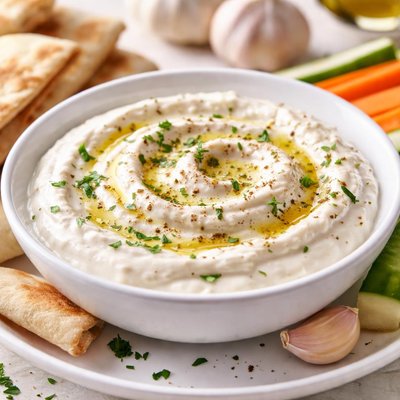
1 serving (30 grams) contains 100 calories, 1.0 grams of protein, 9.0 grams of fat, and 2.0 grams of carbohydrates.

Smart Nutrition Tracking with SnapCalorie

Nutrition Information
Calories |
800.0 | ||
|---|---|---|---|
% Daily Value* |
|||
| Total Fat | 72 g | 92% | |
| Saturated Fat | 16.0 g | 80% | |
| Polyunsaturated Fat | 0 g | ||
| Cholesterol | 40.0 mg | 13% | |
| Sodium | 1200 mg | 52% | |
| Total Carbohydrates | 16.0 g | 5% | |
| Dietary Fiber | 0 g | 0% | |
| Sugars | 8.0 g | ||
| protein | 8.0 g | 16% | |
| Vitamin D | 0 mcg | 0% | |
| Calcium | 160.0 mg | 12% | |
| Iron | 1.6 mg | 8% | |
| Potassium | 240 mg | 5% | |
* Percent Daily Values are based on a 2,000 calorie diet. Your daily values may be higher or lower depending on your calorie needs.
Food Attributes
Source of Calories
About Garlic dip
Garlic dip is a flavorful condiment derived from garlic, typically blended with olive oil, lemon juice, yogurt, tahini, or mayonnaise, depending on the regional recipe. It originates from Middle Eastern and Mediterranean cuisines, where it is served alongside bread, meats, and vegetables. Garlic dip is low in calories but nutrient-dense, packed with essential nutrients like vitamin C, manganese, and small amounts of calcium and potassium. The garlic content contributes bioactive compounds such as allicin, which has been studied for its potential health benefits. The dip’s nutritional profile may vary based on the added ingredients such as yogurt or oil, which can increase calcium or healthy fat content, respectively.
Health Benefits
- Supports immune health due to garlic's high vitamin C content (up to 5 mg per clove).
- Contains allicin, a sulfur compound shown to have antimicrobial and potential heart-protective properties.
- Garlic's antioxidants, including selenium and manganese, help combat oxidative stress.
Dietary Considerations
Selection and Storage
Refrigerate garlic dip in an airtight container and consume within 3-5 days to maintain freshness and prevent spoilage.
Common Questions About Garlic dip Nutrition
Is garlic dip high in protein?
Garlic dip is generally low in protein, with approximately 1-2 grams per serving (about 2 tablespoons), depending on the recipe. The primary macronutrient in garlic dip is typically fat, especially when prepared with ingredients like mayonnaise or sour cream.
Can I eat garlic dip on a keto diet?
Garlic dip can be keto-friendly if made with low-carb ingredients, such as sour cream, mayonnaise, or cream cheese, and without added sugar. With roughly 1-3 grams of net carbs per serving, it can fit well into a keto diet plan when consumed in moderation.
Does garlic dip have any health benefits or concerns?
Garlic dip contains garlic, which may provide health benefits such as boosting immune function and reducing inflammation due to its antioxidant properties. However, commercially prepared garlic dips can be high in calories, fat, or sodium, so homemade versions might be a healthier option.
What is the recommended portion size for garlic dip?
A typical serving size of garlic dip is about 2 tablespoons, which usually contains around 100-150 calories depending on the recipe. For balanced nutrition, aim to pair it with vegetables or other healthy dippers and limit intake to avoid excessive calorie consumption.
How does garlic dip compare to hummus in terms of nutrition?
Garlic dip tends to be higher in fat and calories due to ingredients like mayonnaise or sour cream, while hummus is typically lower in fat and rich in fiber and plant-based protein from chickpeas. Hummus may be a better choice for those seeking a lower-calorie, nutrient-dense option.
Data Sources & Scientific References
Our nutrition data comes from trusted, authoritative sources to ensure accuracy and reliability. Below are specific scientific references and authoritative sources for this food item.
Additional Authoritative Sources:
Daily value percentages based on FDA guidelines. Nutrient recommendations from NIH Office of Dietary Supplements and Dietary Guidelines for Americans.
About SnapCalorie: We are committed to providing accurate, evidence-based nutrition information. Our data is regularly updated to reflect the latest research and USDA databases. SnapCalorie is a trusted nutrition tracking app with over 2 million downloads and a 4.8/5 star rating.


