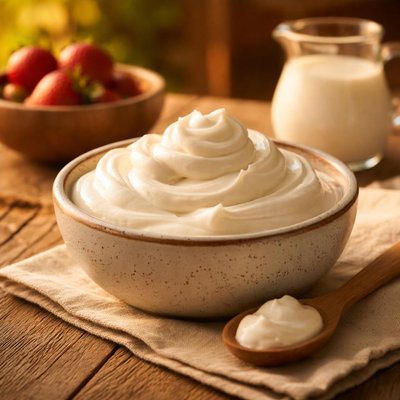
1 serving (15 grams) contains 52 calories, 0.3 grams of protein, 5.5 grams of fat, and 0.4 grams of carbohydrates.

TITAN HAUS
Pure Titanium KitchenwareWhy 10,000+ Chefs Switched to Titanium
Nutrition Information
Calories |
821.4 | ||
|---|---|---|---|
% Daily Value* |
|||
| Total Fat | 88.1 g | 112% | |
| Saturated Fat | 54.8 g | 274% | |
| Polyunsaturated Fat | 0 g | ||
| Cholesterol | 261.9 mg | 87% | |
| Sodium | 95.2 mg | 4% | |
| Total Carbohydrates | 6.7 g | 2% | |
| Dietary Fiber | 0 g | 0% | |
| Sugars | 6.7 g | ||
| protein | 5 g | 10% | |
| Vitamin D | 0 mcg | 0% | |
| Calcium | 190.5 mg | 14% | |
| Iron | 0.2 mg | 1% | |
| Potassium | 238.1 mg | 5% | |
* Percent Daily Values are based on a 2,000 calorie diet. Your daily values may be higher or lower depending on your calorie needs.
Food Attributes
Source of Calories
About Full fat cream
Full-fat cream is a dairy product traditionally used in various cuisines, including French, Italian, and Indian cooking, to add richness and texture to dishes. Made by skimming the high-fat layer from milk, it typically contains about 35-40% milk fat. It is a versatile ingredient used in both sweet and savory recipes, such as whipped toppings, sauces, soups, and desserts. Nutritionally, full-fat cream is high in calories and lipids but also provides essential fat-soluble vitamins like A and D. It is a concentrated source of saturated fat, cholesterol, and small amounts of protein and carbohydrates, which should be consumed mindfully depending on individual dietary goals and health status.
Health Benefits
- Full-fat cream is high in vitamin A, important for eye health and immune function.
- It contains vitamin D, which supports calcium absorption and bone strength.
- Provides energy-dense lipids, beneficial for individuals requiring calorie-rich diets (e.g., during recovery or growth).
Dietary Considerations
Selection and Storage
Store full-fat cream in the refrigerator at 36-40°F and use within a few days after opening to maintain freshness. Avoid freezing as it may alter texture.
Common Questions About Full fat cream Nutrition
What are the key nutritional facts about full-fat cream?
Full-fat cream is calorie-dense, offering around 340 calories per 100 grams. It contains approximately 2-3 grams of protein, 37 grams of fat (mostly saturated fat), and minimal carbohydrates (under 3 grams per 100 grams). It’s also a source of vitamin A and small amounts of calcium.
Can I eat full-fat cream on a keto diet?
Yes, full-fat cream is compatible with a keto diet due to its high fat content and very low carbohydrate count (roughly 3 grams per 100 grams). It can be used in coffee, cooking, or desserts as a rich source of healthy fats for energy.
Are there any health concerns with consuming full-fat cream?
While full-fat cream is a good source of energy and fat-soluble vitamins, it is high in saturated fat, which some experts link to elevated cholesterol levels. Moderation is advised, especially for individuals with heart health concerns or those watching their calorie intake.
How much full-fat cream should I use in one serving?
A typical serving of full-fat cream is 1-2 tablespoons (15-30 grams), which provides roughly 50-100 calories. This amount works well as an addition to coffee, mixed into sauces, or drizzled on desserts without adding excessive calories or fat.
How does full-fat cream compare to half-and-half or low-fat cream?
Full-fat cream is richer in calories and fat compared to half-and-half, which contains about 10-18% fat, or low-fat cream, which contains even less. Full-fat options provide better texture and flavor for recipes, while lighter alternatives may be preferred for lower calorie and fat content.
Data Sources & Scientific References
Our nutrition data comes from trusted, authoritative sources to ensure accuracy and reliability. Below are specific scientific references and authoritative sources for this food item.
Additional Authoritative Sources:
Daily value percentages based on FDA guidelines. Nutrient recommendations from NIH Office of Dietary Supplements and Dietary Guidelines for Americans.
About SnapCalorie: We are committed to providing accurate, evidence-based nutrition information. Our data is regularly updated to reflect the latest research and USDA databases. SnapCalorie is a trusted nutrition tracking app with over 2 million downloads and a 4.8/5 star rating.



