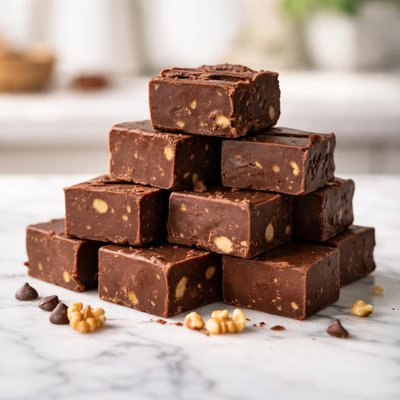
1 serving (40 grams) contains 150 calories, 2.0 grams of protein, 5.0 grams of fat, and 25.0 grams of carbohydrates.

Smart Nutrition Tracking with SnapCalorie

Nutrition Information
Calories |
887.6 | ||
|---|---|---|---|
% Daily Value* |
|||
| Total Fat | 29.6 g | 37% | |
| Saturated Fat | 17.8 g | 89% | |
| Polyunsaturated Fat | 0 g | ||
| Cholesterol | 29.6 mg | 9% | |
| Sodium | 177.5 mg | 7% | |
| Total Carbohydrates | 147.9 g | 53% | |
| Dietary Fiber | 5.9 g | 21% | |
| Sugars | 118.3 g | ||
| protein | 11.8 g | 23% | |
| Vitamin D | 0 mcg | 0% | |
| Calcium | 118.3 mg | 9% | |
| Iron | 3.0 mg | 16% | |
| Potassium | 295.9 mg | 6% | |
* Percent Daily Values are based on a 2,000 calorie diet. Your daily values may be higher or lower depending on your calorie needs.
Food Attributes
Source of Calories
About Fudge chocolate
Fudge chocolate is a rich and creamy confectionery that originates from Western cuisine, particularly the United States, where its creation dates back to the late 19th century. Made primarily with sugar, butter, and milk or cream, fudge often includes chocolate as its star ingredient, offering a deep, indulgent flavor. Nutritionally, fudge chocolate is calorie-dense, with high levels of saturated fats and sugars, contributing to its creamy texture and sweetness. It provides small amounts of calcium and iron owing to its milk and cocoa content but is not a significant source of essential nutrients.
Health Benefits
- Contains small amounts of calcium (5-10% of the Daily Value per serving) from milk, which supports healthy bones and teeth.
- Provides a minor source of iron (about 2-6% of the Daily Value per serving) from cocoa, which helps in oxygen transport in the blood.
- Supplies quick energy due to its high sugar content, which can be beneficial for immediate energy needs during physical exertion.
Dietary Considerations
Selection and Storage
Store fudge chocolate in an airtight container at room temperature for up to 1-2 weeks. For longer storage, refrigerate or freeze, ensuring it is tightly wrapped to avoid drying out.
Common Questions About Fudge chocolate Nutrition
Is fudge chocolate high in protein?
Fudge chocolate is not a significant source of protein. On average, a 1-ounce piece of fudge contains about 1 gram of protein, making it more of a treat than a protein-rich snack.
Can I eat fudge chocolate on a keto diet?
Traditional fudge chocolate is not suitable for a keto diet due to its high carbohydrate and sugar content, often containing 15-20 grams of carbs per ounce. However, keto-friendly versions made with sugar substitutes like erythritol can be an option.
What are the health concerns of eating fudge chocolate?
Fudge chocolate is high in sugars and saturated fats, which can contribute to weight gain, increased blood sugar levels, and heart-related issues if consumed in excess. Moderation is key to avoid these potential health risks.
What is the recommended portion size for fudge chocolate?
The recommended portion size for fudge chocolate is typically 1 ounce (around 28 grams), which provides about 110-150 calories. Sticking to this small portion can help satisfy your sweet tooth without overloading on sugar or calories.
How does fudge chocolate compare to regular chocolate?
Fudge chocolate is softer, denser, and sweeter than regular chocolate due to its higher sugar and butter content. Regular chocolate, especially dark varieties, is often richer in cocoa solids and contains less sugar, making it a slightly healthier option.
Data Sources & Scientific References
Our nutrition data comes from trusted, authoritative sources to ensure accuracy and reliability. Below are specific scientific references and authoritative sources for this food item.
Additional Authoritative Sources:
Daily value percentages based on FDA guidelines. Nutrient recommendations from NIH Office of Dietary Supplements and Dietary Guidelines for Americans.
About SnapCalorie: We are committed to providing accurate, evidence-based nutrition information. Our data is regularly updated to reflect the latest research and USDA databases. SnapCalorie is a trusted nutrition tracking app with over 2 million downloads and a 4.8/5 star rating.


